Best 25 Amp GFCI Breakers for Safe Home and Workshop Power
Choosing the right 25 amp GFCI breaker helps protect people and appliances from electrical shocks while keeping your wiring up to code. This guide highlights five compatible options, covering common residential and light commercial setups. Each product is evaluated by features like leakage protection, surge resistance, and ease of installation, so you can compare performance without the guesswork.
Summary of chosen products:
| Product | Brand | Type | Key Feature |
|---|---|---|---|
| QO225GFI | Schneider Electric | Two-Pole GFCI | QO Plug-on design, easy install |
| Ditansisi 30A GFCI | Ditansisi | Single-Pole GFCI | Self-test, lockout function |
| DIHOOL 2 Pole 25A | DIHOOL | Two-Pole GFCI | Surge protection, multiple protections |
| DIHOOL 25A GFCI + Surge | DIHOOL | Two-Pole/GFCI | Five protection functions, LED indicators |
| Siemens QF230GF | Siemens | Two-Pole GFCI | 30A rating, wet locations ready |
Schneider Electric QO225GFI 25-Amp Two-Pole GFCI Breaker

The QO225GFI is a 25-amp, two-pole GFCI circuit breaker designed for QO load centers, CSEDs, and NQOD panels. Its plug-on design supports straightforward installation, reducing field wiring time. With QO Qwik-Gard construction, it provides reliable ground fault protection for kitchens, baths, garages, and outdoor outlets where moisture may be present. Typical applications include laundry rooms and areas near sinks or pools where leakage protections are critical. The device’s GFCI function detects ground faults and interrupts power quickly to minimize shock risk. This model is compatible with existing Schneider Electric infrastructure and offers a familiar, easy upgrade path for homeowners and professionals.
CUTLER HAMMER NGC312033EC 25A+ GFCI-Like Option
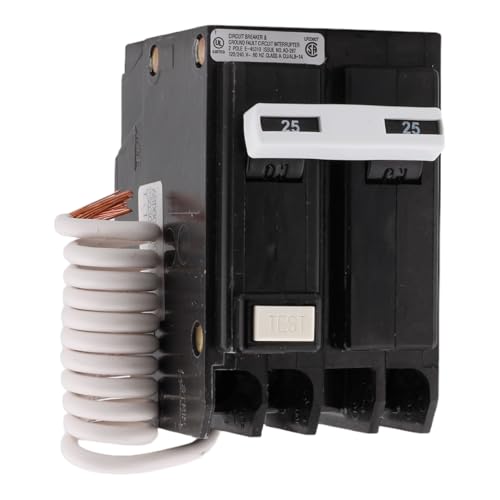
This CUTLER HAMMER product is a heavy-duty breaker from the NG-Frame family, rated with high interrupting capacity and designed for multi-pole configurations. While it emphasizes rapid response and trip accuracy for demanding service panels, users should verify if a true GFCI function is included on this specific model, as some variants focus on electronic trip mechanisms and protective features for industrial or commercial panels. It is suitable for installations requiring robust short-circuit protection and high fault current tolerance in 480 VAC or 240 VAC environments, but double-check GFCI labeling and UL compliance before use in residential circuits.
Siemens QF130A Ground Fault Circuit Interrupter, 30A

Although rated at 30 amps, the QF130A GFCI breaker by Siemens provides reliable ground fault protection, ideal for damp or wet locations where high leakage risk exists. This one-pole or two-pole option offers robust AIC values and UL 943 self-test features common to modern GFCI devices. While it’s not a 25A model, it remains a strong choice for consumers expanding circuits with moisture exposure or where higher amperage is necessary to support load requirements. Verify panel compatibility before installation.
Ditansisi 30 Amp GFCI Breaker

This Ditansisi model is a single-pole GFCI breaker rated for 30 amps with self-test and lockout features. It is suitable for residential and light commercial circuits where leakage protection is required and space constraints limit the number of devices in a panel. It includes 10kAIC interrupting capacity and 120/240V compatibility. While not a 25A unit, it can fill roles in non-25A branches or be considered when upgrading multiple circuits with shared neutrals where a higher amperage GFCI is necessary.
Siemens Q230GF 30A GFCI Breaker

Designed for wet or damp locations, the Siemens Q230GF is a 30-amp, two-pole GFCI breaker with LED trip indicators to help quickly identify fault conditions. It’s a practical choice for outdoor outlets, pools, spas, and kitchens where water exposure is possible. As with the 30A model above, confirm panel compatibility and whether a 25A alternative is required for specific circuits or local codes.
DIHOOL 25 Amp GFCI Breaker With Surge Protector

DIHOOL’s 25 Amp GFCI breaker with a built-in surge protector provides a comprehensive defense for sensitive appliances and electronics. Its 6 protection functions include Type 2 20kA surge protection, 30mA Class A ground fault protection, and overcurrent/short circuit safeguards. The device supports 120V/240V circuits and is suitable for US 110V and 220V systems. The status LED and T-test button make status checks and fault diagnosis straightforward, ideal for homes with a mix of high-end electronics and outdoor outlets.
DIHOOL 25A GFCI With Voltage Surge Arrester

This variant from DIHOOL emphasizes five-layer protection, including Type 2 20kA surge protection, 30mA Class AC ground fault protection, and robust overload and short circuit safeguards. The unit is designed for 120V/240V circuits and supports common US and international voltage ranges for residential and light commercial panels. The visualization window shows the breaker’s status, and a test button provides quick verification of ground fault protection. Suitable for installations requiring reliable leakage protection and surge tolerance.
Buying Guide: Key Considerations For 25 Amp GFCI Breakers
When selecting a 25 amp GFCI breaker, consider the following factors to ensure safety, reliability, and compatibility:
- Compatibility with your panel: Always verify that the breaker is listed for your panel brand and model. Plug-on designs and QO/QPF types may require specific bus connections.
- GFCI type and protection level: Ensure the unit provides ground fault protection for the location (kitchen, bathroom, outdoor, poolside). Look for self-test features that UL 943 requires.
- Interrupting capacity (AIC): A higher AIC rating means the breaker can safely interrupt larger fault currents. Match this to your service panel and load demands.
- Surge protection: Some DIHOOL models include surge protection, which helps shield electronics from transient voltage spikes. If you have sensitive appliances, this can be valuable.
- Physical installation: Plug-on or bolt-on options affect installation time and complexity. Consider whether you need a simple replacement or a full panel upgrade.
- Number of poles: A 25A breaker is commonly needed for 1-pole (120V) or 2-pole (240V) circuits. Two-pole units cover multi-wire branch circuits and shared neutrals.
- Indicator features: LED trip indicators and status windows simplify troubleshooting and routine inspections, especially in damp or outdoor environments.
- Brand ecosystem and warranty: Sticking with a familiar brand (Schneider, Siemens, DIHOOL) often yields better support, easier cross-compatibility, and longer warranties.
In practice, the best choice depends on your panel type, circuit location, and whether you want built-in surge protection. For kitchens, baths, and outdoor outlets, prioritize units with reliable self-test and quick-trip capabilities. If surge protection is important for electronics or sensitive devices, DIHOOL options offer extra value. Always consult a licensed electrician if you’re unsure about panel compatibility or wiring requirements.