Best 24V Battery Pack With Charger for DIY Projects and Ride-on Toys
Find the right 24V battery pack with charger for kids’ ride-ons, DIY electronics, LED displays, and robotics. This guide highlights five reliable options, explains who each is best for, and explains key trade-offs. Expect long life, safe charging, and practical output for a range of 24V applications. The top picks favor compact size, solid BMS protection, and easy integration with common 24V devices. A quick summary table is included to aid side-by-side comparisons and quick decisions.
| Product | Best For | Approx. Capacity | Charger Type |
|---|---|---|---|
| Qwenoer 24V 2.6Ah | Small DIY projects, LED strips, compact electronics | 2.6Ah | Charger included (built-in BMS) |
| Noczeaulia 24V 5.2Ah | Medium DIY builds, LED strips, hobby robotics | 5.2Ah | 25.2V 1A smart charger |
| Lithium Hellas 24V 10Ah | Ride-on toys and longer-running DIY projects | 10Ah | 29.4V 1A charger |
| OANSER 24V 12Ah | High-drain robotics, large LED displays, CCTV | 12Ah | 29.4V charger & bare leads |
| LOLRKO 24V 5Ah | DIY electronics, low-power projects, audio gear | 5Ah | DC 5.5×2.1mm port |
Qwenoer 24V 2.6Ah Li-ion Battery With Charger
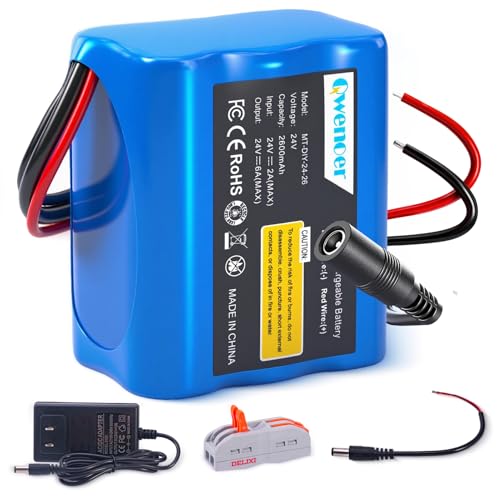
Best for compact, lightweight needs where space is limited. The 2600mAh capacity fits small DIY projects, LED strips, and light CCTV cameras. Its built-in safety features guard against overcharge, overdischarge, and short circuits, supporting stable operation during charging and discharging.
Who it’s best for: hobbyists building compact 24V circuits, kids’ DIY projects, or small sensor arrays. Limitations: not intended for full-size electric vehicles or high-current demands.
Noczeaulia 24V 5.2Ah Battery With 25.2V Charger
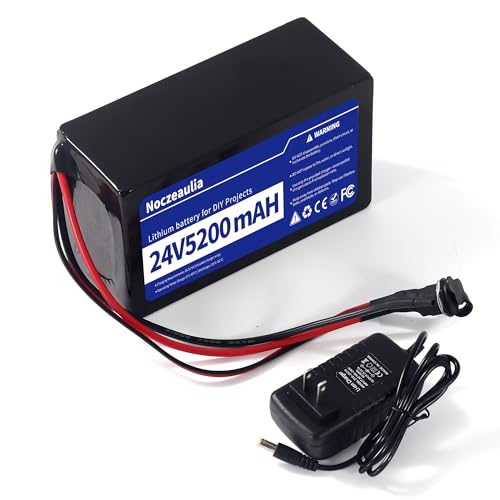
This option emphasizes ready-to-use convenience. It ships with a 25.2V 1A smart charger and weighs about 0.6 kg, making it suitable for portable DIY projects and medium-load tasks. A Battery Management System (BMS) monitors protection against overcharge, overdischarge, and short circuits.
Who it’s best for: builders who want a simple, plug-and-play 24V solution. Consideration: only modestly higher capacity than ultra-compact options; may suit projects where weight is a factor.
Lithium Hellas 24V 10Ah Battery With 29.4V Charger

Best for longer-running ride-on toys and heavier DIY setups. This 10Ah pack offers extended runtime and comes with a 29.4V 1A charger. It uses advanced lithium technology and a multi-layer safety framework to protect against overcharge, over-discharge, and short circuits.
Who it’s best for: projects needing sustained 24V power, such as larger ride-on devices. Caution: higher capacity often means larger size and weight, which may require reconfiguration of enclosures.
Lithium Hellas 24V 5Ah Battery With 29.4V Charger

Choose this for a balance between portability and runtime. The 5Ah pack is compact yet capable, with over 1000 charge cycles and more than 80% capacity retention. It includes a 29.4V charger and a safety-first design with a BMS that protects against common fault conditions.
Best for: medium-demand DIY builds, small robotic kits, or longer-lasting LED displays. Limitation: not ideal for very high-drain applications requiring maximum current.
LOLRKO 24V 5Ah Battery Pack With Charger

Potentially best for DIY electronics and compact 24V projects requiring a straightforward connection. It includes bare red/black wires and a DC charging port, simplifying integration into custom enclosures. Its 5Ah capacity supports moderate-duty devices with steady current delivery.
Who it’s best for: hobbyists building Bluetooth speakers, LED installations, or small 24V instruments. Limitation: bare wire connection may require more assembly work for plug-and-play setups.
Buying Guide: Key Considerations For Your 24V Battery Purchase
- Capacity vs. runtime: Higher Ah means longer runtime but typically larger size and weight. Choose based on how long you need power between charges.
- Charger compatibility: Ensure the charger voltage matches your device requirements (e.g., 29.4V vs. 25.2V). Mismatches can reduce performance or safety.
- BMS protections: Look for built-in protection against overcharge, overdischarge, overcurrent, and short circuits. This extends battery life and protects devices.
- Format and connectors: Decide between ready-to-connect packs with cables, or packs with bare wires for custom wiring. Consider enclosure space and mounting options.
- Weight and footprint: For ride-on toys or compact projects, weight and dimensions affect fit and handling. Heavier packs may require stronger enclosures.
- Cycle life: More cycles (e.g., 1000+) translate to longer practical life with repeated charging. Ideal for high-usage setups.
- Safety and temperature: Some packs maintain performance across temperature ranges. If used outdoors or in hot spaces, verify thermal behavior.
Frequently Asked Questions
- What does a BMS do in a 24V battery pack? It monitors charging, discharging, and safety conditions to prevent damage and prolong life.
- Is a higher Ah battery always better? Not always. It increases runtime but adds weight and may not fit small enclosures.
- Can I mix 24V batteries in a project? Mixing different chemistries or capacities can cause imbalance and should be avoided unless the system is designed for it.
- Do these batteries require special chargers? Yes, use the charger specified for each pack to avoid undercharging or overcharging.
- Are bare-wire packs harder to install? They require soldering or connectors, so plan wiring and safety when choosing these options.
- How many charge cycles can I expect? Most lithium-based packs offer 1000+ cycles with good care and appropriate BMS protection.