Best 24V DC Motors for DIY Projects and Engineering
Choosing the right 24V DC motor is essential for performance, longevity, and reliability in DIY projects, robotics, and small machinery. This article highlights five suitable options, with a focus on high torque, low noise, and durable gear systems. Each product is described with its key features and practical applications, helping you compare suitability for your build. Consider factors like speed, torque, output shaft, and mounting when selecting a motor for your project.
| Product | Brand | Rated Voltage | Key Speed/Torque (approx.) | Notable Feature |
|---|---|---|---|---|
| Greartisan 24V 1000RPM Gear Motor | Greartisan | 24V | 1000 RPM, high torque | All-metal gears, pure copper rotor |
| XD-3420 12V/24V High Torque Motor | XD-3420 | 12V/24V | 3500 RPM (12V) / 7000 RPM (24V); ~1–2 kgf·cm torque | Versatile CW/CCW operation |
| Vevitts 24V 3000RPM DC Motor | Vevitts | 24V | 3000 RPM | Aluminum body, full copper winding |
| BRINGSMART 24V 40rpm Worm Gear Motor | BRINGSMART | 24V | 40 RPM (no-load up to 30 RPM with load) | Self-locking, 1:200 reduction |
| Greartisan 24V 500RPM Gear Motor | Greartisan | 24V | 500 RPM | All-metal gears, durable gear box |
Greartisan 24V 1000RPM Gear Motor
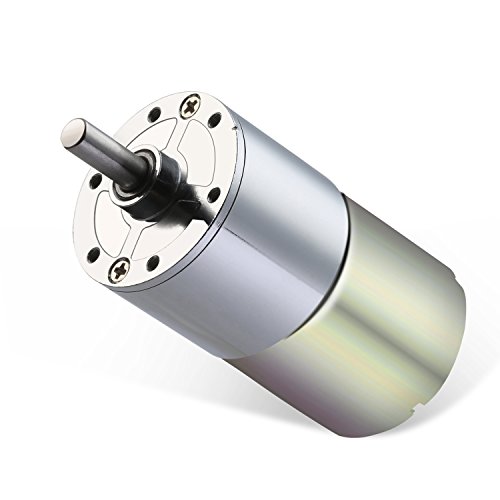
The Greartisan 24V 1000RPM gear motor delivers all-metal gears and a pure copper wire core rotor, designed for high-temperature resistance and durability. The D-shaped output shaft uses high-hardness steel to improve bearing life and overall robustness, making it suitable for heavy-duty gear boxes and continuous duty cycles. With a geared reduction system, this motor can provide consistent torque for robotic arms, conveyors, or automation projects that demand reliable power transfer. Applications include precise positioning, small automation rigs, and hobby robotics where steady performance is essential.
XD-3420 High Torque DC Motor (12V/24V)

The XD-3420 motor supports 12V or 24V operation, with CW/CCW capability and a high-speed range that scales with voltage. Rated power sits at 30W, with speeds of 3500 RPM at 12V and 7000 RPM at 24V, and outputs torque of around 1–2 kgf·cm depending on voltage. The design emphasizes low noise and smooth operation, suitable for DIY generators, lightweight machinery, and devices requiring responsive motor control. The flexible voltage range helps designers tune speed and torque for different load profiles while maintaining compact form factors.
Vevitts 24V 3000RPM Brushed Motor
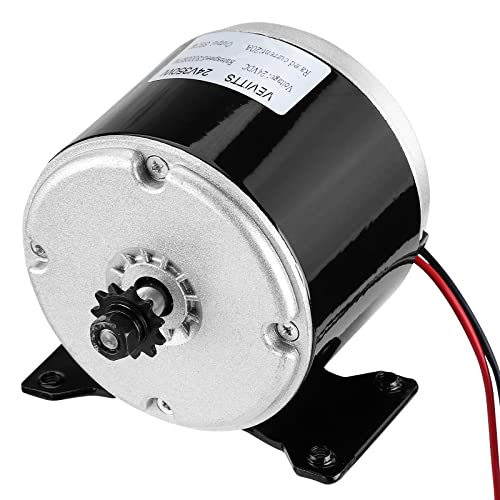
The Vevitts 24V 3000RPM motor uses a full copper coil and an aluminum body for heat resistance and longevity. It’s designed for high-speed operation with robust thermal performance and natural air cooling to sustain higher outputs. This makes it suitable for propulsion systems in compact electric vehicles, high-load hobby projects, and gear-driven mechanisms requiring a steady 24V supply and reliable continuous operation. The motor’s high-speed capability complements lighter gear reductions for responsive drive systems.
BRINGSMART 24V 40rpm Worm Gear Motor

This self-locking worm gear motor from BRINGSMART features a 1:200 reducer, 40 rpm output, and an 8mm output shaft. The worm gear arrangement provides high torque at low speeds and a natural self-locking feature, ensuring stability in devices like rotating tables, safe boxes, curtain machines, and robotic tables. The motor’s low-noise operation is suitable for precision equipment and safe-turning mechanisms where steady, controlled motion is required even under load. Multiple mounting points support straightforward integration into DIY builds.
Greartisan 24V 500RPM Gear Motor
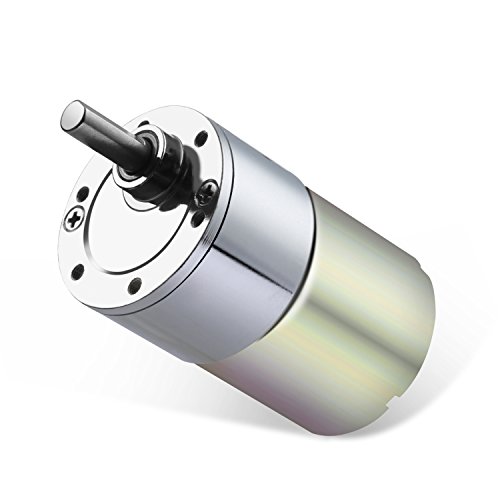
The Greartisan 500RPM gear motor emphasizes all-metal gears and a robust gearbox designed to handle elevated loads with improved durability. The D-shaped output shaft adds to the mechanical reliability by enabling precise coupling with accessories and gear trains. This motor is well-suited for slow, torque-heavy applications such as automated doors, precise positioning stages, and heavy-lift mechanisms in small-scale automation projects where high torque at low speed is essential.
Buying Guide: Key Considerations For 24V DC Motors
Voltage and compatibility: Most 24V motors are designed for 24V DC supply but some variants support a range that includes 12V. Ensure your power source and control electronics match the motor’s rated voltage and current requirements. Consider a motor module with a driver that supports PWM control for smooth speed adjustment and torque management.
Torque, speed, and gear ratios: Higher gear reduction increases torque at low speeds but reduces top speed. For robotics and automation, choose a ratio that balances stall torque with acceptable speed under load. Pay attention to shaft diameter and coupling compatibility to prevent slippage or misalignment.
Construction and durability: All-metal gears and copper windings generally offer longer life and better heat dissipation than plastic gear motors. Aluminum housings can improve cooling, while sealed or rugged housings protect internal components in harsh environments.
Output shaft and mounting: D-shaped or round shafts with standard diameters simplify coupling to drive pulleys, gears, or couplings. Check mounting options, screw hole patterns, and overall footprint to ensure the motor fits your enclosure or frame.
Noise, efficiency, and cooling: Motors vary in acoustic performance. In quiet or noise-sensitive projects, prioritize low-noise designs and natural cooling with ample airflow. Efficiency impacts battery life and runtime in portable DIY devices.
Reversibility and control: Some motors offer CW/CCW functionality which is valuable for bidirectional operations and reversible mechanical systems. Consider whether your controller supports reversing signals or needs integrated direction control.
Durability and service life: High-temperature resistance, abrasion resistance, and robust bearings contribute to longer service life in continuous-duty or high-load applications. Review manufacturer specifications for duty cycle, operating temperature, and service life estimates.
Compatibility with accessories: Verify available sprockets, couplers, and mounting brackets. Standard sprocket sizes and interchangeable gear fittings can simplify integration into existing builds.
Safety and standards: Ensure electrical insulation, heat generation, and wiring configurations meet your project’s safety standards. Use protective enclosures and appropriate fusing to prevent damage from overloads or shorts.
Overall, the five motors covered here offer a mix of high torque, speed versatility, and robust build quality for 24V systems. When selecting, map your project’s load profile, desired response time, and physical constraints to choose the motor that delivers reliable performance without overdesigning. Consider prototyping with a motor that provides adjustable speed and torque to refine your application before finalizing a design.