Best 225 Watt Solar Panel Solutions for Off‑Grid Power
Looking for a reliable 225 watt solar panel to power an RV, boat, van, or off‑grid cabin? This guide highlights five top options based on efficiency, durability, and flexibility, so you can choose the right fit for your space and energy needs. Each product is described with who it suits best and any notable limitations to consider.
Buyer overview table (quick comparison):
- Product: AeternaSol 225W HPBC Panel
- Best for: Extreme weather durability and high efficiency in limited space
- Key trait: 25.5% efficiency, IP68 protection, rugged backplate
- Product: Renogy 200W N-Type (Note: 200W listed, not 225W; included for space-constrained comparison)
- Best for: Compact installs in tight spaces
- Key trait: 25% efficiency, lighter and smaller
- Product: ACOPOWER 250W Panel
- Best for: Higher wattage in off-grid setups
- Key trait: 250W panel with easy expansion options
- Product: Callsun N-Type 400W (two 200W modules)
- Best for: Bifacial capability and shading resilience
- Key trait: N-Type, anti-shade design
- Product: Renogy 200W ShadowFlux
- Best for: Shading-prone installations
- Key trait: Anti-shading tech, 25% efficiency
AeternaSol 225W HPBC Solar Panel
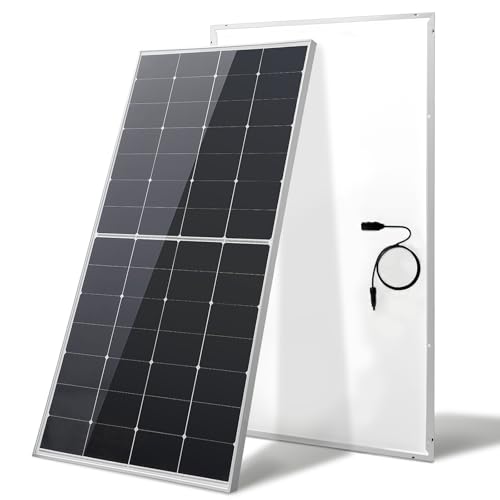
The AeternaSol 225W panel uses HPBC technology to deliver a high 25.5% efficiency, with back-contact cells designed for gridless systems. It is best for users seeking maximum power in tight roof spaces, such as RVs, boats, or small off-grid cabins, where space is precious. The design aims to boost rooftop utilization by about 30% and reduce annual electricity bills. A notable strength is the IP68 enclosure and a welded backplate that adds durability against hail and high winds. A caveat is that real-world gains depend on mounting and system matching; ensure your wiring and controller support the higher efficiency. Suitable for: compact home/off-grid roofs, RVs, and marine installations that require reliable high output in limited space.
Key specifications to compare: IP68 protection, corrosion-resistant frame, 25.5% efficiency, long-term reliability in harsh environments.
Renogy 200W N-Type Solar Panel

This Renogy panel features N-Type technology and 25% efficiency, with a compact size that reduces weight and footprint. It’s an excellent choice for Class B vans or other space-limited RV installations where every inch counts. The 24V system compatibility optimizes efficiency and can perform better in high temperatures, which helps in sunny climates. Best for: tight-space RV roofs and portable setups where weight and size matter. Better for: those who prioritize a lighter panel with solid performance in heat. Limitation: it is listed at 200W rather than 225W, so expect a slightly lower peak output if you specifically need 225W.
ACOPOWER 250W Mono Panels
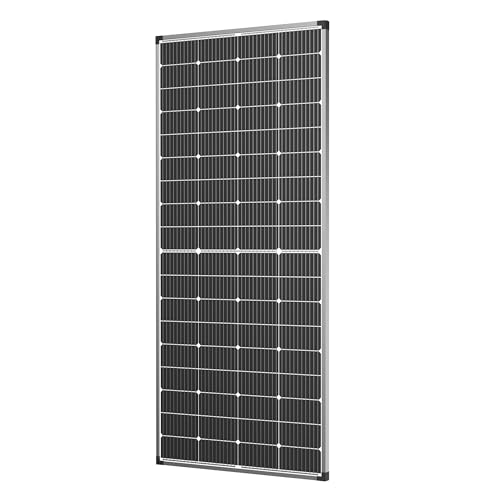
The ACOPOWER panel delivers a higher wattage in a durable package, with an emphasis on easy installation through pre-drilled mounting holes. It’s a good fit for RVs, marine applications, or farm off-grid setups where customers want to scale power. The panel supports expansion with compatible connectors for larger arrays. Best for: off-grid rigs needing straightforward expansion. Choose this if you want a robust 250W option that’s easy to integrate. Limitation: not a 225W unit, so exact 225W specification may not apply for users strictly requiring 225W.
Callsun N-Type 400W Bifacial Panels

Callsun offers two 200W modules with N-Type 16BB cells, delivering up to 25% efficiency. The bifacial technology captures light from both sides, boosting total energy output by up to 30% under favorable reflectivity. This design, plus an anti-shade TwinCell feature, helps maintain power in partial shade. Best for: RVs, boats, or homes with frequent shading or variable sun. Choose this if you want dual modules with shading resilience. Limitation: the product is listed as two 200W modules, resulting in 400W total rather than a single 225W unit; consider system sizing accordingly.
Renogy ShadowFlux 200W Panel

Renogy ShadowFlux uses anti-shading technology and 16BB N-Type cells to maintain power output in shaded conditions. It is compact and lighter than many fixed PERC panels, which helps in space-limited installations such as RV roofs or small cabins. Best for: shaded environments or locations with intermittent sunlight. Take note: the unit is 200W, not 225W, so it may not meet a strict 225W target.
ECO-WORTHY 200W Dual 100W Panels

ECO-WORTHY’s 200W set uses N-Type cells and dual 100W panels with 25% efficiency. The design includes pre-drilled holes and a durable IP68 rating for rugged outdoor use. It’s a solid choice for off-grid systems on RVs, boats, or trailers where space allows for two panels. Better for: modular expansions and installations requiring robust weather resistance. Limitation: aggregate wattage is 200W, not a single 225W unit.
Buying Guide: Key Purchase Considerations
- Power needs and space: Match panel wattage to available roof space and daily energy requirements. Higher efficiency panels help in tighter spaces, but ensure your battery bank and controller support the output.
- Cell technology: N-Type cells typically offer better performance in heat and shading. Bifacial designs can add output in reflective settings but may require optimal mounting angles.
- Durability and weather rating: For RVs, boats, or outdoor cabins, IP ratings and frame materials matter. Consider panels with corrosion resistance and robust backplanes for long-term use.
- System compatibility: Confirm voltage (12V vs 24V), connector types, and whether expansion is desired. Some panels are designed for easy daisy-chaining or future growth.
- Installation and maintenance: Look for pre-drilled mounting holes, lightweight designs, and ease of wiring. A portable option can simplify seasonal use.
Frequently Asked Questions
- What makes a 225W panel better for limited roof space?
Higher wattage per panel means more daily energy without adding more panels, which is ideal when roof area is restricted. - Are N-Type cells worth the extra cost?
N-Type cells generally deliver better efficiency and durability, especially in heat and shade, which can improve year-round performance. - Can bifacial panels be used on RV roofs?
Yes, with proper mounting and reflective surroundings, they can add extra output, but installation complexity may be higher. - Is IP68 protection necessary for marine use?
IP68 provides extended submersion protection, which is beneficial for boats and humid environments. - Should I choose multiple smaller panels or one large panel?
Multiple panels offer modularity and easier replacement, while a single larger panel reduces wiring complexity but may be bulkier to install. - Do these panels require a specific charge controller?
Most 12V/24V systems work with standard MPPT controllers; verify compatibility with your battery bank.