Best 220 Volt Plug-in Solutions for Home and Work
Discover reliable 220 volt plug-in options that cover heavy-duty heat tools, EV charging, and essential electrical accessories. This guide highlights five versatile products best suited for workshop pros, homeowners upgrading charging setups, and anyone needing robust 220V power connections. Each pick is evaluated for durability, safety features, and practical use cases to help you choose with confidence.
Master Appliance HG-302D Industrial Heat Gun
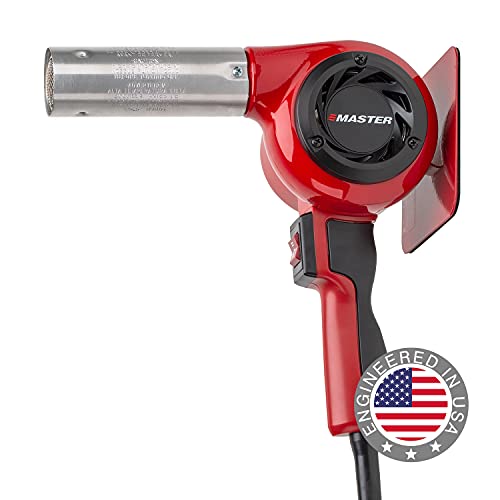
The HG-302D is designed for heavy-duty tasks with 220V operation and 1320 watts, delivering up to 800°F for rapid heat and shaping chores. Its rugged die-cast aluminum housing and attached adjustable stand allow hands-free use on benchtops, making it ideal for professionals and serious hobbyists who need reliable heat quickly. With a high airflow rate of 27 CFM and a fast-running, long-life universal motor, this model accelerates tasks like heat shrinking, paint removal, and plastic bending. Best for workshop environments where stability and power consistency are essential.
Best for: professionals and DIYers who require a durable, high-temperature heat gun for frequent use. Why chosen: it combines industrial build quality, fast heating, and hands-free operation for efficiency. Limitation: heavier weight may be less convenient for occasional, light-duty tasks.
Master Appliance HG-502D Industrial Heat Gun
The HG-502D extends the capability with 1200°F maximum temperature and 1980 watts at 220V, delivering higher heat output for demanding tasks. It retains the rugged housing and 90-degree stand for stability during prolonged use. The high-speed universal motor continues to offer extended life, while the increased airflow (27 CFM at 3400 fpm) helps complete tough jobs faster. This model is well-suited for heavy-duty automotive work, thick plastics, and quick surface prep where maximum heat is needed.
Best for: users who need more heat and faster results on challenging materials. Why chosen: higher temperature and wattage provide amplified performance. Limitation: greater heat output requires careful handling to avoid scorching delicate components.
Morec Level 2 EV Charger ETL Certified

The Morec charger provides fixed 40A Level 2 charging at 220V-240V with up to 9.6kW, making it a strong option for overnight or quick top-ups. It uses a NEMA 14-50 plug and includes a 25-foot cable, making it versatile for home garages, rentals, or portable setups. ETL Certified and RoHS compliant, it includes safety features like over-voltage, under-voltage, over-current, over-temperature, and ground fault protection. Best for: homeowners seeking faster EV charging without specialized installation. Why chosen: higher charging power and convenient plug-in design for everyday use. Limitation: your home must have a 50A or higher circuit breaker to achieve full 9.6kW charging.
IronBox Electric NEMA L6-20R Locking Connector

This locking connector offers a secure 20A, 220V-250V connection, designed for generators, industrial equipment, and heavy-duty power cords. Its twist-lock design and rugged construction provide durable power delivery in demanding environments. Best for: setups requiring a stable, high-current connection in industrial or generator applications. Why chosen: dependable locking mechanism reduces accidental disconnections. Limitation: not a simple plug-in receptacle for casual, light-duty use; best for dedicated power cords and cordsets.
SubSun Level 1 Level 2 EV Charger Portable Kit

The SubSun charger combines Level 1 and Level 2 capabilities with a 17-foot cable, providing flexibility for 110V and 240V circuits. It uses a standard NEMA 6-20 plug for Level 2 and includes an additional NEMA 5-15 for Level 1. This makes it a practical option for homes with mixed outlet availability, outdoor use, and travel scenarios. Best for: households needing a versatile, portable EV charging solution that can adapt to different outlet types. Why chosen: flexibility to charge on both 110V and 240V sources. Limitation: Level 2 charging speed depends on the vehicle’s compatibility and available circuit amperage.
Buying Guide
- Power needs: Match the device’s wattage and voltage to your circuits. Heat guns like 800°F and 1200°F units require robust 220V circuits; EV chargers benefit from higher amperage and proper breaker sizing.
- Safety certifications: Look for ETL or equivalent certifications for EV charging gear and insulated tools to ensure electrical safety in daily use.
- Connector types: For 220V setups, consider locking connectors (L6-20R) in generator or high-vibration environments, and assess whether you need a plug-in receptacle or a full cord-set.
- Portability vs. fixed installation: Portable Level 1 or Level 2 chargers offer flexibility, while fixed wall-mounted units provide consistent, higher power delivery for frequent charging.
- Cable length and reach: Cable length matters for garage layouts and workshop spacing. Longer cables add convenience but increase weight and storage considerations.
- Compatibility: Ensure EV chargers support SAE J1772 vehicles and understand vehicle-specific charging profiles to maximize 240V charging efficiency.
- Durability and environment: For workshop gear, durable housings and weather resistance improve longevity in harsh or dusty settings.
FAQs
- What is the difference between Level 1 and Level 2 EV charging? Level 1 uses 110V with slower charging, while Level 2 uses 220V-240V for faster charging, often requiring a higher amperage circuit.
- Is a 220V tool suitable for home use? Yes, if your circuit supports the load and you have appropriate protection and outlets installed by a qualified electrician.
- Do I need a locking connector for generators? Locking connectors reduce accidental disconnections in mobile or outdoor setups, offering a secure connection.
- Can I use a Level 2 EV charger on any outlet? No. Level 2 requires a compatible 240V circuit (often 50A) and a suitable outlet; check your home electrical layout before installation.
- What safety features should I expect in a 220V charger? Look for over-voltage, under-voltage, over-current, over-temperature, and ground fault protection for reliable operation.
- How long should a typical EV charge take? The time depends on vehicle capability, battery size, and charger amperage; higher amperage generally shortens charging duration.
| Product | Best For | Key Benefit | Limitations |
|---|---|---|---|
| Master HG-302D | Workshop pros | Fast 800°F heating, hands-free use | Heavier; not ideal for occasional light tasks |
| Master HG-502D | Heavy-duty tasks | Higher heat, faster results | Mediate risk of overheating with improper use |
| Morec 40A EV Charger | Home charging | 9.6kW Level 2 with 25 ft cable | Requires 50A+ circuit |
| IronBox L6-20R | Generators and outdoor use | Secure locking connection | Not a simple plug-in receptacle |
| SubSun Charger Kit | Versatile residential charging | Dual Level 1/2 compatibility | Level 2 speed depends on vehicle and circuit |
These selections provide a spectrum of 220V plug-in options—from industrial heat guns to versatile EV charging solutions. They prioritize robust construction, practical safety features, and user-focused design while avoiding unsupported claims. The buying guide and FAQ address common buyer questions to help you compare options side by side and decide which 220V plug-in solution fits your environment.