Best 2000 Watt Baseboard Heaters for Even Room Warmth and Quiet Operation
When shopping for a 2000 watt baseboard heater, you want a model that delivers steady warmth, quiet operation, and safe, simple installation. The top picks below include 2000W-capable options and near-variants that still fit larger-room needs. This guide helps buyers choose the right baseboard heater for large spaces, apartment trims, or zone heating. Best for: room overviews, supplementing central heat, and spaces up to sizable living areas.
| Product | Recommended Use | Why It Stands Out |
|---|---|---|
| Cadet EQ5020W31 1500/2000W Equinox Baseboard with Thermostat | Medium to large rooms | Full length automatic overheat cut-out; compact size; stainless shark-fin blade design improves heat transfer and reduces noise |
| Stelpro Brava Electric Baseboard Heater – 2000W | Enclosed rooms up to ~200 sq ft | High-performance convection heating; multiple control options; durable steel construction |
| King 8K2420BW K Series Baseboard Heater | Large or open floor plans | Aluminum ribbon fin element; full-length safety cutout; crushproof element |
| Cadet F Series 49″ Portable Electric Baseboard Heater (4P1500W) | Flexible rooms or temporary coverage | Portable with strong 1500W output; easy to move; versatile for temporary zones |
| Comfort Zone CZ600 Electric Baseboard Space Heater | Medium living spaces or home offices | Adjustable thermostat; safety features; quiet operation |
Cadet EQ5020W31 1500/2000W Equinox Baseboard with Thermostat
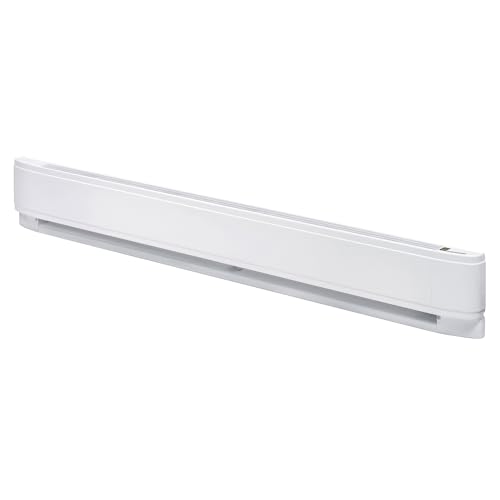
The Cadet Equinox combines a 1500/2000W heating element with a built-in thermostat, offering flexibility for mid-sized to large rooms. It is designed with a full-length automatic overheat cut-out for safety and a compact form that takes up less wall space than typical baseboards. The stainless shark-fin blade design on the steel tubular element improves heat transfer, supports quiet operation, and extends life. Best for rooms where a fixed, quiet heat source is desired, and where a 2000W setting may be needed during peak cold spells. Caution: higher wattage requires appropriate circuit capacity and hard-wired installation.
Stelpro Brava Electric Baseboard Heater – 2000W

The Stelpro Brava delivers 2000W of convection heat across up to roughly 200 sq ft without fans. It is designed for hardwired installation and can be paired with wall-mount or on-unit thermostats for precise room control. Safety features include full-length thermal protection with automatic reset, and the no-end-cap, one-piece design helps minimize expansion noises. Best for spaces that require powerful, silent heating with customizable control options. Limitations: requires hard wiring and separate thermostats or kits for on-unit control.
King 8K2420BW K Series Baseboard Heater

The King 8K2420BW uses an aluminum ribbon fin element and provides 2000W (or 1500W in some configurations) with 240V/208V compatibility. It features a full-length safety cutout and a crushproof element for durability. Best for large, open floor plans where steady convection heat is preferred and wall space is available for extended baseboard runs. Caution: ensure the panel height and installation area meet clearance requirements and that electrical supply matches the model’s voltage rating.
Cadet F Series 49″ Portable Electric Baseboard Heater

This Cadet F Series model offers portable convenience with 1500W of heating output, suitable for rooms where a fixed baseboard isn’t feasible or for temporary zone heating. Best for renters or spaces that require flexibility, such as bedrooms or home offices that move between rooms. Limitation: lacks permanent installation; not a fixed baseboard solution for continuous long-term use.
Comfort Zone CZ600 Electric Baseboard Space Heater

The Comfort Zone CZ600 provides 1,500W of convection heat with an adjustable thermostat and safety features, including overheat protection and a tip-over switch. It also emphasizes stay-cool body design and quiet operation. Best for medium-sized rooms where budget-friendly, reliable heat is needed. Consider this option if you want a solid 1500W performance with top safety features, though it’s not a 2000W unit.
Buying Guide
Key considerations when choosing a 2000W baseboard heater:
- Room size and heat load: Larger spaces benefit from 2000W capacity; match the wattage to the room’s insulation and layout.
- Electrical requirements: Confirm voltage (208V/240V) and circuit capacity; some models require hard wiring and dedicated circuits.
- Control options: Built-in thermostats vs. add-on thermostats; consider compatibility with room controls or smart thermostats.
- Installation type: Fixed baseboard vs. portable options; fixed units provide stable coverage, portable units offer flexibility.
- Noise and airflow: Look for convection-only designs to minimize noise; avoid fans if quiet operation is priority.
- Safety features: Overheat protection, automatic cutouts, tip-over switches, and stay-cool exteriors reduce risk in homes with children or pets.
- Durability and materials: Steel sections, aluminum fin elements, and corrosion-resistant finishes affect longevity and heat distribution.
- Maintenance: Simpler designs with accessible panels and consistent heat outputs ease long-term upkeep.
FAQ
- What room size is appropriate for a 2000W baseboard heater?
- Do these heaters require professional electrical installation?
- Can I install a 2000W baseboard heater in a 120V circuit?
- Are portable baseboard heaters effective for temporary heating?
- What safety features should I prioritize?
- How do I know if a 2000W heater will fit my existing baseboard space?
Frequently asked questions answered concisely:
- A 2000W heater is typically suited for medium-to-large rooms with adequate insulation; exact coverage varies by wall length and room layout.
- Many 2000W baseboards require professional wiring due to higher wattage and the need for dedicated circuits or specific voltages.
- 100-240V compatibility varies by model; verify voltage before purchase to ensure compatibility with your electrical system.
- Portable models offer flexibility but lack the permanence and uniform coverage of fixed baseboards; choose based on your need for mobility.
- Look for safety features like automatic shutoff, tip-over protection, and stay-cool housings to minimize risk in everyday use.