Best 2-Stage Heat, 1-Cool Thermostats for Efficient Home Comfort
Answer: A 2-stage heat, 1-cool thermostat is ideal for homes with a two-stage heating system and a single cooling stage. These thermostats optimize energy use by enabling two levels of heat when needed while keeping cooling simple and reliable. The best options below are selected for households with heat pumps or conventional systems seeking straightforward control and good display readability. The top picks suit different installation needs, from non-programmable basics to programmable models with scheduling features. Use the buyer notes to determine compatibility with your existing wiring and system type.
Summary table of selected products:
| Product | |||
|---|---|---|---|
| Garystat Non-Programmable Heat Pump Thermostat | 2 Heat / 1 Cool, non-programmable | Simple operation for heat pump users | Not compatible with 110-240V line voltage systems |
| Heagstat H721 Non-Programmable | 2 Heat / 1 Cool, non-programmable | Quick setup with clear display | Compatibility confirmation required before purchase |
| Honeywell TH6220WF2006/U Lyric T6 Pro | 2 Heat / 1 Cool programmable (Wi‑Fi) | Geofencing and remote control | C-wire required for full features |
| Suuwer Non-Programmable Thermostat | 1 Heat / 1 Cool (single-stage) | Budget-friendly basic replacement | Limited to single-stage systems, not ideal for true 2H/1C setups |
| Miuputake Nonprogrammable Thermostat | 1 Heat / 1 Cool | Simple DIY install with clear display | Does not support multi-stage configurations |
Garystat Non-Programmable Heat Pump Thermostat

Product type and wiring: Non-programmable 2 heat / 1 cool thermostat designed for heat pump systems and conventional forced-air furnaces. It is configurable for electric or gas/oil setups. It is not compatible with electric baseboard heat (120-240V) or high-voltage line voltage systems, and it does not work with RV thermostats. The large LCD provides easy readability, and the unit is positioned for straightforward install for homeowners with basic wiring knowledge.
Who it’s best for: Homeowners seeking a simple, reliable thermostat for a heat pump or conventional furnace, who prefer a non-programmable option with clear status readouts. Why selected: It directly addresses 2H/1C setups common in many homes and minimizes complexity for quick upgrades. Caution: Verify compatibility with existing equipment before purchasing to avoid misfit wiring or system conflicts.
Heagstat H721 Non-Programmable 2H/1C Thermostat

Features and compatibility: The Heagstat H721 is a non-programmable thermostat for 2 heat/1 cool systems. It targets heat pump setups or conventional single-stage systems (gas, oil, or electric furnaces). Buyers should confirm system compatibility and ensure the wall plate and unit size will cover existing wall traces from older thermostats. Best for straightforward control without scheduling, it provides a practical upgrade path from older models that lack 2H/1C control. Limitation: Requires system compatibility confirmation before purchase to ensure proper operation.
Who it’s best for: Homeowners with a 2H/1C configuration seeking a simple, no-frills upgrade. Why selected: Provides essential control for common two-stage heating with a single cooling stage, while avoiding the complexity of programmable features.
Honeywell TH6220WF2006/U Lyric T6 Pro
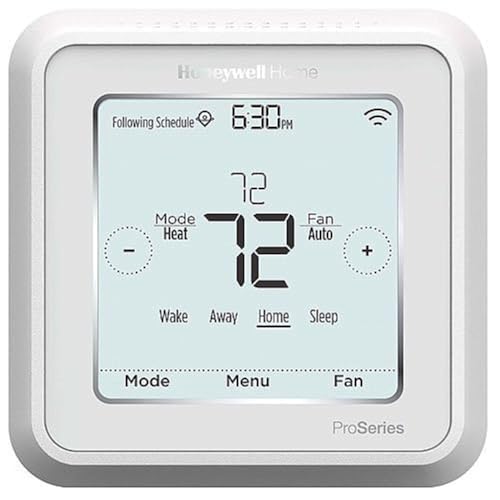
Overview and capabilities: The Lyric T6 Pro handles up to 2 heat/1 cool for heat pump or conventional systems and adds smart features like geofencing and remote control via Wi‑Fi. It is a hardwired unit requiring a common wire (C-wire) for full functionality. This model supports multiple scheduling options (7-day, 5-2, and more) and can function in non-programmable mode. The device is well-suited for tech-forward homes that want smartphone control and energy-aware scheduling. Caution: Requires compatible wiring and a compatible wireless network setup for proper cloud features.
Who it’s best for: Tech-savvy homeowners who want smartphone control and geofencing, with reliable 2H/1C support. Why selected: Combines robust scheduling options with remote access, making it a strong choice for modern homes. Limitation: Needs a C-wire and a compatible Wi‑Fi setup to unlock all features.
Suuwer Non-Programmable Thermostat

Compatibility and usage: Suuwer offers a non-programmable thermostat for single-stage systems (1 heat/1 cool) with a blue backlight. It is suitable for upgrades in homes that do not require multi-stage heat control. The model is appropriate for budget-conscious buyers looking for straightforward replacement. Caution: Not suitable for multi-stage configurations; verify that your system is compatible with a single-stage thermostat before buying.
Who it’s best for: Homes with single-stage heating and cooling that want a simple, low-cost replacement. Why selected: Provides dependable basic control for simpler systems, while avoiding over-featured options that may complicate installation.
Miuputake Nonprogrammable Thermostat

What it is: A nonprogrammable thermostat designed for single-stage systems with broad compatibility across gas, oil, electric, and certain heat pump configurations when appropriate. It emphasizes a clear LCD display and straightforward controls for everyday use. Best for older homes or DIY projects where a simple install is preferred. Caution: Verify that the wiring and system type match the thermostat’s listed compatibility, as mis-match can prevent proper operation.
Who it’s best for: Do-it-yourselfers needing a simple replacement for a 1H/1C setup or similar. Why selected: Emphasizes ease of installation and readability, suitable for straightforward replacements without smart features that add complexity.
Buying Guide: 2H/1C Thermostat Essentials
What to check before buying: Confirm your HVAC configuration (2 heating stages and 1 cooling stage vs. single-stage). Check the control type (non-programmable vs. programmable) and whether the thermostat requires a C-wire for full features. Look at compatibility with heat pump systems and conventional furnaces to avoid mismatches.
Wiring and compatibility: If upgrading from an older model, verify the number of wires in the wall base (2-5 wires is common for basic installs). For smart or Wi‑Fi models, ensure your home network supports the device’s connectivity and security requirements. Be mindful of systems that are not compatible, such as line voltage electric baseboards or RV HVAC systems.
Programmable vs. non-programmable: Programmable thermostats provide scheduling to reduce energy use but require setup and regular programming. Non-programmable models are simpler, with quick access to temperature changes, which can suit households that prefer manual control.
Energy considerations: A well-chosen 2H/1C thermostat can improve comfort by providing staged heating while avoiding unnecessary cooling cycles. Try models with clear displays and easy-to-use interfaces to reduce the time spent adjusting temperature and encourage consistent use.
Installation notes: Many units are designed for DIY installation, but some require professional help for accurate wiring and load considerations. When in doubt, consult product guides and wiring diagrams to ensure a safe and correct installation.
FAQ: Buyer Intent Quick Answers
- What does 2H/1C mean in thermostats?
Answer: It refers to two heating stages and one cooling stage supported by the thermostat, enabling staged heat for efficiency and a single cooling stage for climate control. - Can I use a non-programmable thermostat with a heat pump?
Answer: Yes, if the unit supports 2H/1C operation and is compatible with your heat pump system. Check compatibility notes for wiring and stage support. - Is a C-wire required for smart thermostats?
Answer: Many smart thermostats require a C-wire to power their electronics, though some can operate with alternative power methods. Confirm compatibility before purchase. - What should I do if my existing thermostat is not compatible?
Answer: Verify the wiring, confirm the system type, and consult the product’s compatibility notes. If mismatches persist, consider a model designed for your specific system configuration. - Are programmable thermostats worth the extra cost?
Answer: They can reduce energy usage through scheduling, especially in homes with varied occupancy patterns. Consider your routine and willingness to program when deciding. - Which thermostat is easiest to install?
Answer: Non-programmable models with standard wiring and simple backplates typically install fastest, while programmable or smart models may require more setup time.