Best Power Backup for Computers: Top UPS Options for Home and Office
Keeping computers, routers, and essential peripherals powered during outages is critical for uninterrupted work and data protection. The following five UPS units from trusted brands provide backup power, surge protection, and data-safe shutdown for a range of home and small-office setups. Consider capacity, runtime at typical loads, number and type of outlets, and built-in surge protection when choosing your backup solution.
| Product | Capacity | Outlets | Best For | Notes |
|---|---|---|---|---|
| APC BE600M1 | 600VA / 330W | 7 (5 battery backup + surge, 2 surge-only) | Home office, Wi‑Fi routers, small PCs | USB charging port |
| Amazon Basics 400VA | 400VA / 255W | 6 (3 battery backup + surge, 3 surge-only) | Basic home networks and IoT devices | Compact, affordable |
| APC BX1500M | 1500VA / 900W | 10 (5 battery backup, 5 surge-only) | Home office with multiple devices | LCD display |
| APC BE650G1 | 650VA / 390W | 8 (4 battery backup + surge, 4 surge-only) | Mid-range PCs and peripherals | Good balance of power and outlets |
| Amazon Basics 800VA | 800VA / 450W | 12 (6 battery backup + surge, 6 surge-only) | Larger home networks | High outlet count |
APC BE600M1 Uninterruptible Power Supply
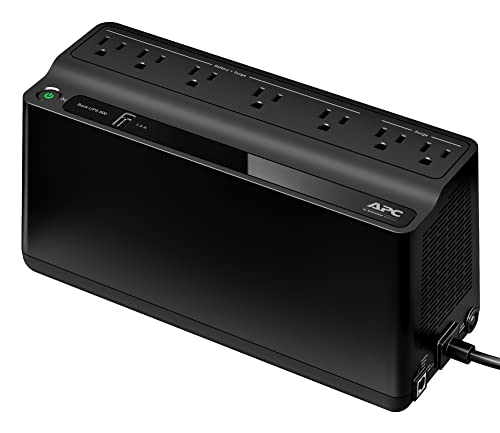
APC BE600M1 is a compact backup unit designed for essential home devices. It provides 600VA / 330W of reliable backup power and a USB charging port for mobile devices. The unit includes seven outlets, with five backed by a battery and surge protection, plus two surge-only outlets. Runtime at a 100W load can reach up to about 23 minutes, making it suitable for safe shutdowns and maintaining internet connectivity during brief outages.
Amazon Basics UPS Battery Backup & Surge Protector 400VA

Amazon Basics 400VA/255W provides standby UPS protection for small networks, IoT devices, and home entertainment gear. It offers six outlets, with three backed by battery and surge protection and three surge-only. Runtime will vary with load, but this model ensures devices stay powered long enough to shut down gracefully during short outages.
APC BX1500M Back-UPS Pro 1500VA

APC BX1500M offers one of the higher capacities in a consumer-focused line, delivering 1500VA / 900W. It provides up to 19 minutes of runtime at a 300W load and features ten outlets (five battery backup and five surge-only) plus built-in coaxial and Ethernet surge protection. The Sinewave output helps safeguard sensitive electronics and keeps systems stable during power disturbances.
APC BE650G1 Back-UPS 650VA

APC BE650G1 provides 650VA / 390W of backup power with eight outlets (four battery backup plus surge protection, four surge-only). Runtime at a 100W load can approach 29 minutes, making it a solid option for keeps essential devices online during short outages and safely shutting down during longer interruptions.
Amazon Basics 800VA UPS

Amazon Basics 800VA/450W provides a larger outlet footprint with 12 total outlets, all with surge protection, and a combination of battery-backed and surge-only outlets. Runtime scales with load, offering ample capacity for a home network and multiple devices while ensuring protection during power events and enabling orderly shutdowns when outages persist.
Buying Guide
Key purchase considerations
- Capacity and expected runtime: Match VA/W ratings to your total load. Higher watt requirements demand larger UPS units to provide meaningful runtime and safe shutdown windows.
- Outlet mix and layout: Consider how many devices need battery-backed outlets versus surge-only. A well-planned outlet configuration reduces the need for power strips and preserves protection for essential gear.
- Output waveform: Sinewave or simulated sinewave output is important for sensitive components. Sinewave models typically deliver cleaner power and run cooler under load.
- Protection features: Look for surge protection, surge-only outlets, USB charging ports, and built-in USB-C/USB-A charging when needed for devices beyond a PC.
- Software and monitoring: Some units include LCD displays or software for status monitoring, automatic shutdown, and energy management. This aids in proactive power management.
- Physical footprint and noise: Smaller units save space but may offer less runtime. Consider cooling requirements and any audible fan noise in quiet environments.
- Upgrade paths: If you anticipate expanding your home office, a higher-capacity model can reduce the need for frequent replacements while offering room to grow.
- Warranty and support: Reputable brands provide warranties that reflect trust in performance and long-term reliability.
Performance perspectives
- Low-load efficiency: Smaller UPS units are most efficient at modest loads, making them ideal for basic routers and modest workstations.
- High-load resilience: Larger units handle multiple devices and longer outages, reducing data-loss risk and enabling sustained operation during blackouts.
- Battery chemistry: Lithium-based UPS units (LiFePO4) can offer longer life and lower total cost of ownership in some scenarios, but generally at a higher upfront price.
- Protection scope: If you rely on an internet connection, ensure the model provides adequate runtime for router and modem continuity, along with a safe shutdown window for your PC.
- Future-proofing: For evolving setups including NAS, networked printers, or smart-home hubs, prioritize models with more outlets and better surge protection.