Best 12V Inline Water Pump Self Priming for RV, Marine, and Domestic Use
If you need a reliable 12V inline water pump with self-priming capability, these models are designed to deliver consistent water pressure for RVs, boats, gardens, and emergency basins. This guide targets buyers seeking on-demand pumping with automatic pressure control, durable diaphragms, and simple installation. The top picks below are best for different use cases: RV living and camping, boat or marine applications, garden irrigation, and basic home backup. A quick summary table follows to help compare key specs at a glance.
| Product | Best For | Max Flow | Max Pressure | |
|---|---|---|---|---|
| ECO-WORTHY RV Fresh Water Pump | RV, yacht, camper on-demand | 3.5 GPM | 45 PSI | Self-priming up to 9.8 ft |
| CrocSee 12V Mini Pump | Compact freshwater transfers | 0.3 GPM | ≥16 ft head | Self-priming up to 6.5 ft |
| bayite 12V Diaphragm Pump | Weed control, ATV, boat sprayers | 4.5 L/min (1.2 GPM) | 80 PSI | |
| WASSERMANN RV Pump | Reliable RV water pressure | 4.0 GPM | 45 PSI | 12V DC powered |
| MAXZONE Fresh Water Diaphragm Pump | Industrial, irrigation, boats | 4.0 GPM | 50 PSI | On-demand, self-priming |
ECO-WORTHY RV Fresh Water Pump 12V DC 3.5GPM 45PSI

The ECO-WORTHY unit is designed for on-demand water flow with an adjustable pressure range from 35 to 80 PSI. It delivers 3.5 GPM at 45 PSI and can self-prime up to 9.8 vertical feet, with a lift capability up to 98 feet. It incorporates thermal overload protection and can run dry briefly without damage. Best for RVs, yachts, campers, and food-truck setups needing reliable, continuous water delivery. A limitation to note is that maximum flow may vary with line length and height in some installations.
CrocSee DC 12V Mini Self Priming Diaphragm Pump

Suitable for small transfer tasks, this pump offers self-priming operation with a maximum vertical lift of about 6.5 feet and a modest flow of 0.3 GPM (1.3 LPM). It runs on DC 9–14V (12V recommended) and features 1/4″ hose barb ports. It is best for compact, low-flow transfer jobs like ice-maker or small beverage dispensers. A caution: it has a lower flow ceiling, so for high-demand scenarios, choose higher-capacity models.
bayite 12V DC Water Transfer Pump

Bayite offers a 12V diaphragm pump with a higher head and a turnkey setup that includes two hose clamps. It delivers up to 4.5 L/min (1.2 GPM) with a default cut-off at 80–85 PSI, and a 6.6 ft suction lift. It is suitable for sprayers, small irrigation tasks, or off-grid water transfers. It is best for users who need a compact unit with a balanced flow and pressure, but avoid continuous operation beyond 6 hours to prevent motor wear.
WASSERMANN RV Pump 12V Self-Priming 4.0GPM

This kit-style model supplies up to 4 GPM at 45 PSI and includes basic adapters, a debris filter, and manual. It is designed for RVs, campers, and marine use with a straightforward 12V DC power option. Best for users who want an all-in-one solution with included fittings. A limitation is that the kit’s additional components may require checkups for secure fittings and debris protection in dusty environments.
MAXZONE RV Fresh Water Diaphragm Pump
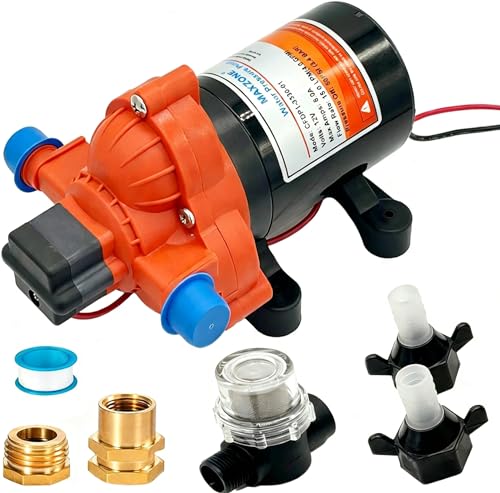
MAXZONE’s diaphragm pump provides 4.0 GPM with a 50 PSI setting and is suitable for RVs, boats, and sprinklers. It is marketed as a self-priming, on-demand unit, which helps maintain steady pressure without manual priming. Best for users needing a robust pump for moderate to high water demands. A note: the listing mentions general safety and setup tips, and users should ensure proper inlet pressure to prevent leaks or motor strain.
Buying Guide
What should I consider before buying a 12V self-priming pump?
- Flow rate vs. pressure: Higher GPM means more water but can demand more power; match to your water needs (showering, spraying, or simple transfers).
- Self-priming capability: Essential for installations where the pump sits above the water source or in a remote location.
- Power source and duty cycle: Ensure the motor voltage matches your battery system and note any recommended continuous-use limits.
- Inlet/outlet fittings: Check barb size and available adapters to fit your hoses (1/4″ to 1/2″ are common).
- Protection features: Thermal overload protection, dry-run tolerance, and debris filtration help durability in rough environments.
- Installation environment: Outdoor exposure, wet conditions, or dusty sites may require weatherproof housings or seals.
Which features matter for RV vs. marine use?
- RV and camping: Prioritize reliable 12V operation, 3–4 GPM, and 45–50 PSI for shower and sink tasks.
- Marine and boats: Look for corrosion-resistant materials, compact form, and self-priming up to 6–8 ft to handle bilge or fresh water transfer.
- Garden and emergency draining: Focus on higher lift and higher head capabilities with safe dry-run protection for longer operation periods.
What is the typical maintenance approach?
- Inspect inlet filters and debris screens regularly to prevent clogs.
- Check hose connections for tightness and leaks before each major use.
- Keep the pump clean and dry when not in use; store away from extreme temperatures.
What pitfalls should I avoid?
- Avoid exceeding the recommended voltage range; overvoltage can damage motors.
- Avoid running pumps dry for extended periods, even if some models tolerate brief dry priming.
- Avoid using incompatible fluids or concentrations that can degrade diaphragms.
Quick FAQ
- What does self-priming mean? It allows the pump to establish a water flow from a lower source without manual priming.
- Can these pumps run off a car battery? Yes, most are designed for 12V DC systems used in RVs and boats.
- Is 45 PSI enough for showers? It can be sufficient for small showers and sinks, depending on line length and fixtures.
- Do these pumps require special adapters? Many include standard hose barb ports; verify your hose size before purchase.
- Will they work with a water tank higher than the pump? Self-priming capability helps, but check lift ratings to ensure compatibility.
- Is continuous operation hazardous? Some models have duty cycle limits; follow manufacturer guidelines to avoid overheating.