Best 12V 15Ah Generator Battery for Reliable Backup Power
If you need dependable 12V 15Ah power for a generator, UPS, or emergency lighting, these sealed lead-acid and lithium options deliver solid performance and maintenance-free operation. This guide highlights five top choices, explaining who each is best for, plus practical trade-offs. Whether you prefer AGM, SLA, or LiFePO4 chemistry, you’ll find a compact, high-energy option to fit small generator setups, alarms, and off-grid systems.
Summary of selected products:
| Product | Chemistry | Approx. Weight | Best For |
|---|---|---|---|
| PowerStar PS12-15T | AGM SLA | ~13.66 lb | UPS, emergency backup, small genny power |
| Mighty Max ML15-12 | SLA | ~2.7 lb (approx.) | Compact 12V needs, lightweight setups |
| GRENERPOWER 12V 15Ah LiFePO4 | LiFePO4 | Very light | Portable 12V off-grid, camping, solar |
| SEFEPODER 2 Pack 12V 15Ah LiFePO4 | LiFePO4 | Lightweight | Multiple small devices, scalable packs |
| Mighty Max ML18-12 | SLA | ~4–6 lb | Higher capacity fallback in same form factor |
PowerStar PS12-15T Sealed AGM 12V 15Ah Battery

The PowerStar PS12-15T is a sealed AGM maintenance-free battery rated at 12V and 15Ah, featuring Nut & Bolt terminals (T3) and a compact 7.14″ x 3.03″ x 6.59″ footprint. It weighs about 13.66 lbs, making it a sturdy option for UPS systems, emergency backup, small scooters, and compact generator use. Best for users who want a straightforward, plug-and-play deep-cycle option with a straightforward replacement path for existing SLA setups.
What to know:
- Best for: UPS, EPS, emergency backup, small mobile power needs.
- Limitations: AGM batteries can have lower energy density than lithium, so weight and size are trade-offs for the 15Ah rating.
Mighty Max ML18-12 12V 18Ah SLA Battery

The ML18-12 is a 12V, 18Ah sealed lead-acid battery with Nut & Bolt terminals. It is UL certified and designed for longer run times than smaller 12V models in similar footprints. It’s a solid choice when you need a bit more capacity in a familiar SLA format, such as for larger portable generators or backup systems that require more energy per cycle.
What to know:
- Best for: Systems needing more than 15Ah without changing form factor.
- Limitations: Heavier than LiFePO4 alternatives and may have a shorter cycle life if not well managed.
Mighty Max ML15-12 12V 15Ah SLA Battery

The ML15-12 is a 12V 15Ah sealed lead-acid battery with a compact footprint and F2 terminal type. It is a maintenance-free option suitable for a variety of small power needs, including generators, alarms, and mobile setups. The product listing emphasizes a simple replacement path for models already using SLA batteries.
What to know:
- Best for: Lightweight 12V backup in compact devices and alarms.
- Limitations: Slightly heavier than lithium options and may require more careful charging management.
Mighty Max ML18-12 12V 18Ah for Champion Generators
This ML18-12 is a 12V, 18Ah SLA battery designed for Champion generators and similar backup power setups. It provides a higher capacity option in a familiar sealed lead-acid format, helping extend runtime between charges in medium-duty generator roles.
What to know:
- Best for: Generators and backup systems needing more endurance than 15Ah in SLA format.
- Limitations: Heavier than LiFePO4 and may require more frequent maintenance in storage.
GRENERPOWER 12V 15Ah LiFePO4 Battery
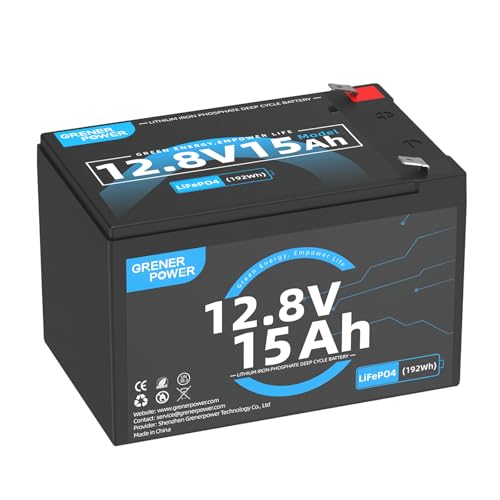
The GRENERPOWER LiFePO4 battery weighs significantly less and uses lithium iron phosphate chemistry for a longer lifecycle. At 12V and 15Ah, it’s designed for portable 12V power needs, including camping, solar off-grid, and power for small devices. It promises a cycle life well beyond typical SLA options and a safer, steadier voltage under load.
What to know:
- Best for: Portable, lightweight 12V power with long cycle life.
- Limitations: Higher upfront cost and requires BMS-aware charging and care to maximize cycle life.
SEFEPODER 2 Pack 12V 15Ah LiFePO4 Batteries

This SEFEPODER pair offers two LiFePO4 12V 15Ah batteries with a built-in 16A BMS, enabling safe parallel or series configurations up to four units in series for higher voltage. They are designed for applications like scooters, lighting, and small power tools with 2000+ cycles expected from LiFePO4 chemistry.
What to know:
- Best for: Scalable 12V power with optional expansion for larger setups.
- Limitations: Requires careful battery management when combining multiple packs (wiring, balance considerations).
Buying Guide: Key Purchase Considerations
Battery chemistry matters for performance, weight, and lifecycle. AGM and SLA options are rugged, compatible with many existing 12V systems, and typically lower in upfront cost. LiFePO4 batteries are lighter, offer longer lifecycles, and handle deep discharge better—though they come with higher initial cost and require a compatible charger and BMS.
- Application fit: Choose AGM/SLA for existing non-LiFePO4 systems or where a lower upfront price is preferred. Choose LiFePO4 for long-term cycle life, weight-sensitive setups, and wider operating temperatures.
- Voltage and capacity: Ensure the 12V rating matches your device requirements; 15Ah is a common target for compact backup power and small generators, but higher capacity is beneficial for longer runtimes.
- Terminal type and fit: Confirm terminal type (Nut & Bolt vs. F2) and dimensions align with mounting hardware and connectors.
- Charger compatibility: LiFePO4 requires chargers designed for LiFePO4 chemistry to avoid overcharging or reduced lifespan.
- Cycle life and temperature: LiFePO4 often offers thousands of cycles and wide operating temps; SLA/AGM performance can degrade with high-temperature exposure and deep discharges.
FAQ
- What does 12V 15Ah mean in practice?
It indicates the battery voltage is 12V and the energy capacity is 15 amp-hours. This helps estimate runtime for a given load, though actual runtime varies with discharge rate and device efficiency.
- Which is better for a generator backup: AGM or LiFePO4?
LiFePO4 typically offers longer cycle life and lighter weight, while AGM is often less expensive and compatible with many existing chargers. For long-term use, LiFePO4 is usually preferred.
- Can I mix different battery chemistries in one system?
Mixing chemistries is not recommended because different charging profiles can reduce lifespan and create safety risks. Use matched batteries per system design.
- Do these batteries require special chargers?
Yes, LiFePO4 batteries require chargers compatible with LiFePO4 chemistry. SLA/AGM banks generally work with standard lead-acid chargers, but voltage and termination rules still matter.
- How do I extend the life of a 12V 15Ah battery?
Store in a cool, dry place; avoid deep discharges when possible; use appropriate charging gear; and for LiFePO4, allow gentle cycling to maximize lifecycle.
- Are these batteries UL certified or safety-rated?
Product listings indicate UL certification for some models; verify current documentation from the seller before purchase.