Best 120V UPS Power Supply Solutions for Home and Office
Answer: A 120V UPS power supply provides short-term battery backup and surge protection for computers, routers, and essential electronics during outages. This guide highlights five reliable models and explains who each is best for, with practical buying considerations. Whether you need compact backup for a modem and router or a larger unit for a desktop and network gear, these options help prevent data loss and downtime.
Overview table of selected products:
| Product | Best For | Key Benefit |
|---|---|---|
| APC BE600M1 | Home office users needing compact backup | 600VA with 7 outlets and USB charging |
| CyberPower CP1500PFCLCD | Workstations and multiple devices | 1500VA, sinewave, LCD monitor |
| APC BE425M | Router/modem and small devices | 425VA, small footprint |
| Vertiv Liebert PUL-350LVT | Power protection with lithium options | 350VA/210W, lithium-ready |
| CyberPower ST625U | Compact backup for home offices | 625VA, USB charging ports |
APC UPS Battery Backup BE600M1
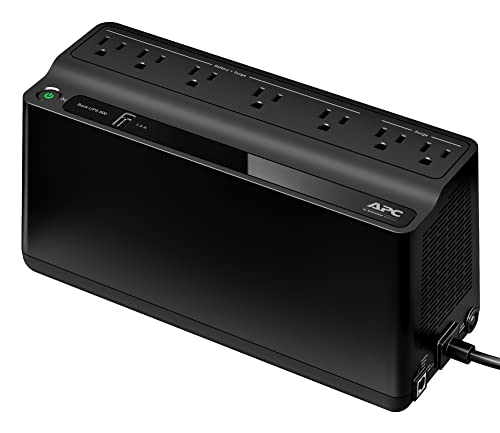
Product features show 23 minutes of runtime at 100W, 600VA/330W capacity, full battery backup with 5 outlets, plus 2 surge-only outlets. Best for a small desk setup with a computer, Wi‑Fi router, and essential peripherals.
Best for: Home offices or dorm rooms needing reliable outage protection for essential devices. This model offers compact backup without taking up much space.
Caution: Runtime estimates vary with load; exceeding 100W reduces backed-up time. Use the surge-only outlets for non-critical gear to conserve battery power.
CyberPower CP1500PFCLCD PFC Sinewave UPS

Features: 1500VA/1000W, 12 outlets (six battery backup and six surge-protected), USB ports, and a color LCD panel showing battery and power conditions. Best for power protection of desktops, workstations, and network gear with active power management needs.
Best for: Users who require strong backup for a full workstation and multiple devices, plus visibility into power status. Choose this if you want detailed battery information at a glance.
Caution: Larger footprint and weight; may require a dedicated space. Ensure the right-angle plug fits your setup without blocking adjacent outlets.
APC Back-UPS BE425M

Features include 425VA/255W, 6 outlets with 4 battery backup plus surge protection and 2 surge-only outlets. Best for routers, modems, VoIP phones, and small home-office electronics requiring compact backup power and surge protection.
Best for: Compact setups with essential devices that need a small, affordable, reliable backup. Not ideal for power-hungry desktops.
Caution: Runtime is limited; plan for quick shutdowns or staggered loads during an outage to maximize usefulness.
Vertiv Liebert PowerUPS 100Li (PUL-350LVT)

Offers flexible battery options (VRLA or lithium-ion) and lithium-based models with longer life. 350VA/210W, 120V standby power with 4 outlets, and a focus on high-temperature environments. Best for environments that require adaptable battery technology and longer service life.
Best for: Offices or home labs where high-temperature operation and longer battery life are priorities. Not as compact as small-beast UPS units.
Caution: Lithium models may incur higher upfront cost; verify space and airflow in crowded setups.
CyberPower ST625U Standby UPS

425VA/360W standby UPS with 8 outlets and two USB charging ports. Appropriate for home offices and entertainment setups that need reliable backup for routers, modems, and low-power gear.
Best for: Small home offices requiring a balance of battery backup and device charging. Avoid this if you need true sine wave output for high-performance PCs.
Caution: Standby UPS may deliver lower protection during high load or certain equipment with nonlinear power needs; plan accordingly.
Buying Guide
What capacity do you actually need?
Calculate total wattage of devices needing backup and choose a unit with a comfortable margin above that value. Higher VA/W ratings deliver longer runtimes but take more space.
What type of UPS should you choose?
Standby UPSes are compact and affordable for basic protection. Line-interactive models offer better voltage regulation. Sinewave or true sine wave UPS units are best for sensitive electronics and active PFC power supplies.
How many outlets and how should they be configured?
Consider the mix of battery-backed and surge-only outlets. Place critical devices on battery-backup outlets and use surge-only outlets for nonessential gear to maximize uptime during outages.
What about management features?
Look for LCD displays or LED indicators, automatic shutdown features, and USB connectivity for safe device shutdown and power monitoring.
What installation considerations matter?
Check plug shape, cord length, and whether the unit fits on a desk, under a shelf, or in a rack. Ensure adequate ventilation to prevent overheating in warm rooms.
Are lithium options worth it?
Lithium-based UPS units often offer longer life and lighter weight with higher upfront costs. They suit environments where maintenance frequency must be minimized.
FAQ
- What does VA mean in a UPS rating? VA (volt-ampere) indicates apparent power. Compare VA and watt (W) ratings to estimate real-world runtime.
- Can a UPS protect a gaming PC? Yes, but choose a sinewave or true sinewave UPS if the PC has a high-end power supply or GPU. Standby UPS may be sufficient for basic setups.
- How long will a UPS keep devices on during an outage? Runtime depends on load and battery capacity. Refer to each model’s specified backup time at representative loads as a guide.
- Is it better to buy a bigger UPS than needed? Generally yes for longer runtimes and future proofing, but consider space, weight, and cost.
- Do UPS units protect against surges? Yes, most offer surge protection in addition to battery backup, protecting connected electronics from spikes.
- Should I replace batteries proactively? If your unit uses replaceable batteries (especially lead-acid or lithium variants), plan for periodic replacement to avoid sudden failures.