Best LED Lights for Weed Plants: Top Indoor Grow Lights for Any Setup
Choosing the right LED grow light is essential for healthy weed plants in indoor environments. The following selections prioritize full-spectrum output, energy efficiency, and reliable cooling to support vegetative growth and flowering. Each option includes practical features like dimming, coverage area, and user-friendly controls to help optimize yields while keeping energy use reasonable.
| Product | Brand | Key Feature | Coverage (approx.) |
|---|---|---|---|
| TATU 1000w LED Grow Light | TATU | Full-spectrum with 660nm red, 430nm blue; high efficiency; low heat | 2×2 ft to 3×3 ft (typical) |
| Phlizon Upgraded 600W LED Grow Light | Phlizon | Low-heat, high efficiency; dual grow switches; wide coverage | 2×2 ft |
| LeFreshinsoft Full Spectrum 1000W | LeFreshinsoft | Samsung LM301B LEDs; dimming; silent passive cooling | 2×2 ft to 3×3 ft |
| Gerylove SP1000 Full Spectrum | Gerylove | 2×2/3×3 ft coverage; dimmable; thermometer/hygrometer | 2×2 ft or 3×3 ft |
| CANAGROW Waterproof COB LED | CANAGROW | Full spectrum COB; waterproof/dustproof; outdoor-ready option | Varies by setup |
The following sections highlight five leading options, focusing on performance, energy efficiency, and suitability for growing weed indoors. Each entry provides a concise overview, key specs, and practical considerations to help buyers compare across brands and models.
TATU 1000w LED Grow Light For Indoor Plants

The TATU grow light combines a full spectrum that includes white, blue, and red wavelengths, with a strong emphasis on 660nm red to support flowering and yield improvements. It also integrates 430nm blue light to promote rhizome and leaf development. Advertised as energy-saving, the lamp uses an LED chip design intended to reduce light loss and achieve higher light utilization. A multi-sided heat-dissipation system and a fireproof PC cover with an aluminum back further reduce heat output and noise, allowing placement near plants without disruption. Suitable for grow tents and compact rooms, this model aims to balance performance with lower operating temperatures for consistent growth across stages.
Key considerations: It provides a robust full spectrum and a claimed 90% utilization rate, which can support both vegetative growth and flowering. Active cooling is designed to minimize fan noise, though users should verify heat buildup in their specific setup. The product’s actual wattage is marketed as 1000W equivalent, which may appeal to growers comparing to traditional HPS systems while aiming for energy efficiency.
Phlizon Upgraded 600W LED Grow Light

The Phlizon unit emphasizes energy efficiency, claiming a 600W device that consumes only about 100W while delivering a broad spectrum. It notes a dual-switch design for Veg and Bloom phases, giving growers flexibility to tailor light output during seedling and flowering stages. With larger-than-average coverage, it is positioned as a practical option for a 2×2 ft grow area. The design includes dual cooling fans to extend lifespan, and adjustable angles to optimize light distribution. The company emphasizes its factory background and long-standing experience in LED grow lighting, which can translate to tested reliability and service support.
Key considerations: While it presents strong energy savings, the actual PPFD and PAR values should be checked against your individual canopy height and plant density. The inclusion of distinct Veg/Bloom modes helps automate growth cycles but requires careful setup to ensure uniform coverage across all plants.
LeFreshinsoft Full Spectrum 1000W LED Grow Light F1000
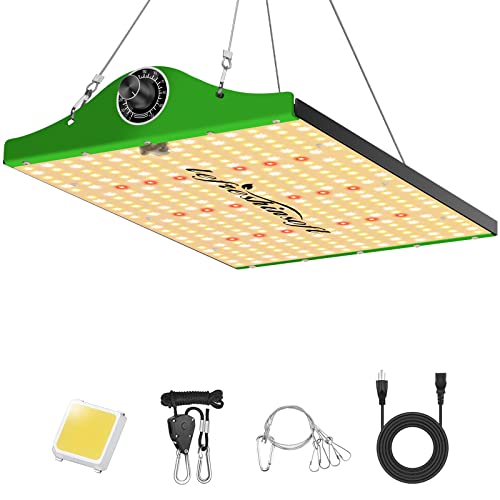
The LeFreshinsoft F1000 uses Samsung LM301B diodes to deliver high efficacy, paired with a passive cooling design that eliminates fans. With a dimming knob and a unified dimming system, this model supports multi-light setups for larger grow areas. The light is designed to minimize heat while maximizing PAR output, which helps maintain stable conditions in rooms with limited venting. The construction emphasizes a robust aluminum heat sink and water-resistant features, making it a capable option for both home and light commercial grows.
Key considerations: Passive cooling reduces noise and moving parts but can require careful heat management in very warm rooms. Dimming provides flexibility, but growers should confirm uniform intensity across the canopy to avoid hotspots. IP-rated protection adds some resilience in humid environments, which can be beneficial for weed cultivation in certain climates.
Gerylove SP1000 Full Spectrum LED Grow Light

The SP1000 focuses on a broad spectrum with a high PAR output and adjustable coverage for 2×2 ft or 3×3 ft areas. It features a dimmable interface and includes built-in thermometer/hygrometer sensors for quick ambient readings, aiding in maintaining stable environments. The unit is designed with a fanless, passively cooled system to minimize noise while ensuring durable performance. The spectrum arrangement aims to cover both vegetative and flowering needs with consistent intensity over the canopy.
Key considerations: The integrated environmental sensors are helpful for beginners, though some growers may want a separate, external climate monitor for more detailed data. The low-noise design is advantageous for quiet operation in living spaces or studio setups where sound can be a distraction.
CANAGROW Full Spectrum COB LED Outdoor Grow Light

The CANAGROW COB LED light emphasizes a full spectrum range from 380-800nm with COB LED technology to maximize light delivery. The device is described as waterproof and dustproof, suitable for indoor and outdoor lighting scenarios. This model also mentions intelligent cooling features, integrating heat dissipation to maintain stable temperatures without noisy drivers or fans. The emphasis on a broad spectrum, including infrared and UV elements, aims to enhance germination, growth, and flowering phases, potentially increasing yields when properly positioned and spaced from plant canopies.
Key considerations: Outdoor-capable features add versatility, but indoors, ensure the fixture’s footprint and mounting options align with your grow area. Waterproofing can be beneficial in humid environments but may be unnecessary for strictly indoor grows. Always verify PAR distribution at your target canopy height to avoid light waste or scorch risk.
Buying Guide: Key Purchase Considerations For LED Weed Growing Lights
- Full spectrum vs targeted spectrum: For weed cultivation, a full spectrum that includes blue (veg) and red (flower) wavelengths is important, with some models offering enhanced red (660 nm) for flowering.
- Actual wattage and efficiency: Compare true wattage draw to advertised wattage. Look for high efficacy (μmol/J) to maximize photosynthetically active radiation per watt consumed.
- Heat management: Active cooling (fans) vs passive cooling affects noise and reliability. In small rooms, quieter, passive designs can be advantageous, but require adequate heat sinking.
- Coverage area and height: Identify the recommended hanging height and coverage area to ensure uniform intensity across the canopy and avoid hotspots.
- Controls and dimming: Dimmable options and separate veg/bloom modes help tailor light schedules to growth stages and plant density.
- Durability and protection: Look for sturdy build materials, heat sinks, and moisture/dust resistance when appropriate for your environment.
- Modularity and expansion: Some systems allow multiple units to be daisy-chained or positioned for larger tents or rooms, which can be cost-effective for scaling.
- Noise and energy use: Low-noise operation is important for living spaces; energy efficiency reduces ongoing running costs and heat load.
- Warranty and support: A solid warranty and responsive customer service can reduce risk when investing in longer-term cultivation equipment.
- Practical setup: Consider your tent or room size, plant density, grow medium, and ventilation to choose a light with compatible PAR output and footprint.