Best 12 Volt Charging System Options for Boats, Campers, and RVs
Finding reliable 12-volt charging components is essential for keeping marine, automotive, and RV electrical systems running smoothly. This guide highlights five solid options that balance durability, ease of use, and compatibility. It’s best for boaters, RV enthusiasts, and remote-area travelers who need dependable USB charging, battery monitoring, and DC power distribution.
The table below compares five top picks to help you decide which is best for your setup. Consider where and how you’ll use the system—installing in a boat, RV, or off-grid cabin—and note each product’s key strength and limitation.
| Product | Best For | Limitations | |
|---|---|---|---|
| Blue Sea Systems 1011 Dash Socket, 12V, Black | Boat dashboards, wet environments | Corrosion resistance, watertight cap, secure twist-lock | Designed for DC outlets; not a charger by itself |
| 30A PWM Solar Charge Controller, 12V/24V | Small solar setups, off-grid use | Automatic voltage detection, LCD display, multiple load modes | Not compatible with lithium batteries |
| Blue Sea Systems 1045 Dual USB Charger Socket Mount | Dual USB charging on marine/vehicle panels | Intelligent device recognition, reduced interference | Requires proper mounting and wiring for best results |
| Blue Sea Systems 1016200 12V DC Dual USB Charger Socket | Two devices charging on the go | Dual USB 2.1A, conformal coating for harsh environments | Limited to USB charging; no data ports |
| Shutao 2Pcs 12V Car Battery/Alternator Tester | On-the-spot battery health checks | LED indicators show health and alternator status; protective features | Not a charging device; diagnostic tool only |
Blue Sea Systems 1011 Dash Socket, 12V, Black
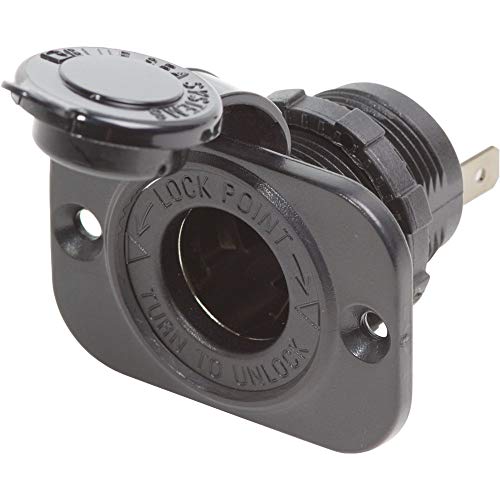
The Blue Sea 1011 dash socket is designed for wet environments and constant vibration. Its corrosion-resistant materials ensure solid contact and low voltage drop, with a watertight cap and twist-lock secure connection. Best for boat consoles and marine dashboards where harsh conditions are common. A caution: this is a charging accessory socket, not a standalone charger.
30A PWM Solar Charge Controller, 12V 24V

This PWM controller supports 12V or 24V systems and is compatible with lead-acid chemistries (OPEN, AGM, GEL). It features an LCD display for status, auto parameter memorization, and dual USB output for charging devices. Best for small solar setups in RVs or cabins, or as a simple, safe regulator for parking area devices. Better for lead-acid packs; not suitable for lithium batteries.
Blue Sea Systems 1045 Fast Charge Dual USB Charger Socket Mount

This Black 12/24V dual USB charger uses intelligent device recognition to optimize charge rate for phones, tablets, and other devices. It includes internal filtering to minimize electronic interference and a conformal coated circuit board for harsh marine environments. Best for dashboards and panels requiring reliable, fast USB charging. A limitation: installation quality affects performance; improper sealing can reduce durability in splash-prone areas.
Blue Sea Systems 1016200 12V DC Dual USB Charger Socket

This white dual USB charger provides two 2.1A ports for simultaneous device charging. It includes internal fusing and a conformal coated circuit board designed for demanding marine environments. Best for compact cockpit panels or galleys where two devices need charging on the go. Consideration: does not provide advanced smart charging beyond USB power delivery limits.
Shutao 2Pcs 12V Car Battery Tester and Alternator Tester

This tester checks battery health and alternator status with six LED indicators. It includes reverse-polarity protection and pure copper clips for reliable conductivity. Best for quick field diagnostics and maintenance checks. Limitation: diagnostic tool rather than a charging device.
Buying Guide
What should you consider when building a 12-volt charging system?
Power needs: Determine total current demand from USB ports, battery chargers, and other 12V devices. Choose components rated for at least 1.5x your peak load to accommodate surges.
Charging environment and durability
For boats and RVs, environmental exposure matters. Look for conformal coatings, corrosion resistance, and sealed housings to withstand salt spray, vibration, and moisture.
Battery type compatibility
Most PWM controllers and USB chargers work with lead-acid systems (OPEN, AGM, GEL). If you plan lithium use, confirm compatibility or choose lithium-rated hardware.
Ease of installation and monitoring
LCD displays, clear labeling, and plug-in connectors simplify setup and ongoing monitoring. Dash sockets and panel-mounted USB chargers save space and reduce clutter.
Safety features
Internal fusing, reverse polarity protection, over-discharge protections, and short-circuit safeguards reduce risk. Favor products with protective caps and secure connectors for mobile environments.
Maintenance and longevity
Conformal coating and robust housings extend life in marine settings. Regular inspection of seals, wires, and terminals minimizes corrosion and conductivity loss.
FAQ
- What is the main use of a dash socket in a 12V system? It provides a convenient DC power outlet on dashboards or panels, typically used for accessories in boats and RVs. It is not a charger by itself.
- Do PWM solar charge controllers work with lithium batteries? Many PWM controllers are designed for lead-acid chemistries and are not suitable for lithium batteries. Check the manual for compatibility before use.
- Are USB charging sockets safe for marine environments? Yes, when designed for 12/24V operation with conformal coatings and proper sealing. They are built to handle moisture and salt exposure when installed correctly.
- What’s the advantage of a dual USB charger in a 12V system? It lets you charge two devices simultaneously, often with fast charge capabilities, improving portability and reducing clutter on panels.
- Should I choose a charger with an LCD display? An LCD display helps monitor status and settings, which is valuable for managing battery health and charging parameters in off-grid setups.
- Is a battery tester necessary in a 12V system? A tester helps verify battery health and alternator status, enabling proactive maintenance and preventing unexpected failures.