Best 12/24 Volt Air Conditioners for Off-Grid Cooling and RV Comfort
Answering the common buyer question: which 12/24 volt air conditioner is best for off-grid camping, RVs, trucks, and vans? This guide highlights five reliable 12V/24V cooling units designed for compact spaces, easy installation, and low power draw. The listed models suit different needs—from ultra-quiet camping comfort to faster cooling for busy crews. Read on to find the right fit for your vehicle, budget, and power setup, and use the quick comparison table to compare core specs at a glance.
Quick comparison table (selected products)
- Somokg 11,000 BTU: Best for off-grid campers needing rapid cooling and gentle airflow
- VEVOR 10,000 BTU: Best for wide-cab trucks and heavy-duty use with energy-aware inverter tech
- Sokaiso 10,000 BTU Universal: Best for broad vehicle compatibility and easy installation
- JAYGOVAN 11,000 BTU: Best for high cooling power and quick response
- Aspligo 8,000 BTU Rooftop: Best for ultra-thin roof mounting and compact vans
Product sections
Somokg 12V RV Air Conditioner — 11,000 BTU
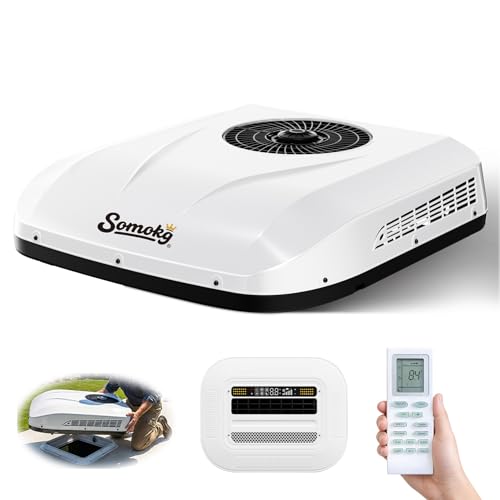
The Somokg unit delivers 11,000 BTU of cooling with a high-frequency compressor for fast space relief. It is designed for off-grid use, with an integrated soft start that reduces startup surge by about 70%, allowing operation on battery, solar, or generator power. It includes 360° vents for even airflow and runs quietly at around 35dB, making it well-suited for quiet camping or late-night rest. Best for off-grid campers who need quick cooling with gentle air distribution. A potential limitation is the dependence on a robust power source to maintain Eco Mode cooling for extended periods.
VEVOR Truck Air Conditioner — 10,000 BTU, 12V
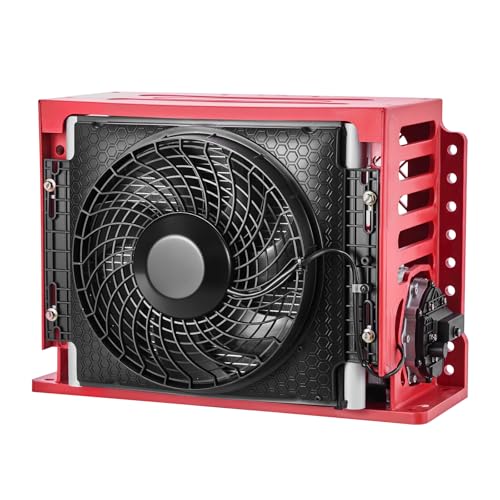
VEVOR’s 12V unit outputs 10,000 BTU with a strong 400 m³/h airflow, designed for fast cooling of sun-heated cabs. It employs automotive-grade inverter technology for better efficiency, and the smart variable-speed compressor reduces power use by adjusting to cooling demand. It can run for 6–8 hours on a 12V battery in typical conditions. Best for truck cabins, semi-trucks, and construction vehicles where steady cooling and energy efficiency matter. Caution: Noise can reach around 65 dB, which may be noticeable in small cab spaces.
Sokaiso 12V Universal Electric RV A/C — 10,000 BTU

This Sokaiso model is a 12V, 10,000 BTU split-style A/C designed for RVs, vans, and larger trailers. It uses a DC-powered scroll compressor with energy-conscious operation and is compatible with a wide range of vehicle types, including trucks and agricultural machinery. Best for owners seeking broad vehicle compatibility with a battery-powered option. Limitation: Installation style is a split system, which may require more DIY effort and space planning for mounting and ducting.
JAYGOVAN 12V Air Conditioner — 11,000 BTU Split Type

This JAYGOVAN model delivers 11,000 BTU through a split-type system with a high-quality aluminum condenser and rapid cooling performance. It emphasizes a fast cooling response with 8828.68–15891.6 ft³/h airflow and a robust motor for quick temperature drop. It includes low voltage protection (11V) to support safe operation when the battery is low. Best for large or busy spaces where fast, powerful cooling is needed. Choose this if you value rapid response and durable components; caution: heavy duty setup may require solid mounting space and electrical planning.
Aspligo 12V RV Rooftop A/C — 8,000 BTU

The Aspligo rooftop unit offers 8,000 BTU with a slim 7-inch profile, designed for rooftop mounting on campers, vans, and small motorhomes. It provides quick cooling (within 3–5 minutes) and drops interior temps significantly within minutes. Best for compact spaces where roof clearance is a concern and installation demands a low-profile unit. Limitation: Cooling capacity is lower than some larger 12V units, so it may be less effective in very large spaces or extreme heat conditions.
Buying Guide
What should you consider when choosing a 12/24 volt air conditioner?
- Cooling capacity (BTU): Match to your space size and climate. Larger vehicles or hotter climates benefit from 10,000–11,000 BTU units, while smaller vans may be fine with 8,000 BTU.
- Power source compatibility: Confirm battery capacity, solar availability, or generator support. Higher BTU units typically demand more current; plan for 60–70A or more if you run at high cooling levels for extended periods.
- Installation type: Rooftop vs. split systems. Rooftop units save interior space but require roof mounting; split systems offer flexible placement but need ducting and more wiring.
- Noise levels: If quiet operation is essential, prioritize models advertised around 35–65 dB, noting that interior acoustics can vary by space.
- Durability and components: Look for corrosion-resistant materials, robust condensers, and safe low-voltage protections to guard against power surges and long-term use on batteries.
- Ventilation and airflow: Units with adjustable 360° vents or wide air throw provide more even cooling across the cabin.
Which type is best for you?
- Off-grid camping and quiet nights: Choose models with ultra-quiet operation and soft-start features to conserve battery power.
- Truck cabs and construction vehicles: Prioritize higher BTU and robust cooling with inverter efficiency for long shifts.
- RVs and caravans with solar: Look for energy-efficient units and compatibility with 12V solar setups, plus practical mounting options.
- Compact vans and rooftop space limits: A low-profile rooftop unit is favorable if roof height is restricted.
Maintenance and safety tips
- Regularly inspect connections and seals to prevent energy loss and moisture intrusion.
- Keep vents clear of obstructions and clean filters as needed to maintain airflow efficiency.
- Ensure battery and inverter capacity align with unit requirements to avoid deep discharge or overheating.
Frequently Asked Questions
- What is the typical power draw for a 12V air conditioner? Answer: Most 12V units draw between 60–70A under full cooling load, depending on BTU and compressor type.
- Can these units operate while the vehicle is not running? Answer: Yes, many are designed to run off batteries or solar with Eco or soft-start modes, but battery capacity and solar input limit duration.
- Are rooftop units better than split systems? Answer: Rooftop units save interior space and are easier to install on vans and RVs, while split systems offer flexible placement and potentially easier ducting in larger vehicles.
- Do these systems require professional installation? Answer: Some installations can be DIY, especially rooftop units with standard mounting patterns, but split systems or complex ducting may require professional assistance.
- What maintenance is recommended? Answer: Regular filter cleaning, checking seals and condensate drainage, and inspecting wiring connections help maintain efficiency and safety.
- Which unit is best for hot climates and larger spaces? Answer: Units advertising 11,000 BTU or higher, with efficient variable-speed compressors and wide airflow, are typically better for hotter climates and larger interiors.