Best 100Ah Lithium Leisure Battery Guide for RVs, Marine and Off-Grid
Looking for a reliable 100Ah lithium leisure battery to power your RV, boat, off-grid cabin, or solar setup? This guide highlights five strong options, each with a capable BMS, long cycle life, and lightweight design. The top picks are best for weekend campers, full-time off-grid users, and travelers who need low-maintenance, safe power storage. Each product is evaluated on size, weight, cycling, and protection features to help you choose the right match for your needs.
| Product | Best For | |
|---|---|---|
| VEMDIA 12V 100Ah LiFePO4 | All-around RV, Marine, and Off-Grid | Strong 100A BMS, low-temp cut-off, light weight |
| BUKNUWO 12.8V 100Ah LiFePO4 | Bluetooth-enabled real-time monitoring | Bluetooth app, high cycle life, compact |
| VEMDIA 12V 100Ah (+ 8000+ cycles) | Compact Group 31 replacement | Drop-in fit, reliable power, 10-year range |
| ECO-WORTHY 12V 100Ah | Smart app and SOC display | Bluetooth control, SOC LED panel |
| YEAGULCH 2 Pack 100Ah | Expandable systems and 4S4P setups | Expandable, multiple protection features |
Buyer note: check your device’s Group size and space to ensure a proper drop-in fit. Look for a battery with a robust BMS, low-temp protection, and a long cycle life to minimize total cost of ownership. Consider whether you want built-in Bluetooth or a simple, low-maintenance unit, and if you plan to scale your system with parallel or series connections.
VEMDIA 12V 100Ah LiFePO4 Battery

This 12V 100Ah LiFePO4 unit features a 100A Smart BMS with full protection against overcharge, over-discharge, over-current, and short circuits. It includes automatic low-temperature cut-off to prevent charging below 32°F (0°C). The 70% lighter weight than lead-acid enhances portability, and its Group 31 drop-in dimensions simplify installation. Best for: RV house banks, marine trolling motors, or off-grid storage where safety and weight matter. Limitation: ensure your charging setup supports LiFePO4 chemistry and the temperature range for charging.
BUKNUWO 12.8V 100Ah LiFePO4 with Bluetooth
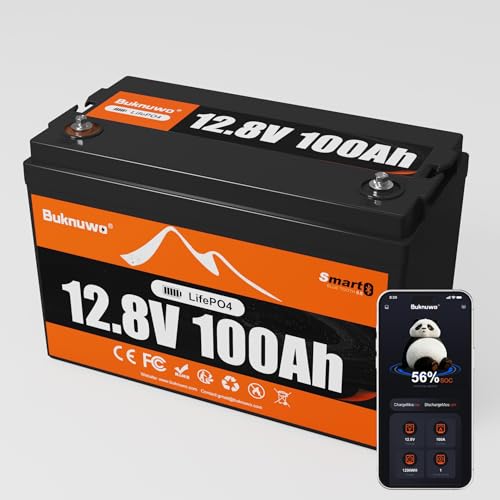
This 12.8V 100Ah battery emphasizes real-time monitoring via Bluetooth 5.0 for both iOS and Android, accessible within about 10 meters. It supports up to 15,000 cycles and includes a 100A BMS with Grade A cells. Best for: users who want remote status checks and lifecycle reliability. Better for: portable setups where app-connected monitoring adds convenience. Caution: Bluetooth app features may vary by device and app version.
VEMDIA 12V 100Ah With IP65 Rating
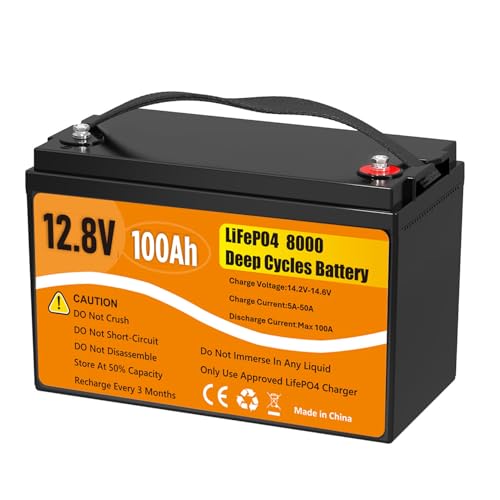
This option mirrors the first VEMDIA pick with a focus on a practical Group 31 fit and strong 100A BMS. It emphasizes long life with up to 15,000 deep cycles at 60% DOD and a 10-year service life. Best for: RVs and boats needing a compact, rugged energy source. Limitation: ensure the charging environment handles lower temperatures to prevent cold charging issues.
SUPER EMPOWER 12V 100Ah LiFePO4 Battery

Designed for drop-in replacement of lead-acid, this battery aims for high cycle life, with a claimed 5,000 cycles at 100% DOD and up to 15,000 cycles at 60% DOD. It includes a built-in BMS for overcharge, overdischarge, and short-circuit protection. Best for: RVs and marine applications seeking a straightforward swap from lead-acid. Caution: verify compatibility with your existing 12V charging setup and ensure proper ventilation in enclosed spaces.
VEMDIA 12V 100Ah LiFePO4 Battery, Group 31

This unit emphasizes advanced Smart BMS with all-weather safety and a low-temp cut-off to protect charging at subfreezing temperatures. It mirrors the ultra-lightweight, drop-in Group 31 fit described earlier. Best for: any environment needing safe, maintenance-free power. Limitation: confirm your climate and charging equipment support low-temperature charging modes.
Comparison Snapshot
Key considerations when choosing a 100Ah LiFePO4 battery:
- Cycle life expectations: 8,000–15,000 cycles depending on depth of discharge.
- Protection: BMS capabilities for overcharge, over-discharge, overcurrent, short circuits, and temperature.
- Weight and fit: Group 31 vs Group 24 sizes, and overall dimensions for drop-in replacements.
- Connectivity: Bluetooth and app monitoring vs. basic onboard indicators.
- Temperature handling: low-temperature cut-off and operating temperature range.
Buying Guide
What to consider before buying a 100Ah LiFePO4 battery
Evaluate your power needs, available space, and the weather you’ll experience. LiFePO4 chemistry is safer and longer-lasting than lead-acid, but you should consider BMS protection, possible low-temperature charging restrictions, and whether you prefer Bluetooth monitoring for remote status checks.
Which features matter most by application
- RVs and campers: prioritize lightweight, compact size and a strong BMS for long trips.
- Marine use: look for water- and heat-resistant builds and stable voltage under load.
- Off-grid solar storage: value high cycle life, deep discharge tolerance, and scalable capacity.
Size, weight, and fit guidance
Group 31 is a common fit for many batteries, but always verify mounting dimensions and terminal configurations. Lighter batteries improve handling and installation, especially for portable setups like trolling motors or portable power stations.
Monitoring and maintenance
Bluetooth-enabled options offer real-time status and historical data, reducing guesswork. Even without Bluetooth, LiFePO4 cells require minimal maintenance compared to lead-acid, with no acid refills or venting concerns in typical use.
FAQ
- Q: Do these batteries support deep cycling? A: Yes, most listed models offer thousands of cycles at varying depths of discharge.
- Q: Can I use these in cold weather? A: Many include low-temperature protection, but charging below 32°F (0°C) is often restricted.
- Q: Are Bluetooth features essential? A: They help with real-time monitoring; if you prefer simple indicators, choose a model without Bluetooth.
- Q: Can I connect multiple 100Ah LiFePO4 batteries in series or parallel? A: Some models support series/parallel expansion; check the manufacturer’s guidance for safe configurations.
- Q: Do these batteries require special charging equipment? A: A LiFePO4 charger is recommended; some can be charged with solar controllers or alternators designed for LiFePO4.
- Q: Are these suitable for engine starting? A: They are designed for auxiliary and house power, not starting engines.