Best Solar System for Camper Power: Top RV Solar Kits and Battery Solutions
This guide highlights five reliable solar solutions tailored for campers, RVs, and off-grid setups. Each pick balances panel efficiency, easy integration, and durable construction to keep essentials running during trips. Whether you’re charging small electronics or running a fridge off-grid, these kits and components offer dependable solar performance in a compact, travel-ready package.
| Product | Brand | Type | Key Benefit |
|---|---|---|---|
| ECO-WORTHY 200W Panel Kit | ECO-WORTHY | Solar Panel Kit with PWM Controller | High efficiency monocrystalline panel and robust frame |
| Renogy Adventurer 200W Kit | Renogy | Solar Panel Kit with LCD PWM Controller | Compact footprint with durable mounting and protection |
| Callsun 400W 2-Pack N-Type Panels | Callsun | Two 200W Panels (N-Type, bifacial option) | Higher efficiency and shaded-area resilience |
| ECO-WORTHY 3584Wh LiFePO4 Battery | ECO-WORTHY | LiFePO4 RV Battery with Bluetooth | Real-time monitoring and cold-weather protection |
| Renogy 200W Starter Kit | Renogy | Two 100W Panels with PWM Controller | Solid performance and versatile battery support |
ECO-WORTHY 200W Panel Kit With PWM Controller

The ECO-WORTHY kit includes a high-efficiency monocrystalline solar panel and a 30A PWM charge controller designed for RVs, campers, and other off-grid uses. It delivers up to 800Wh per day under ideal conditions and is built with a corrosion-resistant aluminum frame rated to withstand strong wind and snow loads. The IP65-rated junction box provides weather protection, making this kit a durable choice for outdoor adventures. Its wide application makes it suitable for powering lights, small appliances, and charging batteries during extended trips.
Renogy Adventurer 200W Kit With LCD PWM Controller
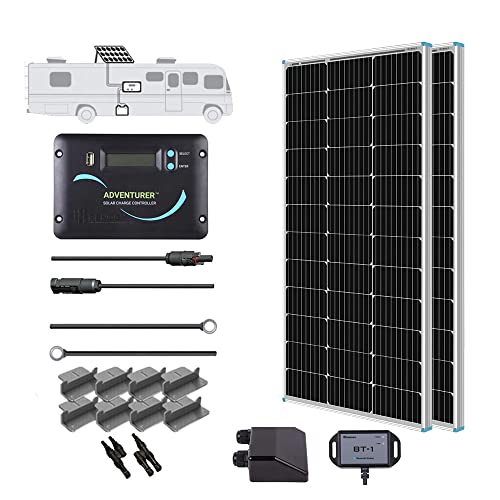
Renogy’s Adventurer 200W kit is designed for RVs, boats, and campers needing a compact yet capable solar setup. It features 22% cell efficiency and a corrosion-resistant aluminum frame built to endure outdoor conditions. The included Adventurer-Li PWM controller provides overcharge, discharge, and short-circuit protection with a clean flush-mount option for RV walls. This kit suits smaller footprints where space is at a premium but reliable daily energy is still required for lighting, charging devices, and small appliances.
Callsun N-Type 200W Solar Panels (2-Pack)

Callsun’s 200W panels use advanced N-type cells and 16BB busbars, delivering up to 25% efficiency with a robust design to resist hot spots and cracking. The bifacial design option captures light from both sides, increasing total energy output by up to 30% in favorable conditions. TwinCell anti-shade technology enhances resilience when one section is shaded. These features make Callsun panels a strong choice for larger RV setups or where driving shade is unavoidable.
ECO-WORTHY 3584Wh LiFePO4 RV Battery

This 3584Wh LiFePO4 battery features Bluetooth real-time monitoring and a built-in 200A BMS with low-temperature protection. It supports app-based status checks and alerts, helping maintain optimal battery health in varied climates. The battery’s robust metal frame enhances durability, and the low-temperature cutoff protects cells in freezing conditions. It is ideal for campers seeking a longer-lasting energy storage option with flexible monitoring and safety protections for off-grid systems.
Renogy 200W Starter Kit

The Renogy starter kit pairs two 100W panels with a 30A PWM controller, offering scalable options for RVs and campers. With a typical daily output around 1000Wh under good sunlight, the kit benefits from a 22% efficiency rating and heat-dissipating back sheet design. It supports various battery types, enabling a flexible upgrade path as energy needs grow. Its modular approach makes it a practical entry point for travelers beginning to build an off-grid solar system.
Buying Guide: Key Purchase Considerations
- Power needs and daily consumption: Assess your crucial loads (refrigeration, lighting, charging devices) and estimate daily amp-hours. Pick a kit with a comfortable margin above those needs to account for weather and seasonal sun variation.
- Panel efficiency and footprint: Higher efficiency panels deliver more power in less space, which matters for compact campers. If space is limited, prioritize high-efficiency monocrystalline cells and consider bifacial options where shading is common.
- Charge controller type: PWM controllers are budget-friendly and simple, good for smaller systems. MPPT controllers maximize power, especially in larger or variable conditions, at a higher upfront cost. Match controller type to panel count and battery size.
- Battery chemistry and longevity: LiFePO4 batteries offer longer lifespans, better safety, and stable performance in fluctuating temperatures. Ensure a battery management system (BMS) protects against overcharge/overdischarge and supports low-temperature protection if you travel in cold seasons.
- Durability and weather rating: Look for corrosion-resistant frames, IP ratings for junction boxes, and robust mounting hardware to withstand road vibrations and outdoor exposure.
- System expansion: Consider modular kits that allow you to add panels or upgrade to a larger battery bank later. This helps you scale as power needs grow or travel patterns change.
- Monitoring and ease of use: Bluetooth or app-based monitoring helps you track voltage, current, and capacity. Clear alerts enable proactive maintenance to prevent outages during trips.
- Warranty and support: A solid warranty and accessible customer support reduce risk, especially for off-grid use where replacements may be delayed.
These considerations help compare kits from ECO-WORTHY, Renogy, and Callsun. For many campers, starting with a reliable 200W to 400W panel setup paired with a LiFePO4 battery provides sufficient daily power for most off-grid needs, with straightforward paths to expand as camping habits evolve.