Best Car Battery to Outlet Converter: Top 5 Inverters for on-the-Go Power
If you need reliable power from your 12V battery to run devices in a car, RV, or boat, these car power inverters convert DC to AC or provide accessible 12V outlets. This guide highlights five dependable options, each best suited for different scenarios—whether you’re camping, traveling with family, or setting up temporary work stations. The list focuses on models that balance portability, output, and practical features for common automotive uses.
Buyer snapshot table:
- Energeaster 24 Inch 12V Battery Clamp to Cigarette Lighter Socket Adapter — Best for powering air compressors and 12V devices from a battery with a robust 6 A limit.
- FOVAL 150W Car Power Inverter — Best for compact, quick-charging needs with dual USB ports and a lightweight design.
- Pro Chaser 400W Power Inverters (two entries) — Best for mid-range power needs with multiple USB options and portable form.
- PiSFAU 200W Car Power Inverter — Best for compact trips with several USB ports and two standard AC outlets.
- Ampeak 750W Power Inverter — Best for higher power requirements with dual USB and two AC outlets, plus protections.
Energeaster 24 Inch 12V Battery Clamp To Cigarette Lighter Socket Adapter

Best for powering automotive accessories directly from a 12V battery using alligator clips to an existing cigarette lighter socket. This adapter supports up to 6 A, making it suitable for air compressors, small inverters, and other 12V devices. It’s ideal for automotive, marine, camping, and outdoor use where a strong, direct connection is needed. A key limitation is the 6 A ceiling, which may restrict heavy-duty tools or larger inverters.
FOVAL 150W Car Power Inverter
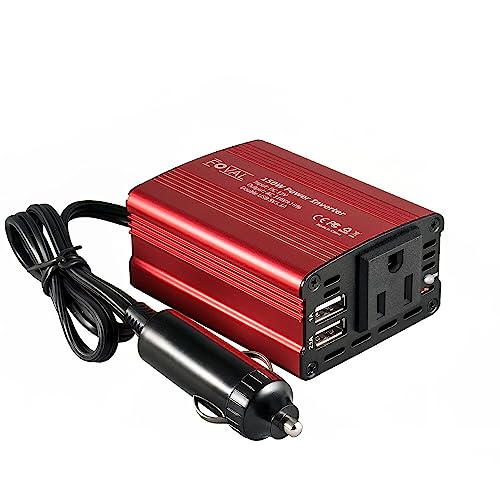
Best for travelers needing portable, lightweight 12V to 110V AC power with quick charging. This unit provides 150 Watts continuous power plus a 3.1A USB charging option, suitable for laptops, tablets, or small electronics. Its compact size and aluminum shell make it convenient for road trips and occasional use. It’s less suitable for high-wattage appliances like full-size laptops or CPAP machines demanding more than 150W.
Pro Chaser 400W Power Inverters for Vehicles

Best for mid-range power needs with dual 110V AC outlets and USB ports. This inverter delivers 400W continuous power with up to 800W peak and includes a 30-inch cord for flexible placement. It supports devices like laptops, DVD players, breast pumps, and tablets. A limitation is that higher-wattage loads approach its continuous rating, so avoid running multiple high-power appliances simultaneously.
PiSFAU 200W Car Power Inverter

Best for compact trips needing multiple charging options. This 200W inverter includes two AC outlets and several USB ports, with a design that emphasizes portability and efficiency. It’s suitable for light-duty tasks such as charging laptops, phones, and tablets. Choose this if you prioritize space-saving design and a simple, quiet operation; avoid it for power-hungry devices or simultaneous high-wattage use.
Ampeak 750W Power Inverter

Best for higher power needs with strong protections. This inverter provides 750W continuous power and 1500W peak, two AC outlets, and two USB ports, plus detachable battery cables and dual fuses. It suits RVs, trucks, and work setups requiring reliable 12V to 110V conversion with added safety features. Limitations include its larger size and higher wattage, which may reduce portability in tight vehicle spaces.
Buying Guide
What power output do you need? Consider the total wattage of devices you plan to run. If you’ll power laptops or CPAP machines, aim for at least 300–500W continuous to avoid overloading smaller inverters. For light charging and small electronics, 150–200W units are usually enough.
What type of power solution fits your setup? Battery clamps with a cigarette lighter socket provide quick access from a main battery, while inverters with multiple outlets and USB ports offer more versatility for varied devices. If you need high peak power for brief loads, select models advertising higher peak ratings and proper fusing.
Portability versus performance. Compact models are easier to store in a glove box or backpack, but they often have lower continuous power. Larger inverters deliver more sustained power but require more space and may need secure mounting in vehicles or RVs.
Safety features. Look for overload protection, thermal shutdown, fuse protection, and stable housing materials. Dual fuses and external battery connection options improve reliability for longer trips or frequent use.
User compatibility. Ensure your devices’ wattage aligns with the inverter’s continuous output. For devices with surge loads such as hair dryers or coffee makers, verify the inverter’s peak rating and whether it supports brief surges without tripping.
Installation considerations. Some inverters are designed for cigarette lighter sockets; others include bare-battery clamps for direct connection. If you are not confident with electrical connections, choose units that rely on standard 12V car sockets and include clear safety instructions.
FAQ
- What is a car power inverter best for? It converts 12V DC from a vehicle battery to AC or provides extra 12V outlets, enabling on-the-road charging and operation of portable devices.
- Can I use an inverter with a 6 A limit? Yes, for lighter loads like chargers and small fans. Heavier devices may require higher current capacity.
- Is a larger inverter always better? Not necessarily. Higher power is useful for laptops and appliances but reduces portability and increases heat. Choose based on your typical load.
- Do inverters require safety considerations? Yes. Avoid running high-wattage devices for long periods without proper ventilation, and follow the manufacturer’s installation guidance to prevent overheating or battery strain.
- Should I buy an inverter with USB-C PD? If you frequently charge laptops or modern devices, PD ports offer faster, versatile charging.
- What about using a car battery to power devices overnight? Check the inverter’s continuous rating and ensure you have a safe, vented setup to avoid draining the battery too quickly.