Best Electric Motor Speed Regulator Options for 110v-120v Applications
If you need precise speed control for AC or DC motors, a motor speed regulator is your best tool. These devices adjust voltage or PWM signals to manage speed, protect equipment, and reduce wear. This guide highlights five dependable choices suited for hobby projects, workshop use, and small machinery. The top picks cover both AC and DC motors, with features like overload protection, LED displays, and forward/reverse control. Use the table below to compare key specs at a glance.
| Product | Type | Voltage Range | Max Current | Best For |
|---|---|---|---|---|
| IGEYAPA AC Motor Speed Controller | AC | 110-120V | 15A | Brushed motors, routers, fans |
| Acogedor DC12V-60V Controller | DC | 12-60V | 20A | DC brush motors, compact spaces |
| EPLZON DC 12-60V Controller | DC | 12-60V | 20A | DC brush motors, PWM control |
| ReeMoo 120V AC Controller | AC | 110-120V | 15A | Routers, drills, fans |
| Azucyzi AC Motor Speed Controller | AC | 110-120V | 15A | Fans, tools, burners |
IGEYAPA 100V-120V AC Motor Speed Controller

This AC motor speed controller accepts 110-120V input and offers a maximum 15A capacity with protective features such as surge, peak, and RC absorption. It includes an LED display for real-time voltage readouts and a precise voltage knob with low, medium, and high settings. A 6-foot cable and American-style plugs add convenience for workshop setups. Best for: hobbyists and small- to medium-sized brushed motors used in routers, fans, and light machinery. Caution: the device is designed for resistive or lightly inductive loads; heavy inductive loads may require additional protection.
Why chosen: It combines clear LED indication with robust protections and a straightforward interface, making it suitable for users who want reliable speed control without complex configuration.
Acogedor DC12V-60V/20A Motor Speed Controller
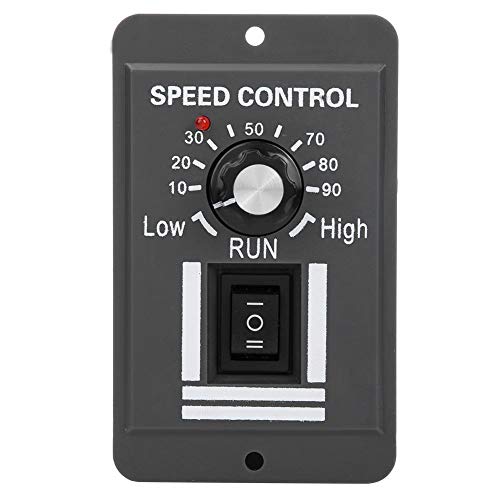
This DC motor speed controller covers 12-60V and up to 20A, with forward/reverse options. It emphasizes compact design and easy installation in tight spaces. Best for: small DC brush motors in robotics or CNC setups where space is limited. Caution: ensure the motor’s stall current stays within the controller’s sustained rating to avoid nuisance trips.
Why chosen: The combination of forward/reverse control and compact form factor makes this a versatile choice for compact projects needing directional control plus straightforward wiring.
EPLZON DC 12-60V Motor Speed Controller

With PWM control across 0%-100% and 12-60V input, this 20A unit supports forward/reverse and stop, plus soft-start protection to reduce inrush current. It’s a compact option designed for tight installations. Best for: DC brush motors requiring smoother ramps and longer motor life. Caution: continuous duty and high inrush may still demand heat sinking in hot environments.
Why chosen: The PWM range and soft-start feature help protect both motor windings and wiring, making this a practical option for projects where longevity matters.
ReeMoo AC Motor Speed Regulator, 120V

Designed for 110-120V AC systems with a peak of 15A and continuous rating near 8A, it handles resistive loads up to 1800W and inductive loads up to 1500W. It features a clear LED voltage readout and a resettable overload protection circuit. Best for: routers, drills, and duct fans where predictable speed is essential. Caution: not suitable for brushless or non-brushed motor configurations; verify load type before use.
Why chosen: The resettable overload and LED display provide quick, actionable feedback during operation, reducing downtime and wiring errors in busy workshops.
Azucyzi 120V AC Motor Speed Controller
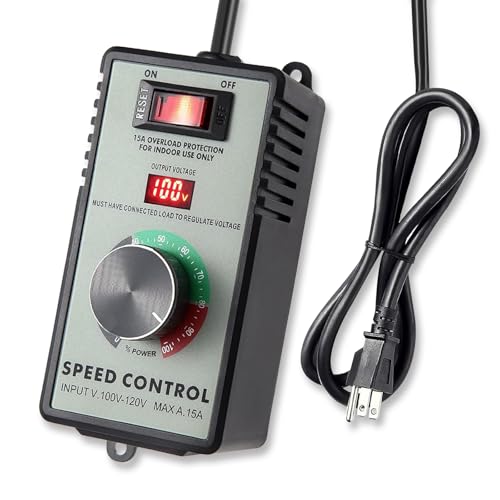
Heavy-duty 110-120V AC controller with 15A max, LED voltage display, and overload protection. It supports both resistive and inductive loads and is marketed for use in fans and tools. Best for: general-purpose 120V motor speed control in woodworking, metalworking, and workshop fans. Caution: confirm the load type and ensure proper wiring to avoid tripping the overload protection.
Why chosen: It offers a balanced feature set—LED readout, reliable protection, and broad compatibility—making it a dependable all-rounder for common workshop motors.
Buying Guide: How To Choose The Right Motor Speed Regulator
What type of motor do you have?
AC regulators are best for brushed AC motors and lighter loads, while DC regulators suit DC brushed motors, especially when PWM control and soft-start features matter. Confirm whether your motor is AC or DC and whether it is brushed or brushless.
What power rating do you need?
Match the regulator’s max current and wattage to the motor’s running current and load. A regulator rated for 15A can handle many hobby machines, but high-inrush devices may require a higher-capacity model or additional protection.
Do you need direction control?
Some DC controllers offer forward/reverse functionality. If your project requires bidirectional motion, choose a controller explicitly listing forward/reverse support.
Is display and fine control important?
LED voltage displays and precise knobs help you set and reproduce speeds. This is especially useful in routers, lathes, and drilling fixtures where speed consistency is critical.
What about safety features?
Look for overload protection, surge protection, short-circuit protection, and flame-retardant housings. Resettable breakers are easier to use than fuse replacements for頻 frequent adjustments.
Installation constraints
Consider enclosure style, footprint, and mounting options. Some units offer belt clips or compact footprints ideal for tight spaces, while larger units may provide better cooling but need more room.
Application examples
- Woodworking tools (routers, drills, sanders): prefer units with clear speed readouts and robust overload protection.
- Robotics and lab benches: prioritize forward/reverse control and smooth soft-start to protect motors during startup.
- Industrial fans and heaters: opt for higher wattage ratings and heat-dissipating housings.
FAQ
Q: Can I use a DC motor speed regulator on a DC brush motor that’s only intermittently used?
A: Yes, but ensure the current draw stays within the regulator’s continuous rating and provide adequate cooling if duty cycles are high.
Q: Are LED displays essential on a motor speed controller?
A: Not essential, but they help monitor output voltage and ensure repeatable settings in busy workshops.
Q: What happens if I exceed the regulator’s current rating?
A: The regulator may trip its overload protection, or in some cases, components could overheat. Use a device with a comfortable safety margin for your load.
Q: Is a PWM-based regulator better than a simple rheostat?
A: For motors, PWM offers smoother speed control, less heat buildup, and longer motor life compared to a simple rheostat that wastes energy as heat.
Q: Can I use any regulator with any motor?
A: No. Check voltage and current compatibility, load type (resistive vs inductive), and whether the motor requires braking or direction control features.