Best Explosion Proof Boxes and Fittings for Hazardous Locations
Answering the needs of professionals working in hazardous areas, these explosion-proof boxes and fittings are designed to prevent ignition while protecting wiring. This guide highlights five top options and explains who each is best for, based on construction, hub configurations, and enclosure features.
Overview of selected products:
| Product | Best For | Key Feature | |
|---|---|---|---|
| Crouse-Hinds GUP215 Conduit Junction Box | General industrial hazardous locations | Varied hubs; dust-ignition-proof and rain-tight | 6 hubs + 3 plugs or 10 hubs + 7 plugs |
| Killark GRSS-3 Iron Explosion Proof Junction Box | Low-cost safety solutions | North American and IEC standard readiness | 7x 1″ hubs |
| Appleton GRT50 JLT 1/2″ Explosion Proof | Compact, lighter-duty applications | HalLoc conduit outlet box, compact dimensions | 1/2″ hub size |
Notes: All products are designed for hazardous locations; verify exact certifications (e.g., UL, IEC) for your specific site requirements. The list prioritizes versatility, hub configurations, and overall reliability for industrial environments.
Crouse-Hinds GUP215 Conduit Junction Box

The Crouse-Hinds GUP215 is an explosion-proof, dust-ignition-proof, and rain-tight junction box. It comes supplied with multiple hub configurations (either 6 hubs with 3 plugs or 10 hubs with 7 plugs) and includes three 3/4-inch pipe plugs. This box is best for industrial sites needing flexible hub patterns and strong weather resistance. Choose this if you require robust environmental protection and a wide hub range for field wiring. A potential limitation is that larger hub configurations may require more space on the panel or enclosure system.
Killark GRSS-3 Iron Explosion Proof Junction Box

The Killark GRSS-3 offers a combination of safety and reliability with a proven track record. It supports multiple standards, serving both North American and IEC environments. Best for budget-conscious projects that still demand compliance with hazardous-location requirements. It is especially suitable where standardization and low-cost solutions are valued. A caution: ensure hub sizing aligns with your conduit needs, as the model is noted for 7x 1″ hubs, which may limit flexibility in some installations.
Appleton GRT50 JLT 1/2″ Explosion Proof
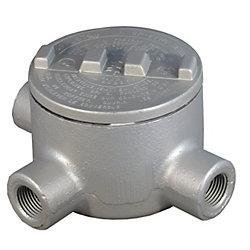
The Appleton GRT50 JLT is a compact explosion-proof conduit outlet box optimized for 1/2-inch hubs. It weighs about 2.17 pounds and has compact dimensions (8 x 8 x 6 inches). This model is best for small-to-medium sized installations where space is at a premium and light weight matters. It’s a suitable choice for upgrades or retrofits where a smaller footprint is required. Limitation: the smaller hub size may require additional boxes for larger wiring schemes.
Xapolu Explosion Proof Junction Box
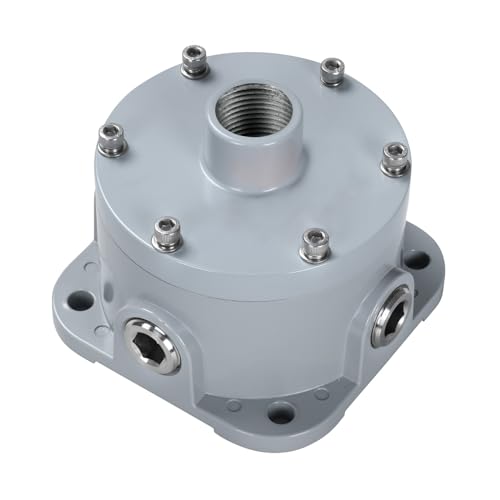
The Xapolu junction box uses a die-casting aluminum housing with stainless steel sealing stoppers and provides a robust weatherproof solution. It supports up to five ¾” NPT cable glands and includes five flameproof sealing stoppers as default. Best for projects requiring a rugged enclosure with multiple entry options in C1D1/2 and C2D1 environments. Choose this if you need a larger, modular interior and strong sealing capabilities. Caution: ensure the gland count matches your wiring plan, as field modifications may be necessary.
CROUSE HINDS GUAL14 2HUB Explosion Proof Conduit Outlet Box

The GUAL14 provides 1/2-inch explosion-proof capability with two hubs. It’s best for simple conduit installations requiring two hubs and a compact enclosure. This model is suitable for smaller control circuits or light-duty applications in hazardous locations. Beware that limited hub availability may require additional boxes to accommodate larger wire runs or future expansion.
Sokply Explosion Proof Junction Box

The Sokply model features 5 openings with 3/4-inch hubs and is UL844 certified for hazardous locations, including Class 1, Division 1 and 2, Class II, and Class III. It offers good corrosion resistance due to its copper-aluminum alloy construction and is ideal for multi-path wiring in challenging environments. A potential limitation is the fixed hub count, which may require careful planning for larger wiring requirements.
Buying Guide: Key Considerations For Explosion Proof Boxes And Fittings
What environment will the enclosure face?
Ambient conditions such as moisture, dust, temperature, and outdoor exposure dictate enclosure rating. Look for IP ratings or NEMA/IEC equivalents to ensure weather and dust resistance.
What hub configuration do you need?
Assess the number and size of conduits your installation requires. Some enclosures offer flexible hub counts (e.g., 6/3, 7×1″, or 5 openings), while others are fixed. Plan for current needs and potential future expansion.
Which standards matter for your project?
Hazardous locations may require UL, CSA, or IEC certifications. Confirm that the enclosure complies with the specific classification of your site (Class I, II, III; Division 1 or 2; Zone equivalents).
Materials and sealing performance
Die-casting aluminum, copper-aluminum alloys, or stainless steel each offer different corrosion resistance and mechanical strength. Sealing stoppers and gland compatibility influence long-term integrity in harsh environments.
Size, weight, and installation constraints
Compact boxes save space but may limit wiring capacity. Heavier, robust enclosures suit rugged sites but require more handling during installation. Consider mounting options and accessibility for maintenance.
Maintenance and future expansion
Choose enclosures that allow easy access for wiring changes and future updates. Modularity in hub configurations can simplify upgrades without replacing the entire box.
FAQ
- What makes an explosion-proof box different from a regular junction box?
Explosion-proof boxes are designed to contain any internal ignition sources and prevent them from igniting surrounding hazardous atmospheres, meeting strict safety standards.
- How do I choose the right hub size and count?
Match hub sizes to the conduit sizes you’ll run and plan for future expansion. More hubs offer flexibility but may increase box size.
- Are these boxes suitable for outdoor use?
Many models are rain-tight or weather-resistant, but verify enclosure ratings and gasket integrity for outdoor exposure.
- Can I mix standards (UL and IEC) in a single installation?
Doing so requires careful coordination with your project specifications and local codes. In many cases, using enclosures that support both standards is preferred.
- What maintenance steps keep explosion-proof boxes reliable?
Regularly inspect seals, gaskets, and knockouts; ensure fasteners remain tight; verify that cable glands remain properly sealed and free of damage.
- Do these boxes require professional installation?
Yes. Hazardous-location installations involve compliance with specific codes and may require qualified electricians to ensure proper grounding and wiring.