Best Electrical Usage Monitoring Devices for Home Energy Management
Answering the demand for precise, real-time energy insights, these electrical usage monitoring devices help homeowners optimize power, cut waste, and track solar or grid interactions. This guide highlights five top options across panels, plugs, and open API solutions. Best for different setups: whole-home monitors suit energy-conscious homeowners; smart plugs fit individual devices; and open API options appeal to DIY-smart homes. The list below targets buyers seeking reliable monitoring, easy installation, and actionable data.
| Product | Brand | Best For |
|---|---|---|
| Emporia Vue 3 Home Energy Monitor | EMPORIA | Whole-home monitoring with solar and net metering, UL certified |
| Fusion Energy Smart Plug System | Fusion Energy | Real-time per-device monitoring in a monitored home |
| Refoss Smart Home Energy Monitor | Refoss | Local control with Open API and Home Assistant integration |
| Meross Smart Energy Consumption Monitor | meross | High-accuracy, 2-year warranty, wide circuit compatibility |
| TP-Link Tapo Smart Plug | Tapo | Cost tracking and scheduling for individual outlets |
Emporia Vue 3 Home Energy Monitor
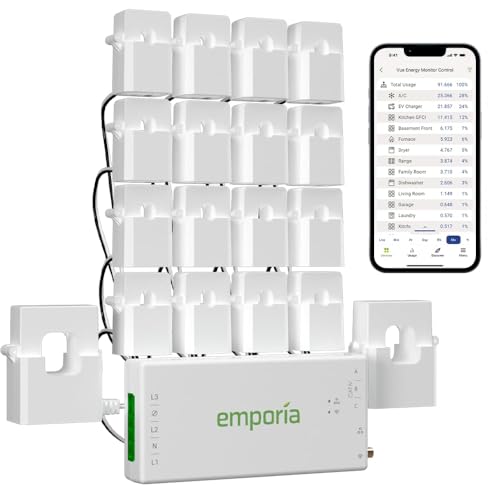
The Emporia Vue 3 is a UL-listed home energy monitor designed for installation in a circuit panel with clamp-on sensors. It supports single-phase, 2-wire, or multi-wire configurations, and can monitor solar production and net metering. Best for homeowners seeking a robust, UL-certified panel solution that provides real-time power data across the entire home. Limitation: 3-phase and certain earthen-neutral configurations may require an additional 200A sensor sold separately.
Who it’s best for: homeowners wanting a single, centralized energy dashboard with solar monitoring and utility-grade safety. Why selected: UL certification and broad compatibility with common residential wiring regimes provide reliable, long-term energy insights for whole-house management.
Caution: For some complex three-phase setups, additional sensors may be needed to achieve full coverage.
2 Pack Upgraded Watt Meter Plugs

This two-pack Watt Meter Plug set provides real-time readings of power (W), energy (kWh), volts, amps, and more, displayed across multiple modes. Best for renters or small households wanting inexpensive, plug-level monitoring without panel access. Selected for its broad parameter set and clear backlit display. Caution: Overload protection is adjustable, but users should configure safety thresholds to avoid misreads or nuisance alarms.
Who it’s best for: individuals or apartments needing quick, device-level energy visibility without panel work. Why selected: flexible parameter outputs and a compact form factor suit quick monitoring and budgeting tasks.
Upgraded Watt Power Meter Plug
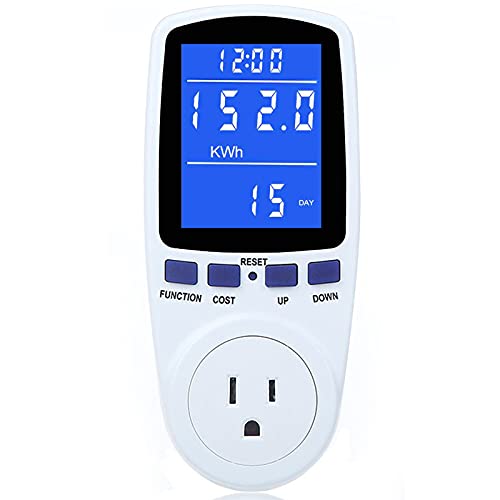
This single-outlet power meter offers 7 display modes, a bright 2.36-inch LCD, and adjustable backlight timing. Best for users who want clear, frequent readings on a single device, with enhanced visibility day or night. Selection reason: readable data with extensive display modes supports quick energy awareness. Caution: Overload protection requires initial setup to avoid misoperation.
Who it’s best for: households needing easy-to-read, on-device energy data for one or two appliances. Why selected: large display and backlight options improve nighttime readability and quick checks.
Fusion Energy Smart Home Monitor

Fusing 16 sensors for 50A per branch, the Fusion Energy monitor provides real-time power tracking for multiple loads, including major appliances. Best for mid-to-large homes or rental properties needing detailed circuit-level monitoring and integration with Home Assistant. Selection rationale: robust sensor array supports precise energy analytics across diverse circuits. Caution: End-user installation may require professional electrical work for some homes.
Who it’s best for: tech-savvy homeowners or small businesses wanting extensive circuit-level visibility and smart-home integration. Why selected: broad sensing capability and compatibility with solar and net metering make it a strong all-around choice.
Meross Smart Energy Consumption Monitor

Meross’ energy monitor tracks power, voltage, current, and power factor with ±2% accuracy and stores years of data. Best for users seeking cloud-free monitoring, extensive data export, and strong warranty support. Selection reason: wide circuit compatibility and offline data storage without mandatory subscription. Caution: Requires 2 main circuits capacity (200A) plus 16 branch circuits, which may be excessive for very small homes.
Who it’s best for: households wanting deep data analysis and local data storage with Home Assistant compatibility. Why selected: robust data retention and offline access support long-term energy management.
Buying Guide
What to consider when choosing electrical usage monitoring devices:
- Scope of monitoring: Do you need whole-home monitoring (panel-level) or per-device monitoring (outlets and plugs)?
- Installation: Are you comfortable installing a device inside a main panel, or do you prefer plug-in modules?
- Data access: Do you want local control only, cloud-based access, or open APIs for custom automations?
- Solar and net metering: Is solar production tracked, and does the system support your metering arrangement?
- Safety and compliance: Look for UL or ETL certifications and documented safety standards.
- Data longevity and export: Consider how long data is stored and whether you can export data for analysis.
- Expandability: Are additional sensors or future upgrades possible as your home energy needs change?
Comparison Snapshot
- Best for whole-home visibility: Emporia Vue 3
- Best for plug-level, quick setup: Meross Monitor or Tapo Plug
- Best for local-only data: Refoss with Open API and Home Assistant compatibility
- Best for detailed circuit-level data: Fusion Energy Monitor with multiple sensors
Frequently Asked Questions
- What is an electrical usage monitoring device?
Answer: A device that measures electrical parameters such as power, energy, voltage, and current to help manage energy consumption. - Do I need a professional to install a panel monitor?
Answer: Panel monitors may require electrical expertise; verify local codes and consider professional installation. - Can these devices track solar production?
Answer: Many models support solar and net metering, but confirm compatibility with your solar setup. - Is data stored locally or in the cloud?
Answer: Some devices offer local data access and APIs; others rely on cloud services. Check the product’s data policy. - Do these monitors require subscriptions?
Answer: Several models operate without subscriptions, offering built-in analytics and local control. - What’s the main difference between plug-in monitors and panel monitors?
Answer: Plug-in monitors measure individual outlets; panel monitors measure the entire electrical system for comprehensive data.