Best Low-Noise Air Compressors for Quiet, Efficient Workflows
Answering the need for quiet, reliable air power, this guide highlights top low-noise air compressors suited for indoor use, small shops, and DIY projects. These models prioritize low decibel operation, oil-free pumps, and portable designs. Ideal buyers include homeowners, hobbyists, auto enthusiasts, and professionals who work in noise-sensitive environments. Below, each product is evaluated for noise level, portability, maintenance, and suitability for common tasks like tire inflation, nail driving, spray painting, and light framing. A quick product table follows to help compare key specs at a glance.
| Product | Noise (dB) | Tank | Best For |
|---|---|---|---|
| California Air Tools 8010 | 60 | 8 gal | Indoor use, home workshops |
| Makita MAC100Q | 58 | 1 gal | Indoor tasks, quiet hobbyists |
| Metabo HPT EC28M | 59 | 1 gal | Portable jobsites, quick tool changes |
| California Air Tools CAT-1P1060S | 56 | 1 gal | Clean air, compact setups |
| FORNAX Ultra Quiet | 65 | 1.3 gal | Nailers, inflators, light carpentry |
California Air Tools 8010: Ultra Quiet, Oil-Free

The California Air Tools 8010 operates at an ultra-quiet 60 dBA, making it a top pick for noise-sensitive environments like home garages or shared workshops. Its 8-gallon steel tank balances capacity with portability, and the oil-free dual-piston pump reduces maintenance needs. The motor runs at a low 1680 RPM, which helps minimize wear and extend life. This model delivers 3.10 CFM at 40 PSI and 2.20 CFM at 90 PSI, supporting a range of tools from brad nailers to small spray guns.
Best for: Homeowners and hobbyists who require steady airflow with minimal disruption and straightforward maintenance. Choose this if you frequently work indoors or during evenings and weekends. Caution: Heavier than ultra-compact units, so plan for space and mobility needs on small jobs.
Makita MAC100Q Quiet Series

The Makita MAC100Q is a compact 1-gallon, oil-free electric air compressor designed for quiet indoor use. With a top noise level of 58 dB, it supports indoor tasks like inflation, light nail driving, and small spray projects. Its low RPM operation contributes to longer motor life and a more durable pump. The roll-cage construction protects against job-site mishaps, and the unit is easy to store when not in use.
Best for: Indoor DIY projects, light carpentry, and tire inflation where a small, quiet unit is preferred. Avoid this if you need longer runtime or higher air volume for continuous tools.
Metabo HPT EC28M: Portable 1-Gallon Quiet Compressor

The Metabo HPT EC28M delivers ultra-quiet performance at 59 dB, enabling a peaceful work environment. It features a universal quick coupler for fast tool changes and an integrated control panel for easy PSI adjustments. Weighing around 25 pounds, it is highly portable for job sites and indoor use. This unit’s compact footprint suits light framing, finish work, and general inflation tasks while maintaining reliable oil-free operation.
Best for: Professionals and DIYers who need quick tool changes at a quiet, portable option. Better for smaller projects than heavy framing tasks; avoid if you require higher CFM for continuous air tools.
California Air Tools CAT-1P1060S: Light & Quiet Portability

The CAT-1P1060S is a 1-gallon, ultra-quiet compressor with a 56 dBA rating. Its oil-free single-piston pump and 0.6 HP motor operate at 1680 RPM for reduced noise and long-term reliability. The unit’s compact size and light weight make it easy to move and store, while delivering steady airflow suitable for light nailers, inflators, and small spray tasks.
Best for: Small workshops or apartment setups needing clean air and quiet operation. Choose this if space is limited and you want a simple, maintenance-free unit. Caution: Lower tank capacity means more frequent cycling for larger tasks.
FORNAX Ultra Quiet 1.3-Gallon, 1HP
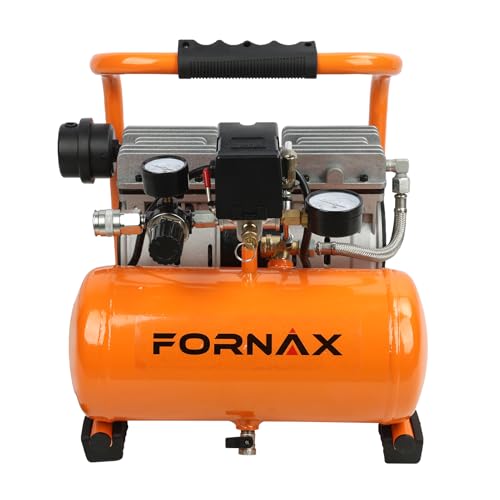
The FORNAX Ultra Quiet Air Compressor combines a 1 HP motor with a 1.3-gallon tank and a max of 125 PSI. Operating at about 65 dB, it is suitable for tire inflations, nail guns, and general garage work while keeping noise to a minimum. The unit’s 1450 RPM low-speed operation helps extend motor life and maintain steady performance under load. It also offers fast tank recovery for repetitive tasks, reducing downtime between uses.
Best for: Auto repair, tire inflation, and light pneumatic tasks in a home shop or garage. Choose this if you need reliable performance with relatively quick fill times. Limitation: The smaller tank means more frequent cycling during higher-demand projects.
Buying Guide
Key purchase considerations for low-noise air compressors:
- Noise level: Aim for 56–60 dBA for indoor use; even modest reductions can improve comfort and compliance with shared spaces.
- Tank size vs. portability: Larger tanks store more air but weigh more and can be less portable. Balance capacity with space and transport needs.
- Oil-free vs. oil-lubed: Oil-free pumps reduce maintenance and oil contamination risk, ideal for indoor use and light tools. Oil-lubed designs may offer longer life in some demanding applications but require more upkeep.
- CFM and PSI: Confirm the required CFM at your target PSI for your tools. Higher PSI and CFM are better for frequent nailers, spray guns, and heavier tasks, but demand more power and size.
- Portability features: Look for wheels, compact frames, and sturdy handles when moving between rooms or job sites.
- Durability and warranty: For DIYers, a reliable warranty and rugged build support long-term use in varying environments.
Frequently Asked Questions
- What is a quiet air compressor good for?
It’s ideal for indoor projects, small garages, and environments where noise must be minimized while powering light nailing, inflation, or spray tasks. - Do oil-free compressors last as long as oil-lubed ones?
Oil-free designs reduce maintenance and oil contamination risk, but some users prefer oil-lubed units for heavy continuous use; select based on tool load and maintenance tolerance. - Is a larger tank always better for quiet models?
A larger tank stores more air, reducing cycling, but adds weight and size. Choose based on your typical run time and space constraints. - Can these compressors run multiple tools at once?
Some models offer sufficient CFM at lower PSI for light tools; for simultaneous operation, verify total CFM requirements of all tools. - What maintenance is required for oil-free pumps?
Generally less maintenance than oil-lubed units, but periodic checks for seals, ventilation, and filter cleanliness are still advised. - Are these units suitable for professional framing?
For frequent heavy-duty framing, look for higher CFM ratings and larger tanks; the listed models are best for light to moderate tasks.