Best 10 Ft Battery Cable Options for Automotive and Solar Setups
Finding the right 10 ft battery cable matters for safe, reliable power delivery in cars, boats, solar systems, and generators. This guide highlights five well-rounded 10-foot cables suitable for common DC applications, with clear guidance on who benefits most from each option. Each choice emphasizes copper quality, durability, and insulation, helping you balance flexibility, resistance, and cost.
| Product | Best For | Key Benefit |
|---|---|---|
| Shirbly 4 Gauge Battery Cable, 10FT Red + 10FT Black | Heavy-duty automotive and outdoor use | Pure OFC copper, wide temperature and solvent resistance |
| Battery Cable – iGreely 8 AWG, 10ft | Inverter installs and dual-battery setups | Tinned copper for corrosion resistance; ready-to-use ring terminals |
| 5 AWG Battery Cables, 10ft | Marine and RV electricals | Two cables with dual lug options; outdoor/marine suitability |
| Shirbly 2 Gauge Battery Cable, 10FT | High-current needs and flexible installations | Thick copper core; versatile 2 AWG option |
| Spartan Power Battery Cable 10 ft, 4 Gauge | Premium US-made reliability | Made in USA, compatible with high-current DC use |
Shirbly 4 Gauge Battery Cable, 10FT Red + 10FT Black

This 4 AWG cable set includes both red and black 10-foot runs, offering a total dual-cable solution for positive and negative connections. It uses pure OFC copper and an EPDM insulation sheath designed to handle tough environments. This option is best for heavy-duty automotive and outdoor installations where high current, long cable runs, and resistance to solvents are important.
Best for: Automotive wiring, solar setups, and marine applications requiring durable copper with broad temperature tolerance. Choose this if you need a robust, flame-resistant insulation and high-voltage capability up to 600V.
Caution: Inspect insulation for any nicks or wear before installation, as outdoor exposure can stress the sheath over time.
Battery Cable – iGreely 8 AWG, 10 ft

This 10-foot, 8 AWG pair features tinned copper and precrimped 3/8″ ring terminals, making it convenient for inverter and solar installations. The tinned copper enhances corrosion resistance and solderability. It is suitable for heavy-duty DC transmission and is designed to withstand common automotive and marine environments.
Best for: Inverter connections and dual-battery configurations where ease of crimping and corrosion protection matter. Better for: users who prioritize ready-to-use terminals and robust copper performance.
Caution: While flexible, the overall stiffness of thicker gauge cables may require careful routing in tight spaces, especially in compact engine bays.
5 AWG Battery Cables, 10 ft
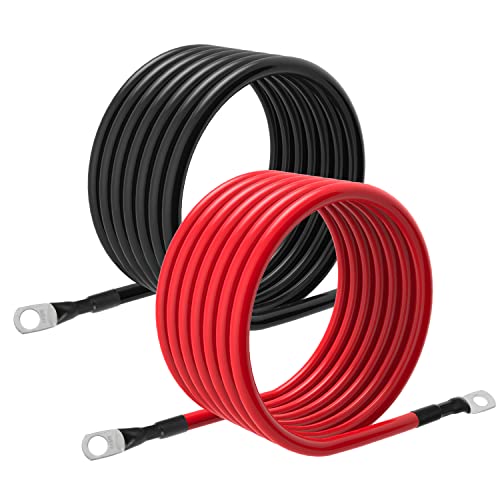
This kit includes two 5 AWG cables, each with 3/8″ and 5/16″ lugs on both ends, ready for automotive, marine, or RV use. The copper lugs are plated for corrosion protection, improving reliability in outdoor settings. The flexible 5 AWG core provides a balance between current capacity and ease of routing.
Best for: RVs, boats, and cars that require a slightly lighter gauge than 4 AWG but still need strong current handling. Choose this if you want two complete leads with multiple lug options to fit common terminals.
Caution: If your system demands extreme high current over very long runs, you might face voltage drop; consider matching with a higher-gauge option.
Shirbly 2 Gauge Battery Cable, 10FT

The 2 AWG option offers a thicker copper core with a 10-foot length, suited for high-current needs or installations where maximum efficiency is required over a long run. The cable uses a pure copper OFC wire with a durable EPDM insulation sheath, enabling operation across a wide temperature range and resistance to many solvents.
Best for: High-current applications such as main power feeds to big inverters or multi-battery systems. Choose this if minimizing voltage drop is critical and space allows for the bulkier, stiffer cable.
Caution: Heavy gauge cables can be less flexible; plan routing carefully to avoid sharp bends that could compromise integrity over time.
Spartan Power Battery Cable 10 Foot, 4 Gauge

Made in the USA, this 10-foot 4 AWG cable set emphasizes durability and compatibility with high-current DC systems. It uses tinned copper ring terminals and is designed to pair well with Spartan Power fuse kits. These cables are described as robust, with professional finishing, crimping, and heat shrinking to ensure longevity.
Best for: US-made reliability and integration with other premium components. Better for: installations where a strong, standard 4 AWG lead is required and compatibility with American-made fuses is a plus.
Caution: Availability of compatible accessories (like specific fuse kits) should be checked to ensure seamless integration with existing components.
FASTSTORM 6 AWG Battery Cable, 10 Feet

This 6 AWG option provides a balance of current handling and flexibility, making it suitable for parallel or series connections in trucks, RVs, and marine setups. The kit includes lugs (5/16″ and 3/8″), corrosion-protected tin-plated copper terminals, and heat shrink tubing, designed for outdoor and marine environments. The PVC insulation adds UV resistance and flame retardance for added safety.
Best for: Projects needing reliable power delivery with solid resistance to weather and moisture. Choose this if you want a complete kit with lugs and heat shrink for straightforward installs.
Caution: 6 AWG is not as high-current capable as 4 AWG or 2 AWG; ensure it matches your system’s current requirements to avoid voltage drop.
Buying Guide: How to Choose the Right 10 ft Battery Cable
- Current rating and gauge: Higher current systems typically benefit from 2–4 AWG cables; lighter loads can use 5–6 AWG. Consider future expansion when selecting gauge.
- Copper quality: OFC (oxygen-free copper) generally offers superior conductivity and flexibility. Tinned copper provides corrosion resistance in outdoor/marine environments.
- Insulation and sheath: EPDM insulation is common for automotive and marine use due to heat, oil, and weather resistance. Polyolefin adds fire resistance and durability.
- Terminals and lugs: Pre-installed lugs save time but ensure compatibility with your battery terminals and disconnects. Consider dual lug options for versatility.
- Flexibility and routing: Thicker cables are sturdier but less flexible. Plan routes to minimize sharp bends and abrasion.
- Environment: Outdoor or marine applications demand UV, moisture, and salt resistance. Marine-grade insulation helps prevent deterioration.
FAQ
- What gauge should I use for a high-current 12V system? Generally, 2–4 AWG is recommended for high-current runs, depending on length and load.
- Is tinned copper better than pure copper for outdoors? Yes, tinned copper resists corrosion better in outdoor and marine environments.
- Do I need dual red/black cables? Yes, a pair helps keep positive and negative wiring organized and reduces mix-ups in installations.
- Can I reuse lugs from different brands? Compatibility matters; use lugs that fit your battery terminals and cable diameter for a secure connection.
- Will these cables handle solar battery banks? Many are suitable, but verify current rating, insulation, and connectors match your solar controller and inverter specs.
- What should I avoid when routing battery cables? Avoid sharp edges, heat sources, and prolonged exposure to direct sunlight without protection.