Best Combined Smoke and Heat Detectors for Home Protection
When choosing a combined smoke and heat detector, you want reliable early warning, easy installation, and long-term power options. This article highlights five options that balance safety and practicality for American homes. The top picks are suited for bedrooms, living areas, and garages where heat or smoke events require rapid alerts. Each product is evaluated on interconnection, power backup, sensor type, and maintenance. The following buyer guide and FAQs help you compare features and avoid common pitfalls.
Quick Product Comparison
| Product | Best For | Power | Notes |
|---|---|---|---|
| X-Sense SC07 | Best overall combo with 10-year power | Sealed 10-year battery | Combination smoke and CO detection |
| X-Sense XP0H-SN | Best for 2-in-1 protection | 10-year battery | Combo unit; standalone model |
| First Alert SMI100 | Easy installation in multiple rooms | Battery-operated | Precision detection for reduced nuisance alarms |
| Kidde 20SD10 | Long-term battery-powered option | 10-year battery | Smoke-focused with visual alerts |
| First Alert BRK HD6135FB | Heat-focused backup in critical areas | Battery backup + 120V | Best for garages or utility spaces |
Kidde Heat Detector, Hardwired with Battery Backup

The Kidde heat detector detects rising temperatures above 135°F and emits an 85-decibel alarm. It operates on a 120V wired source with a nine-volt battery backup, making it reliable during power outages. Quick-connect wiring aids fast installation. Best for garages or spaces where high heat is a concern and standard smoke detectors aren’t ideal. Caution: It does not detect smoke, only temperature changes, so pair it with a dedicated smoke detector in living areas.
First Alert Hardwired Heat Alarm With Battery Backup

Designed for spaces where heat fires are a greater risk, this hardwired heat alarm offers a battery backup for outages and microprocessor control to reduce false alarms. It’s well-suited for garages, attics, or boiler rooms. Best for buyers prioritizing heat detection in non-living areas. Limitation: It is not a smoke detector and should be paired with a separate smoke alarm in living spaces.
X-Sense 10-Year Battery Combination Smoke CO Alarm SC07

This standalone, 10-year sealed unit combines photoelectric smoke sensing with an electrochemical CO sensor. It’s UL 217 and UL 2034 certified, offering dependable all-in-one protection. The 10-year sealed battery eliminates periodic battery changes, reducing maintenance. Best for bedrooms and living areas where a single device must cover both smoke and CO. Use caution: It is not interconnectable with other units unless explicitly designed for interconnection, so plan a multi-unit layout if needed.
X-Sense XP0H-SN Smoke and CO Alarm Combo
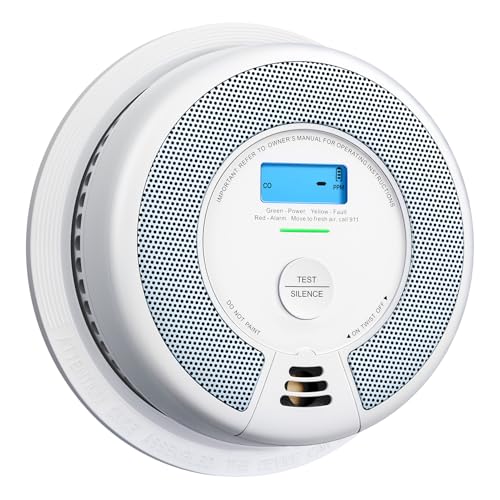
The XP0H-SN is a dual-sensor combination alarm providing smoke and CO detection. It features a 10-year sealed battery and meets UL 217 and UL 2034 standards. Best for homes seeking consolidated protection in a single device, especially in areas where both smoke and CO could be present. Limitation: The XP0H-SN is a standalone unit; for networked interconnection, consider models designed for multiple-unit setups.
Kidde Smoke Detector With 10-Year Battery

Offers rapid smoke detection with an 85 dB alarm and a long-life 10-year battery. Red LED status provides clear visual cues. Best for homeowners who want reliable smoke detection with low maintenance. Caution: This device focuses on smoke detection and is not a CO detector; pair with a CO detector for full coverage.
First Alert BRK SMI100 Hardwired Smoke Detector

This hardwired smoke detector includes a battery backup for outages and a tamper-resistant design. It’s a practical choice for multi-room installation where a consistent, connected smoke detection network is desired. Best for whole-home smoke coverage with a straightforward testing and silencing process. Caution: This model is smoke-only and does not detect heat or CO; plan to add CO detectors if needed.
Buying Guide: How To Choose A Combined Smoke And Heat Detector
- Sensor combination: Look for models that combine smoke detection with heat or CO sensing. This adds redundancy and can shorten response time in various fire scenarios.
- Power and maintenance: Consider 10-year sealed batteries to avoid frequent changes. If you choose hardwired models, ensure they have battery backup for outages.
- Interconnection: If you want multiple alarms to alert simultaneously, verify whether the unit supports interconnection or if you need separate interconnected units.
- Placement: Install combo units in sleeping areas and living spaces. Put heat-dedicated devices in garages or boiler rooms where high ambient temperatures are common.
- False alarms: Seek sensors with smart nuisance reduction to minimize cooking or steam-related false alarms.
- Compatibility: Check local building codes or lease requirements for hardwired installations and interconnection capabilities.
- Maintenance plan: Create a simple routine to test alarms monthly and replace batteries or units per the manufacturer’s guidance.
Frequently Asked Questions
- Do I need a separate CO detector if I have a combo smoke and heat detector?
– Many combo detectors include CO sensing; verify the product specs. If not, add a dedicated CO detector in sleeping areas or near fuel-burning appliances. - Are 10-year sealed batteries better than replaceable batteries?
– Yes, they reduce maintenance and prevent missed alerts due to dead batteries, but ensure the device’s lifespan matches your home safety plan. - Can I interconnect all combo detectors?
– Some models are designed for interconnection; others are standalone. Choose interconnect-capable units if you want synchronized alerts across rooms. - Where should I place a combo detector in a garage?
– Install near the driveway entry and away from direct exhaust or extreme heat sources to avoid false alarms. A dedicated heat detector may be better for specific garage areas with high heat. - Is a heat detector enough in a living room?
– Heat detectors respond to rapid temperature rises but do not detect smoke. For living spaces, pair a smoke detector with a heat detector or choose a combo unit for comprehensive coverage. - What’s the difference between a combo detector and separate devices?
– Combo units consolidate sensing into one device, reducing wiring and maintenance for some homes, while separate devices can offer optimized placement and sensor specificity in larger spaces.