Best Radiant Floor Panels PEX for Efficient Heating
For homeowners building or upgrading a radiant floor system, selecting the right PEX heat transfer panels can dramatically improve warmth, efficiency, and installation ease. This guide highlights five top options that align with common needs: even heat distribution, compatibility with standard PEX sizes, and straightforward installation. The best choice depends on floor type, pipe diameter, and whether you favor pre-cut panels or customizable length. The following products are well-suited for wooden or concrete floors and for DIY or professional installations.
Summary table of selected products
| Product | Best For | Key Benefit | Potential Limitation |
|---|---|---|---|
| PEX GUY Aluminum 2 ft U-Channel Plates | Budget-conscious projects needing U-channel plates | Made in the USA; straightforward U-channel design | Limited length per piece; check pipe fitment |
| EasyFloor Aluminum Heat Plates (Floorheat) | Complete hydronic kits and grid-enabled setups | Optimized for EasyFloor Grid and Floorheat Panel; high heat transfer | System-specific compatibility may require matching modules |
| VEVOR PEX Heat Transfer Plates 4 ft | 4-foot length plates for faster coverage | Large panels for even heat distribution; trim-friendly | Check exact pipe ID/OD for fit |
| Happybuy PEX Heat Transfer Plates 4 ft | Durable aluminum plates with long service life | Long-lasting and corrosion-resistant; 200 pcs kit option | Thickness and fit should match pipe size |
| VEVOR PEX Heat Transfer Plates 2 ft | Smaller runs or modular installations | Compact panels; versatile for various floor layouts | May require more joints for large areas |
PEX GUY Aluminum 2 ft U-Channel Plates

These U-channel heat transfer plates are designed to pair with 1/2″ PEX tubing. The product emphasizes American manufacturing, appealing to buyers who prioritize domestic sourcing and simple installation. Best for small-to-medium radiant floor runs where quick, modular panels are beneficial. A potential limitation is the fixed length of 2 ft, which may require additional pieces for larger spaces. The plate design supports steady heat distribution and is well-suited for standard plywood subfloors or concrete slabs.
EasyFloor Aluminum Heat Plates for Hydronic Radiant Floors

These high-efficiency heat transfer plates are tailored for use with the EasyFloor Grid and Floorheat Distribution Panel. They are designed to maximize heat transfer, improve thermal conductivity, and support energy-efficient performance. Best for complete hydronic systems where the grid and distribution panel are already in use. Better for larger installations needing robust heat output. Limitations include dependency on compatible grid components and potential compatibility checks with existing piping layouts.
VEVOR PEX Heat Transfer Plates 4 ft
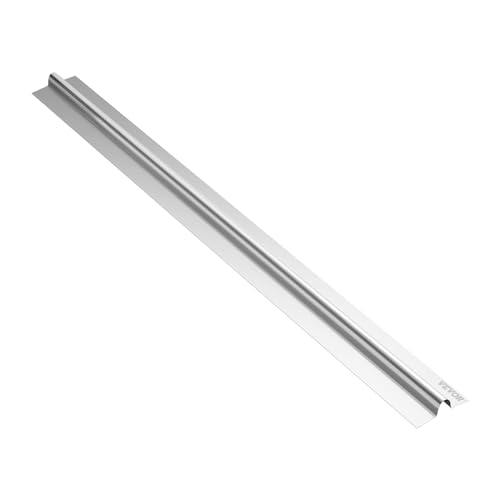
VEVOR’s 4-foot aluminum plates offer substantial coverage for radiant floors using 3/4″ PEX tubing. The plates are designed to snugly fit PEX pipes to promote even heat distribution and reduce heat loss. Best for larger room zones or projects where longer panels minimize seams. Choose this if your floor layout supports longer runs; observe pipe ID/OD compatibility to ensure a proper fit. A caution is to verify total panel length against your room dimensions to avoid gaps.
VEVOR PEX Heat Transfer Plates 2 ft

This 2-foot variant from VEVOR provides modular versatility for tight layouts or retrofit projects. It suits 3/4″ PEX pipes and helps maintain even warmth with a smaller footprint. Best for stairwells, hallways, or zones where longer panels won’t fit. The main consideration is that multiple pieces may be required to cover larger areas, potentially increasing joint management and installation time.
VEVOR Oxygen-Barrier PEX Tubing (not a panel)

While not a panel, this oxygen-barrier PEX tubing is a relevant companion product for radiant floor systems. Best for buyers planning long-run tubing with reduced O2 ingress to improve system longevity. It is important to verify compatibility with the chosen heat transfer plates and fittings. Consider this option when designing a complete radiant floor loop rather than selecting plates alone.
Buying Guide
Key factors to evaluate when choosing radiant floor panels for PEX
- Pipe compatibility: Confirm the PEX size (commonly 1/2″ or 3/4″) and the internal diameter of the plate channels to ensure a snug fit and efficient heat transfer.
- Panel length and layout: Longer panels reduce seams but require space to accommodate. Modular options (2 ft or 4 ft) offer flexibility for odd room shapes.
- Material durability: Aluminum plates provide excellent thermal conductivity and corrosion resistance. Check plate thickness and coating for longevity in moist environments.
- System integration: Some plates are optimized to work with specific grid modules or distribution panels. Verify compatibility with your hydronic system design.
- Installation considerations: Plan for gaps between plates and potential trimming to length. Follow safety guidelines and wear gloves during handling and cutting.
- Thermal performance: Look for designs that claim even heat distribution and reduced heat loss, which translate to more stable room temperatures and energy efficiency.
FAQ
- What size PEX is most common with radiant floor plates?
Most plates support 1/2″ or 3/4″ PEX; confirm the plate’s specified pipe size before purchasing.
- Are aluminum heat transfer plates better for heat transfer?
Yes. Aluminum’s high thermal conductivity generally provides efficient heat transfer and uniform floor temperatures.
- Should I choose 2 ft or 4 ft panels?
2 ft panels offer modular flexibility for small areas or irregular shapes; 4 ft panels cover larger sections with fewer joints.
- Do these plates require special installation tools?
Most installations use standard tools; trimming may require a fine-toothed saw or metal snips, and gloves are recommended.
- Is oxygen barrier tubing essential for radiant floors?
Oxygen barrier tubing helps protect metal components from corrosion, potentially extending system life in humid environments.
- Can I mix different plate brands in one system?
Brand mixing is possible if fittings and pipe sizes are compatible, but matching materials simplifies thermal performance and installation.