Best Diesel Generator With 1800 RPM for Reliable Backup Power
If you need a dependable diesel generator that runs smoothly at 1800 rpm, these top picks offer strong standby and portable options for homes, small businesses, and job sites. Diesel engines at 1800 rpm typically provide better fuel efficiency, longer engine life, and steadier power delivery for critical loads. This guide highlights five suitable models, who they’re best for, and practical considerations to help you choose.
Summary of selected products
| Product | Best For | Key Benefit |
|---|---|---|
| RA03022L Protector Series 30kW | Businesses needing high-capacity standby power | NFPA 110 capable, corrosion-resistant enclosure, 1800 RPM |
| Generac 6864 XD5000E | Emergency backup on job sites | Portable, low THD, long runtime |
| Pulsar 2300W Portable Gas Generator | Light-duty, portable power | Compact, easy handling, parallel-ready |
| Gearless Permanent Magnet 12000W | Renewables integration and compact power | Low RPM design, robust enclosure |
| 1000W Low RPM Generator | Off-grid basics and small loads | Low RPM, versatile for wind/water/diesel hybrids |
RA03022L Protector Series 30kW Diesel Standby Gen

The RA03022L is a 30 kW emergency standby generator operating at 1800 RPM, with a Power Zone 410 Controller and an NFPA 110 system control capability. Its corrosion-resistant sound-attenuated aluminum enclosure reduces noise and protects the engine. Best for commercial facilities, hospitals, or data centers that require dependable standby power and durable construction. A key limitation is the size and weight; installation requires permanent placement and appropriate space planning.
Generac XD5000E 5000-Watt Diesel Portable Generator
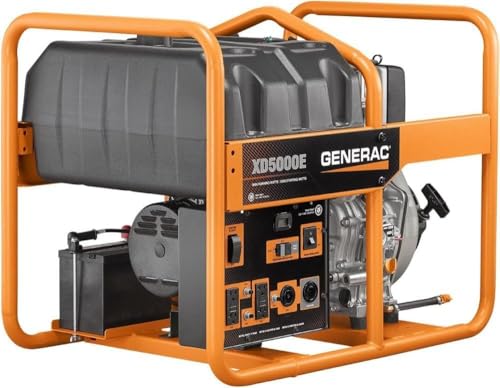
Best for emergency power and remote job sites, the XD5000E provides a robust power source with a sturdy frame and lifting eye for easy transport. It delivers clean operation with low distortion to protect tools and electronics and offers extended runtime thanks to a sizable fuel tank. It’s a strong choice where portability and reliability are priorities, though fuel availability and maintenance should be planned for extended outages.
Pulsar 2,300W Portable Gas Generator

Best for light-duty, portable power needs with parallel capability for extra wattage. It runs on gasoline and offers a compact design with under-47 lb weight for easy handling. Best for camping, small tools, and RV use. A limitation is its wattage ceiling, which isn’t suitable for larger appliances or heavy-duty equipment for extended periods.
Gearless Permanent Magnet Generator 12000W

This 12 kW permanent-magnet generator offers low rpm operation and a compact design with a durable die-cast aluminum cover. It’s well-suited for renewable energy setups or hybrid systems requiring stable, efficient output. It is not a traditional gasoline/diesel unit and may require suitable integration with existing renewable components and controllers.
2000W Permanent Magnet Generator

Best for steady charging and off-grid lighting where small to mid-scale power is needed. A 2000W rating at 4000 rpm makes it practical for compact energy systems, but its higher rpm is less ideal for ultra-quiet or long-running diesel deployments. Best used in tandem with other power sources where RPM alignment is managed.
WEN DF450i 4500-Watt Dual RV-Ready Inverter
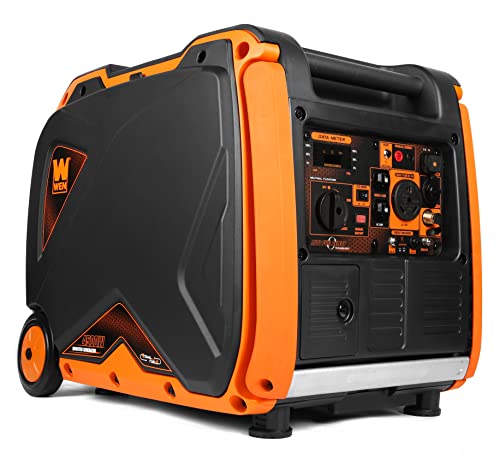
Best for quiet, fuel-efficient portable power with dual fuel capability (gasoline and propane). This unit delivers a high-quality waveform suitable for sensitive electronics. It is not diesel-based, but useful for comparison when evaluating overall generator options for a mixed-power setup. A potential drawback is its lower overall wattage for heavy loads.
Buying Guide
What should you consider when choosing a diesel generator at 1800 RPM?
- Power needs: Determine running and starting watts, and choose a unit with headroom for essential loads plus a safety margin.
- Fuel capacity and run time: Larger tanks yield longer runtimes between refueling. Consider fuel availability and consumption at your typical load.
- Duty cycle: Standby generators support infrequent, high-load events, while prime generators handle continuous operation. Match your use-case to the correct category.
- Controller and monitoring: A capable controller (such as Power Zone 410) provides voltage regulation and system diagnostics to protect connected equipment.
- Portability vs. permanence: On-site needs determine whether a permanent installation or a portable unit with wheels and lifting hardware is best.
- Environmental factors: Noise attenuation, enclosure materials, and corrosion resistance affect performance and suitability for certain locations.
- Maintenance access: Easy access to filters, oil, and coolant reduces downtime and simplifies routine upkeep.
Frequently Asked Questions
- What does 1800 RPM mean for diesel generators?
1800 RPM indicates engine speed, which often correlates with smoother operation, longer engine life, and improved fuel efficiency for continuous-duty generators.
- Is a higher-wuelkier rating better for standby power?
More watts provide more capacity for surges and sustained loads; choose wattage based on your critical circuits and future expansion needs.
- Should I choose a permanently installed unit or a portable generator?
Permanent units are ideal for buildings with standby power needs; portable units work well for temporary or remote sites and easier relocation.
- What maintenance is essential for diesel generators?
Regular oil changes, air and fuel filter replacements, coolant checks, and periodic startup tests are key for reliability.
- Can diesel generators be used with renewable energy systems?
Yes, some models integrate with microgrids or solar/wwind setups, especially those with robust controllers and parallel capabilities.
- What safety considerations should I keep in mind?
Ensure proper ventilation, protect from moisture, follow manufacturer guidelines for fuel storage, and install transfer switches for safe power transfer.