Best Powerful Power Stations for Home Backup and Off-Grid Use
Looking for the most powerful portable power stations for serious backup and off-grid needs? This guide highlights five top options, ranked by capacity, output, and practical usability. It targets buyers who want reliable off-grid power for home backup, camping, RVs, or emergencies. The selections emphasize high capacity, robust surge power, fast recharging, and safety features. Read on to compare each model’s strengths and limitations so you can choose the right fit for your situation.
Summary table of selected products:
| Product | Brand | Capacity | Continuous Output | Best For |
|---|---|---|---|---|
| AFERIY 3840Wh Portable Power Station | AFERIY | 3.84 kWh | 3600W | Heavy-duty home backup, emergencies |
| Anker SOLIX C2000 Gen 2 | Anker | 2,048 Wh | 2,400W (4,000W peak) | Large-appliance backup, outages, DIY power |
| Anker SOLIX C1000 Gen 2 | Anker | 1,024 Wh | 2,000W (3,000W peak) | Medium-load backup, off-grid living |
| BLUETTI Elite 30 V2 | BLUETTI | 288 Wh | 600W (1,500W surge) | Compact power on the go, emergency power |
| EnginStar Portable Power Station 296Wh | EnginStar | 296 Wh | 300W | Compact emergency use, travel |
Anker SOLIX C2000 Gen 2 Portable Power Station
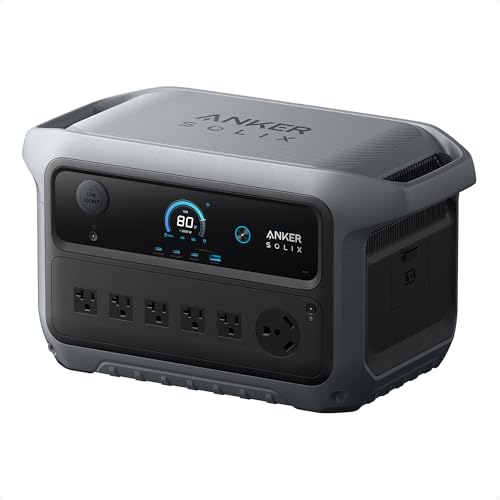
Key features: 2,048Wh LiFePO4 battery, 2,400W continuous output with a 4,000W peak, full charge in 58 minutes with multiple recharge methods, and expandable capacity with an optional expansion battery. Best for households seeking reliable, high-power backup that can run heavy appliances during outages. The product excels in longer runtimes for fridges, freezers, and essential electronics. A potential limitation is the higher upfront cost and larger footprint compared to smaller units.
Who this is best for: Homes and campers needing substantial and fast charging power to support multiple devices or appliances during outages. Why selected: It combines high capacity, fast recharge, and strong surge capability.
Caution: Expansion battery availability and total runtime depend on total load; avoid exceeding the continuous rated output with heavy loads for extended periods.
Anker SOLIX C1000 Gen 2 Portable Power Station

Key features: 1,024Wh LiFePO4 battery, 2,000W continuous output (3,000W peak), 49-minute recharge time, and a compact form factor that is 14% smaller and 11% lighter than similar models. Best for: users who need substantial power without carrying a large unit. Why selected: Strong balance of capacity and portability with rapid recharging. Caution: While powerful, it has less total energy than the C2000 model, so long outages with high load may require more frequent recharging or load management.
AFERIY 3840Wh Portable Power Station

Key features: 3,840Wh LiFePO4 capacity, continuous 3,600W output with peak 7,200W, expandable up to 11.5kWh via expansion packs, UPS <10ms seamless backup. Best for: high-demand home backup, storm outages, and mobile workstations. Why selected: The highest capacity among the listed options and quick UPS switching makes it robust for critical devices. Caution: Expansion adds weight and cost; ensure your setup supports higher total energy use.
Anker Portable Power Station SOLIX C300

Key features: 288Wh LiFePO4 battery, 300W continuous output with 600W surge, 140W two-way USB-C charging, compact and travel-friendly. Best for: travelers and campers who want a compact, reliable power source for essential devices. Why selected: A smaller, more portable option within the Anker SOLIX line that still supports important devices. Caution: Limited energy means frequent recharges for extended outages or high-load scenarios.
Power Station

Key features: Listed as a generic Power Station with international designation. Best for: general backup or travel scenarios where a basic, portable power source is needed. Why selected: Represents a basic option in the lineup for quick energy on the go. Caution: Details are limited; verify capacity and output before purchase to ensure it meets your needs.
BLUETTI Elite 30 V2

Key features: 288Wh capacity, 600W continuous output with 1,500W surge, 9.4 lb weight, UPS 10ms, smart cooling and energy efficiency claims. Best for: light-to-moderate use outdoors or as a portable emergency power source. Why selected: Not the largest capacity, but its balance of weight, cost, and UPS capability makes it a practical option for compact power needs. Caution: Lower capacity means more frequent recharges on longer trips or power outages.
Buying Guide
What to consider when choosing a powerful power station
- Capacity and load: Match watt-hour capacity to your essential devices and planned outage duration. High-capacity units handle refrigerators, freezers, and multiple devices for longer periods.
- Continuous vs peak power: Continuous output indicates steady operation capability. Peak power matters for starting loads like motors and kitchen appliances.
- Recharging speed and methods: Look for fast recharging via AC and, if possible, solar compatibility for off-grid use.
- Weight and portability: Heavier units offer more power but can be harder to move. Consider a model that fits your travel and storage needs.
- Expansion options: Some units support expansion packs to scale capacity; factor future needs and total system complexity.
- Battery chemistry and safety: LiFePO4 batteries offer longer life and improved thermal stability, useful for home backup and frequent use.
FAQ
- What is the best power station for a home backup?
– A model with high capacity (3 kWh or more) and strong surge capability is ideal, such as AFERIY 3840Wh, or Anker SOLIX C2000 Gen 2 for reliable fridge and device support during outages. - Do I need expandable capacity?
– If you anticipate longer outages or plan to run multiple heavy devices, an expandable system can offer significant extended runtime. - Is LiFePO4 the right battery chemistry?
– Yes, LiFePO4 offers longer cycle life and better thermal stability, which is advantageous for frequent charging and use in homes or camps. - Can these power stations be charged with solar panels?
– Most models advertise solar charging as an option; check the product page for compatible panel specifications and charging times. - Is a larger unit always better?
– Not necessarily. Consider your travel, storage space, and typical load. A high-capacity unit is powerful but heavier and more expensive. - What should I avoid when buying a powerful power station?
– Avoid underestimating load needs and choosing a unit with insufficient surge power for high-start appliances, which can cause shutdowns or damage.