Best Virus-Killing Air Purifiers for Safer Indoor Air in American Homes
When choosing an air purifier to reduce viruses and other particulates, prioritize true HEPA filtration, multi-stage cleaning, and room coverage. This guide highlights five top options that target viruses, mold, and wildfire smoke while suiting different room sizes. The best buyers are allergy sufferers, households with kids, and apartment or home owners seeking quiet operation and smart features. Below is a quick summary table of the five selected products to compare at a glance.
| Product | Best For | Room Coverage | Key Filtration |
|---|---|---|---|
| Clorox Turbo Air Purifier | Medium rooms, high-traffic living areas | Up to 1,000 sq ft | 3-stage 360° filtration with True HEPA, active carbon |
| Clorox HEPA Air Purifier (Medium Rooms) | Allergen and virus reduction for 5x per hour in mid-sized spaces | Up to 1,000 sq ft | True HEPA plus dual-stage filtration |
| Clorox Air Purifier (Small Rooms) | Bedrooms and home offices | Up to 200 sq ft | 2-stage 360° filtration with True HEPA |
| Air Oasis iAdaptAir 2.0 | Homes needing medical-grade reduction and large-area coverage | Up to 1,325 sq ft per hour | 5-stage with UV, silver ion, and bipolar ionization |
| BLUEAIR Blue Pure 211i Max | Large rooms and open layouts | Up to 3,235 sq ft (one hour) | HEPASilent dual filtration |
Clorox Turbo Air Purifiers for Home

The Clorox Turbo Air Purifier uses a 3-stage, 360° filtration system to capture 99.97% of allergens and particulates and reduce viruses and bacteria. It combines a pre-filter for large particles, a True HEPA filter for fine particulates, and an activated carbon filter to cut VOCs and odors. Best for: households needing strong virus and odor control in medium-sized rooms. Choose this if you want robust, all-around air cleaning with quiet operation. Limitation: larger rooms beyond 1,000 sq ft may require multiple units for optimal performance.
Clorox HEPA Air Purifier for Home

This medium-room purifier uses true HEPA filtration to capture 99.97% of particles and 99.9% of viruses and bacteria, with a 360° airflow design. Best for: people seeking high-efficiency virus reduction in rooms around 225 sq. ft. The unit cleans up to 5x per hour in standard mid-sized spaces. Caution: performance may vary in rooms with heavy external odors; the carbon stage helps, but odor control depends on usage and room layout.
Clorox Air Purifier for Bedroom

Designed for small rooms, this purifier offers a 2-stage, 360° filtration with True HEPA to capture 99.97% of allergens and 99.9% of viruses and bacteria, plus a pre-filter for larger particles. Best for: a quiet, compact option for bedrooms, nurseries, or small offices. Limitation: coverage is limited to spaces up to 200 sq ft, so multiple units may be needed for larger rooms.
Air Oasis iAdaptAir 2.0

The Air Oasis iAdaptAir 2.0 offers a 5-stage cleaning system that includes UV light and bipolar ionization, targeting viruses, mold, and bacteria. It covers large spaces up to 1,325 sq. ft. in one hour and uses additional filters to reduce odors and contaminants. Best for: homes needing strong biotoxin and virus reduction with medical-grade features. Caution: high-tech cleaning features may require regular maintenance and filter replacements to sustain performance.
BLUEAIR Blue Pure 211i Max
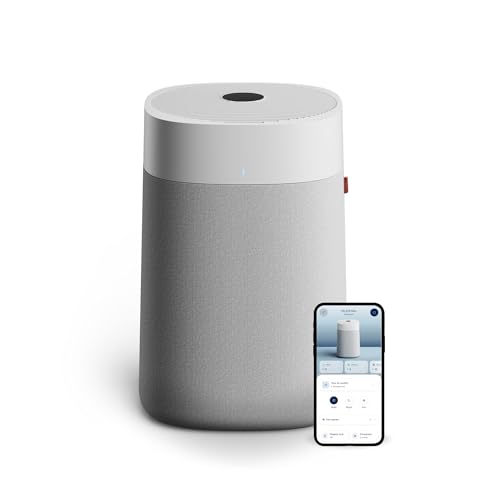
The Blue Pure 211i Max uses HEPASilent dual filtration to efficiently capture dust, smoke, pet dander, pollen, and mold particles in large rooms, with smart app control and auto mode to adapt to air quality. Best for: large open-plan spaces or multi-room homes that need energy-efficient, quiet purification. Limitation: higher initial cost and ongoing filter changes; app connectivity is a key feature for optimal results.
Buying Guide: Key Purchase Considerations
What room size do you need to purify? Measure the space and compare it to the purifier’s stated coverage. For true virus reduction, prioritize models with True HEPA filtration and a dedicated carbon stage to control odors and VOCs.
How important are filters and maintenance? Look for filter lifespans, ease of replacement, and whether replacements are readily available. Some purifiers include indicator lights, helping you track when to replace filters.
Do you want smart features? If you prefer voice control or app monitoring, choose models with Alexa, Google Home compatibility, or mobile apps for schedule automation and filter life checks.
Noise and energy use matter for bedrooms and workspaces. Check decibel ratings and energy-efficient modes. Auto modes can balance performance with quiet operation.
Additional considerations include UV or ionization features, which may offer extra pathogen reduction but require understanding of safety and maintenance requirements. For households with pets or strong odors, 2- or 3-stage filtration plus carbon is advantageous.
Frequently Asked Questions
- Do air purifiers really kill viruses? Some units improve reduction of airborne viruses when equipped with true HEPA filtration and activated carbon, combined with other technologies. Verify claims with independent testing data when available.
- Is a higher CADR better? Yes, a higher CADR indicates faster air cleaning. Match CADR to room size for effective performance and avoid overloading a purifier in a small space.
- How often should I replace filters? This depends on usage, air quality, and the model. Follow the manufacturer’s recommended replacement schedule and replace filters when performance drops.
- Can I use more than one purifier in a large home? Yes. Spreading purifiers across living areas can improve overall air quality, especially in open-plan layouts or homes with multiple rooms in use.
- Are smart features necessary? Not essential, but they help with ongoing monitoring, scheduling, and maintenance reminders for consistent air quality.
- Do purifiers differ for bedrooms vs. living areas? Yes. Smaller spaces benefit from compact purifiers, while larger rooms require units with higher CADR and wider coverage to maintain air quality efficiently.