Best Second-Hand Commercial Espresso Machines: A Buyer’s Guide
Answer: This guide highlights reliable second-hand commercial espresso machines and the best fits for small cafés, offices, or serious home setups. It covers five strong options, detailing who each is best for, key features, and practical considerations. The selections balance durability, ease of maintenance, and value for money in a used market. The buying table below summarizes the core attributes to compare at a glance.
| Product | Type | Key Strengths | Best For |
|---|---|---|---|
| Nuova Simonelli Appia Life Auto Volumetric 2 Group | 2-Group Semi/Auto | Programmable dosing, easy group cleaning, efficient steam system | Cafés needing consistent shots and quick multi-user operation |
| Gevi Commercial Espresso and Coffee Makers | 20 Bar Commercial | NTC control, pressure gauge, compact stainless build | Small business or home office seeking pro-grade performance |
| Kismile Espresso Machine with Grinder | Grinder + Espresso | 30 grind settings, built-in grinder, strong steam | Home baristas wanting fresh grounds and latte precision |
| Gaggia RI9380/51 Classic Evo Pro | Commercial-Style Home Use | Solid steel housing, 9 Bar extraction, 58mm portafilter | Durable, compact setup with pro-style components |
| COWSAR Commercial-Grade Espresso Machine | 20 Bar High-Pressure | Professional steam wand, 45oz water tank, versatile grounds/capsules | Versatile users needing versatility and foam quality |
Nuova Simonelli Appia Life Auto Volumetric 2 Group Espresso Machine

Best for: cafés with multiple baristas who require consistency and fast service. The 2-group layout supports higher throughput, while volumetric dosing standardizes shot volumes across users. The push-pull steam system reduces hand strain during frothing, aiding repetitive-use environments. Automated backflushing simplifies routine maintenance, keeping groups cleaner with less downtime.
Why selected: This model is built for reliability in busy settings, offering programmable dose options and a streamlined cleaning feature, which helps maintain consistent quality during peak hours. Limitations: higher upfront cost and size may require dedicated space in a small shop or larger office kitchen.
EUHOMY Espresso Machine with Grinder

Best for: home baristas who want café-quality espresso with integrated grinding. Features include 30 grind settings and a 20-bar pump for strong extraction, plus an anti-clog system for smoother operation with varied beans. The built-in grinder and milk frother support a wide range of drinks from espresso to lattes.
Why selected: The combination of grinder, high-pressure pump, and user-friendly setup makes it a versatile choice for enthusiasts seeking single-machine convenience. Caution: as a home-oriented model, it may lack the heavy-duty durability of true commercial units over long, high-volume service periods.
Gevi Commercial Espresso and Coffee Makers

Best for: users seeking a compact, durable stainless steel machine with pro features. Highlights include a 20-bar pump, temperature control, pre-infusion, and a pressure gauge for consistent extractions. The compact build suits small kitchens or office break rooms while offering café-quality beverages for guests.
Why selected: Strong value for money with professional controls and durable construction. Limitation: may require a dedicated water line and regular descaling in high-use environments.
Kismile Espresso Machine with Grinder

Best for: home baristas who want control over grind size and extraction. It includes a 30-settings grinder and a robust steam wand for microfoam. The device supports both grounds and a built-in grinder setup, enabling quick adaptation to bean varieties and roast levels.
Why selected: The grinder integration helps achieve fresh grind-on-demand, which improves flavor clarity. Caution: user setup may require time to dial in the ideal settings for different beans; reading the manual is advised before first use.
Gaggia RI9380/51 Classic Evo Pro Espresso Machine

Best for: compact spaces needing pro-style components. The Classic Evo Pro offers a sturdy stainless steel housing, 9-bar extraction, and a 58mm commercial portafilter. It aims to deliver traditional espresso quality with reliable builds from Italy.
Why selected: Durability and traditional design appeal to users who want a long-lasting machine with familiar portafilter dimensions. Limitation: not a high-volume, multi-group setup; suitability is better for smaller volumes or demonstrations.
COWSAR Commercial-Grade Espresso Machine
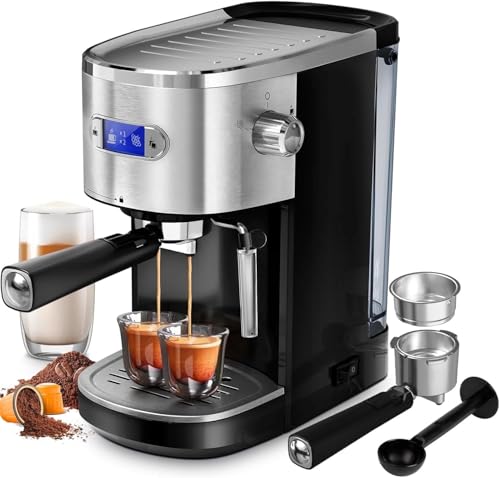
Best for: users needing flexibility with grounds or capsules and a strong steam wand for rich microfoam. The 20-bar pump delivers crema, and the detachable water tank adds ease of setup in varied spaces.
Why selected: The dual compatibility (grounds or capsules) broadens usage scenarios, making it a versatile option for mixed beverage offerings. Caution: larger footprint than some compact machines; ensure countertop space is adequate.
Buying Guide: Key Considerations for Second-Hand Commercial Espresso Machines
- Volume and throughput: Choose a machine with appropriate group count and dosing that matches your expected daily shots and staff.
- Cook-and-clean cycle: Look for features like automated backflush or easy access to group heads for maintenance.
- Durability and parts availability: Prefer brands with widely available replacement parts and a simple service path in your area.
- Water system and pressure consistency: A stable boiler and pump with good temperature control reduce inconsistencies in shot quality.
- Size and installation: Ensure the unit fits your workspace and has compatible power and water connections.
- Operating environment: For high-traffic venues, prioritize machines built for commercial use; for homes or light cafe use, a robust home- or office-grade machine may suffice.
FAQ: Quick Answers for Buyers
- What should I consider when buying a second-hand espresso machine?
Consider throughput, maintenance needs, and the availability of spare parts. - Are second-hand commercial machines reliable for daily use?
Yes, with proper inspection, servicing history, and maintenance, they can perform reliably in many setups. - Should I buy a machine with an integrated grinder?
An integrated grinder adds convenience for single-setup operations, but make sure the grinder’s quality meets your bean choices. - What’s the advantage of a volumetric dosing machine?
Volumetric dosing helps ensure consistent shot volumes across different baristas, improving uniformity. - Do second-hand machines require more maintenance?
Ongoing preventive maintenance is essential to extend life and maintain performance in any espresso machine. - Is installation difficult for these machines?
Installation varies; professional setup is advised for proper plumbing, electrical, and safety considerations.