Best Hand Crank AC Generator Options for Classroom and Outdoor Use
Direct answer: Hand crank AC generators are compact, manual power sources ideal for classrooms, labs, camping, and emergency readiness. The top picks below suit different needs—education, portability, or backup power. Choose based on whether you need AC, DC, portability, or integrated energy storage. The list highlights five solid options best for students, teachers, campers, and DIY enthusiasts.
| Product | Best For | Output | Notes |
|---|---|---|---|
| KEXIAO Hand Cranked Generator | Physics labs and demonstrations | AC and DC | User-friendly, dual outputs for experiments |
| Eisco Labs Demonstration Motor Generator | Equating AC vs DC concepts | AC and DC | Switchable generator modes with manual |
| Sci-Supply Hand Crank DC Generator | DC energy demonstrations | DC | Includes replacement gear sets |
| Nightbreeze Hand Crank Generator | Classroom demonstrations and home schooling | DC 1-12V | Includes LED bulbs; durable build |
| CUBELLIN 15600mAh Emergency Power Generator | Emergency backup and outdoor use | AC, DC, USB | Hybrid power options with USB and car jump start |
KEXIAO Hand Cranked Generator

The KEXIAO hand crank generator offers both AC and DC outputs, enabling direct demonstrations of how mechanical energy becomes electrical energy. It is positioned for physics labs, classrooms, and outdoor settings where power is unavailable. Best for students who need hands-on electricity experiments and educators seeking a clear AC/DC comparison. A potential limitation is that output levels depend on cranking effort, which may vary between users.
Eisco Labs Demonstration Motor Generator
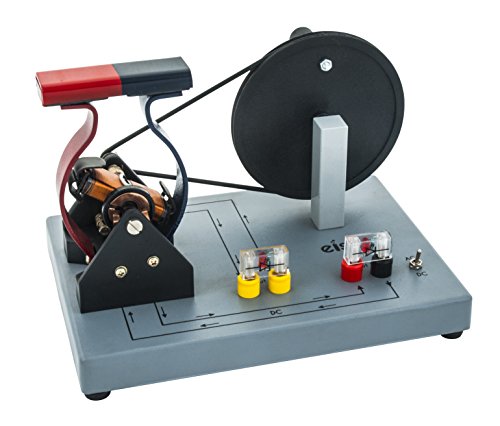
The Eisco device emphasizes the AC vs DC distinction, allowing switchable operation on the same unit. It is best for classrooms where students compare generator types, and for instructors who want an integrated teaching model. The main caveat is that the device requires proper setup and manuals to maximize its educational value.
Sci-Supply Hand Crank DC Generator

This model focuses on DC output, ideal for labs demonstrating energy conversion with a direct, measurable DC current. It is well-suited for physics and STEM classes requiring hands-on generation without batteries. A shortcoming is that it may require specific wiring or circuit setup to integrate with existing experiments.
Nightbreeze Hand Crank Generator
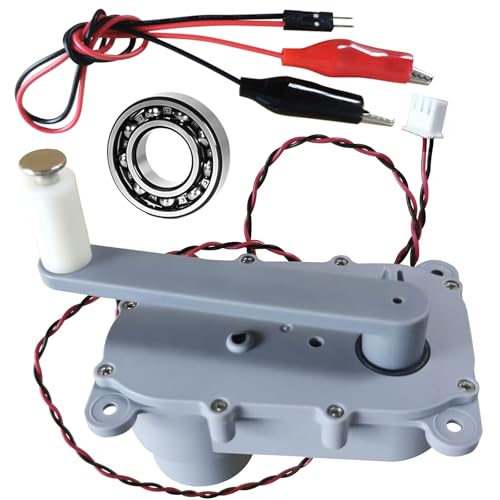
This kit is designed for middle and high school classrooms and home-school use, featuring ready-to-use LEDs and durable construction. It demonstrates mechanical-to-electrical conversion with smooth cranking, aided by dual ball bearings. It is best for interactive demonstrations and repeated classroom sessions; a limitation is that the output targets are modest, suitable for lighting LEDs rather than powering larger devices.
CUBELLIN 15600mAh Emergency Generator

The CUBELLIN unit functions as an emergency power source with multiple outputs: USB, DC, and AC, plus a car jump-start feature. It’s best for camping, outages, and outdoor events where versatile charging is needed. The device can operate without batteries, and it supports additional charging methods. A caveat is that larger loads or long-term power may require supplementary power sources.
Buying Guide: Hand Crank Generators for Power on Demand
What output do I need?
- DC vs AC: Choose DC for charging devices or running DC motors, and AC for appliances or demonstrations that require AC behavior.
- Voltage range: Look for devices that meet typical classroom or field needs (often 1–12V DC or standard AC outputs).
How portable should it be?
- Lightweight, compact units are best for travel, classrooms, and camping. Heavier models may offer higher durability or storage options.
Is extra storage or accessories important?
- Some kits include LED bulbs, cables, extra gears, or even battery-like storage. If you need ongoing demonstrations, consider a model with components ready to use.
What are practical limitations?
- Output depends on cranking effort; some models require more physical effort to produce meaningful power. For younger students, select devices with easy cranking and higher efficiency bearings.
What safety considerations apply?
- Avoid over-cranking or short-circuiting; follow the included guidance to prevent strain on mechanical parts and ensure proper electrical connections.
Frequently Asked Questions
- What is a hand crank generator used for in classrooms?
It demonstrates energy conversion from mechanical to electrical energy and supports teaching concepts like electromagnetism and circuit principles.
- Can these generators power household devices?
Most hand crank generators produce limited power suitable for small LEDs or educational demos, not full-size appliances. Some emergency units offer higher output but check specifications.
- Do all hand crank generators require batteries?
No. Many models are designed to generate power directly by cranking, though some may include battery-assisted modes or storage options.
- Which output is better for science demos, AC or DC?
AC is useful for demonstrating AC concepts and appliances, while DC is ideal for charging devices or illustrating direct-current generation in experiments.
- Are dual-output generators easier to teach with?
Yes. Dual-output units allow students to compare AC and DC behavior side by side, enhancing understanding of energy conversion principles.