Best Programmable Line-Voltage Thermostats for Home Heating
If you need precise, programmable control for line-voltage heating, these thermostats are designed for electric baseboards, convectors, and similar systems. This guide highlights five solid options, who they’re best for, and why they’re chosen. It also compares features to help you choose with confidence.
| Product | Why it’s a fit | Best For |
|---|---|---|
| Honeywell TL8230A1003 Electric Heat Digital 7 Day Programmable Thermostat | 7-day programmable with precision ±1°F for energy savings | Homeowners seeking customizable weekly schedules |
| Lux ELV4 Line Voltage Programmable 5-2 Day Thermostat | 4 program periods per day, clear on-screen programming | People wanting frequent daily adjustments |
| Honeywell Home RLV4305A1000 5-2 Day Programmable Thermostat | High-precision control with silent TRIAC switching | Baseboard or convector setups needing quiet operation |
| Lux WIN100 Programmable 5-2 Day Thermostat | No wiring required; plug-in convenience | renters or DIY installs needing easy setup |
| Cadet T Series Single Pole Mechanical Thermostat (T521-W) | Simple, reliable line-voltage control for basic needs | Low-complexity installations or budget-focused buyers |
Honeywell TL8230A1003 Electric Heat Digital 7 Day Programmable Thermostat
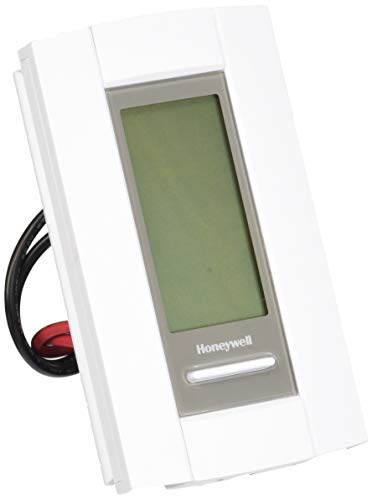
- Features: 7 day programmable; maintain the preset schedule for energy savings; electronic temperature control with precision ±1°F; quiet operation to reduce thermostat clicking.
Best for: Homeowners who want a full weekly schedule and quiet performance. Why selected: Combines a detailed weekly program with precise temperature control for more predictable heating costs.
Caution: Slightly more complex setup than basic models; ensure compatibility with your wiring before installation.
Honeywell TL7235A1003 Line Volt Pro Non-Programmable Digital Thermostat

- Features: On-Demand Backlight; soundproof operation; heating indicator for at-a-glance heat status.
Best for: Users who want simple, predictable on/off control without programming. Why selected: Reliable line-voltage control with clear status indicators.
Caution: Not programmable; may not suit those seeking schedule-driven energy savings.
Lux ELV4 Line Voltage Programmable 5-2 Day Thermostat

- Features: Easy on-screen programming; 4 program periods per day; UL approved; temporary override function for quick changes.
Best for: Households needing flexible daily scheduling with occasional quick overrides. Why selected: Programmer-friendly with a balance of daily and weekly scheduling options.
Caution: Not compatible with heating appliances that mix resistive heating with inductive loads using the same circuit.
Honeywell Home RLV4305A1000 5-2 Day Programmable Thermostat

- Features: Digital 5-2 Day Programmable for electric baseboards; high accuracy (±0.27°F for baseboards); TRIAC switching for silent operation.
Best for: Electric baseboard and convector systems requiring precise control and silent operation. Why selected: High accuracy reduces temperature swings and energy waste. Caution: May require professional wiring for some installations.
Lux WIN100 Programmable 5-2 Day Thermostat
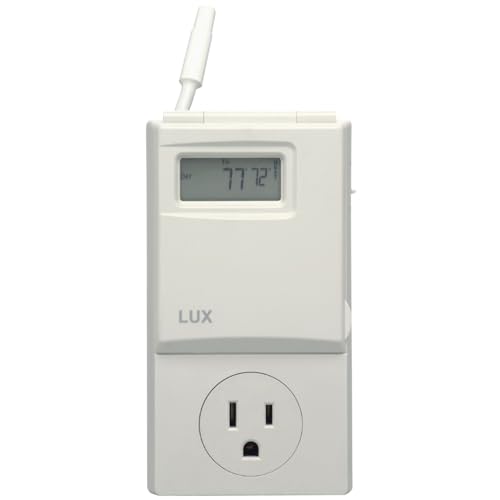
- Features: 5-2 day programming; intuitive touch keys; easy-to-read display; plug-in, no wiring necessary.
Best for: Renters or DIYers who want quick, tool-free setup. Why selected: Convenience and straightforward operation without hard wiring. Caution: Not ideal for complex multi-zone heating setups.
Cadet T Series Single Pole Mechanical Thermostat (T521-W)

- Features: 22 Amp, 120/208/240 Volt; easy replacement for line-voltage thermostats; single pole operation.
Best for: Simpler installations or higher-current heating needs with budget considerations. Why selected: Reliable mechanical control for straightforward baseboard or wall heater setups. Caution: No programmable features; daily scheduling is not available.
Buying Guide: Key Purchase Considerations
- Voltage compatibility: Ensure the thermostat is designed for line-voltage systems (120V/240V, or 277V as applicable) to control baseboard or convector heaters directly.
- Programmability: Decide between fully programmable (7-day or 5-2 day) and non-programmable models based on how you manage energy schedules.
- Accuracy and temperature control: Higher accuracy reduces temperature swings and energy waste; look for specs like ±0.27°F or ±1°F where listed.
- Installation type: Consider plug-in vs. hardwired models, single-pole vs. double-pole, and whether the wiring supports your existing setup.
- Noise and operation: Mechanical vs. electronic—electronic units often offer more features but may be more sensitive to wiring conditions.
- Overrides and temporary adjustments: Some models support overrides to quickly adjust temperature without changing the programmed schedule.
Frequently Asked Questions
- What is line-voltage versus low-voltage thermostats?
– Line-voltage thermostats switch power directly to electric baseboard or convector heaters, while low-voltage models control these devices via a relay or a transformer. - Are programmable line-voltage thermostats worth it?
– Yes, for users who want scheduled temperature changes and potential energy savings in electrical heating systems. - Can I install a line-voltage thermostat myself?
– Some plug-in or simple mechanical models are DIY-friendly, but many electrical installations may require a professional. - What should I prioritize when choosing?
– Prioritize compatibility with your heating load, programmable features, accuracy, and installation type. - Do these thermostats work with multi-zone setups?
– Some models are designed for single-zone circuits; multi-zone setups may require separate thermostats for each zone.