Best Surge Protectors for Panels and Whole-Home Protection
Looking to shield your entire electrical system from damaging power surges? This guide highlights top surge protective devices (SPDs) designed for installation inside or alongside your main panel. Ideal buyers include new-home builders, homeowners upgrading service reliability, and property managers seeking durable, panel-mounted protection. The selections below emphasize whole-panel protection, clear status indicators, and compatibility with common panel architectures. Read on to compare options, including best for whole-house protection, indicators, and installation considerations.
| Product | Best For | Key Benefit | Notes |
|---|---|---|---|
| Eaton BRPSURGE | Whole-home protection for new or existing panels | Type 2 SPD with plug-on neutral, 120/240 VAC | Includes LED indicator; UL 1449 3rd Edition Listed |
| Eaton BRNSURGE | Two-space panel upgrades | 2-pole, 18 kA surge current | Compact, uses 2 branch spaces |
| Drizzlen Type BR 3-Pack | Budget multi-pack for multiple panels | 3-pack, 18 kA each | Uses 2 branch spaces |
| Bzcovac QSPD2A035B | High-capacity whole-house protection | 35 kA per device, mechanical status indicator | Indoor SPD designed for panel installation |
| ABB THOMESURGE THOMESURGEP | Premium, code-compliant units | Type 1 SPD, 36 kA per phase protection | Externally mounted, suitable for service entrances |
The following sections present five top options that align with “surge protector on panel” intents. Each product is evaluated for suitability, plus practical considerations like installation footprint and visual indicators. Use the product headers to jump to full details.
Eaton BRPSURGE Breaker Surge Device

The Eaton BRPSURGE is a Type 2 SPD designed for plug-on neutral installation in a 120/240 VAC, 2-pole, 1-phase panel. It provides protection for the entire downstream electrical system and includes a status LED to confirm operation. Best for homeowners seeking robust, first-line defense integrated directly in the panel. A notable limitation is that, as a single-device protection solution, it may need coordination with downstream protection for highly crowded panel spaces.
Eaton BRNSURGE Whole-Panel SPD
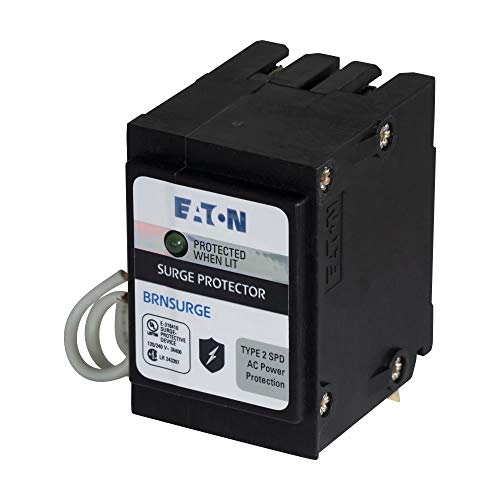
This 2-branch- space SPD is designed for whole-panel protection with 18 kA surge current capacity. It’s best for panels that need a compact, install-in-place unit while preserving two available spaces for other breakers. Choose this if you want straightforward, space-conscious panel upgrades. Avoid this option if you anticipate higher-than-18 kA events frequently in your area without additional upstream protection.
Drizzlen Type BR 3-Pack Whole-Panel SPD

This 3-pack from Drizzlen provides three 2-space, 18 kA surge-capacity SPDs, suitable for multiple panels or phased installations. Best for contractors or homeowners planning staged upgrades or protecting several sub-panels. The limitation is a potential higher upfront cost per device, though it offers bulk value. This option is better for budget-conscious buyers needing multiple devices in one purchase.
Bzcovac QSPD2A035B Indoor SPD

The Bzcovac QSPD2A035B provides whole-home protection with a high 35 kA surge current capacity and a built-in mechanical status indicator. It is designed for inside-the-panel installation and offers a clear green/red flag to show normal function or need for replacement. Choose this if you want strong surge capacity and a simple visual maintenance cue. A limitation is that some installations may require careful panel fitment to accommodate the device footprint.
ABB THOMESURGEP Surge Protective Device

ABB THOMESURGEP is a Type 1 SPD rated for service entrances, offering 36 kA per phase protection. It is designed for rapid, contractor-friendly installation without occupying extra breaker spaces. Best for new builds or renovations seeking premium, code-aligned surge protection that acts as the last line of defense before sensitive equipment. A potential limitation is its Type 1 classification, which may require coordination with other panel protections and space planning in smaller panels.
Buying Guide
What should you consider when choosing a panel-based surge protector?
- Protection type and location: Type 1 vs Type 2 SPDs. Type 1 is typically used at the service entrance, while Type 2 is installed inside or adjacent to the panel.
- Surge current rating: Higher values (e.g., 35 kA or 36 kA per phase) offer stronger protection against large transients, but may require panel space and compatibility checks.
- Number of spaces: Some devices use two branch spaces; plan for current panel configuration and future expansions.
- Indication and maintenance: Visual indicators (LEDs, mechanical flags) help monitor status and replacement needs.
- Code compliance: Look for listings and NEC-adjacent guidance relevant to your local requirements and new construction norms.
- Installation footprint and compatibility: Ensure the unit fits your panel model and does not interfere with breakers or bus bars.
Frequently Asked Questions
- What is a surge protector on a panel best for?
A panel-mounted surge protector provides whole-home protection by guarding all circuits downstream from the device, especially useful for protecting electronics, HVAC controls, and appliances. - Do I need a Type 1 SPD if I already have a Type 2 inside the panel?
Type 1 is typically installed at the service entrance; Type 2 inside the panel adds an extra layer of protection for downstream circuits. Depending on local codes, both may be used in tandem for enhanced protection. - Can I install panel SPDs myself?
Installation can require panel access, tie-in with bus bars, and adherence to electrical codes. Consult a licensed electrician to ensure proper placement and wiring. - How do I know if an SPD needs replacement?
Look for visual indicators such as green/red mechanical flags or LED status indicators. A device signaling a surge event should be replaced to restore protection. - Is higher surge current always better?
Higher surge current capacity generally offers stronger protection against large surges, but must match panel design and space. Oversizing without compatibility can waste space or complicate installation. - Which option is best for a single-family home?
For a straightforward upgrade, options like an indoor QSPD2A035B or a reputable Type 1 SPD from ABB provide robust protection while keeping installation manageable. For budget-focused upgrades, multi-pack Drizzlen solutions offer bulk value.