Best Small Light Bulbs for Science Experiments: Top Picks and Practical Guide
Small light bulbs are essential tools for classroom experiments, STEM projects, and simple circuit demonstrations. This article highlights five reliable options that balance size, voltage, and performance for educational settings. Each product is evaluated for ease of use, compatibility, and safety considerations to help educators, students, and hobbyists choose the best fit for hands-on learning.
The following table offers a quick overview of the chosen products, covering key specs and intended uses to help you compare at a glance.
| Product | Brand | Type / Base | Voltage / Current | |
|---|---|---|---|---|
| Honoson Miniature Bulbs (20 Pieces) | Honoson | E10 Mini Bulb | 3.8V, 0.3A | Great for circuit boards and basic experiments |
| MCIGICM 5mm LED Diodes (100 Pcs) | MCIGICM | LED Diodes, 5mm | Forward 2.0-3.2V; 20 mA max | Color variety supports visual projects |
| MEETOOT Set of 10pcs Bulbs & E10 Holder | MEETOOT | Mini Bulb with E10 holder | 6.3V / 0.3A | Convenient kit for quick setups |
| EBOOT 100 Pcs 5mm LED Kit | EBOOT | LED Diodes, 5mm | 1.8-3.4V depending on color; 20 mA max | Assorted colors for projects |
| GutReise 50 Pcs E10 2.5V Bulbs | GutReise | E10 Mini Bulb | 2.5V, 0.3A | Compact and widely used in experiments |
Honoson 20 Pieces Miniature Screw Tiny Light Bulbs
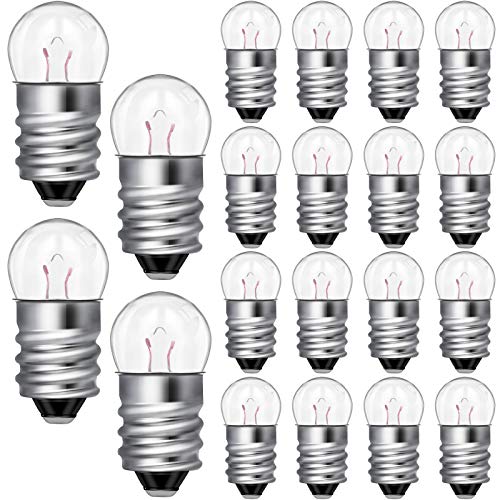
These E10 miniature bulbs operate at 3.8V and 0.3A, delivering a bright, warm light suitable for basic circuit demonstrations and display boards. The compact 2.3 cm length makes them easy to store and replace without crowding workspaces. They are simple to install and remove, ideal for classroom lessons and quick lab setups. As with all small bulbs, keep them away from young children to prevent ingestion hazards. Always verify voltage compatibility with your project before use.
MCIGICM 100 Pcs 5mm LED Diodes Kit

The kit includes 100 LED diodes in five colors: White, Red, Green, Blue, and Yellow. Forward voltages range from 1.8V to 3.2V with a maximum current of 20 mA, making them versatile for indicator circuits, color-mmatching experiments, and visual demonstrations. The variety supports hands-on exploration of series and parallel connections. Ideal for foundational electronics projects, science fairs, and classroom activities where color differentiation aids learning. Handle with care to avoid electrostatic damage during assembly.
MEETOOT Set of 10pcs Bulbs & E10 Holder

This kit contains mini bulbs sized for 6.3V operation and includes five E10 holders for easier circuit construction. The combination features a plastic bulb base and brass socket, offering durability for repeated classroom use. It supports student experiments that involve basic series or parallel circuits and is suitable for DIY projects. Ensure the power source matches the bulb’s voltage to prevent premature burnout or safety issues.
EBOOT 100 Pieces Clear LED 5mm Kit
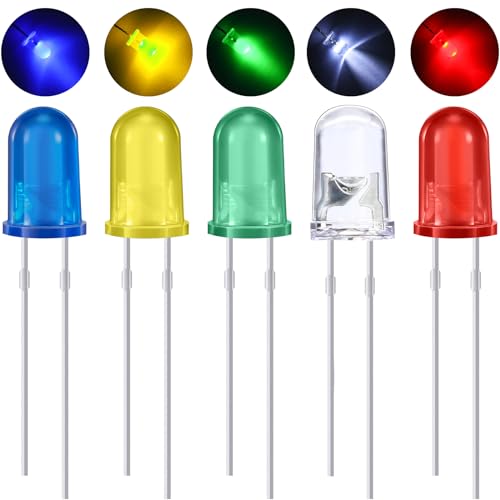
Contains 100 five-millimeter LEDs across five colors, with color distribution of 20 per color. Forward voltages vary by color, generally 1.8-3.4V, and typical current is up to 20 mA. This kit supports color-based experiments, brightness comparisons, and indicator indicators for student projects. The varied colors help students visually distinguish different circuit branches and outcomes. As with all LEDs, static protection during handling is recommended to extend component life.
GutReise DC 50pcs E10 2.5V Bulbs
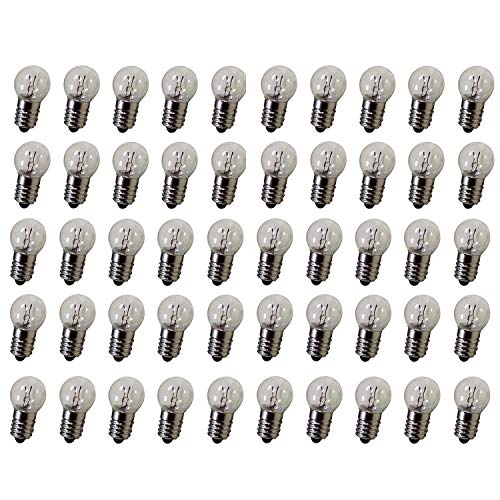
These 2.5V, 0.3A E10 miniature bulbs are well-suited for equipment inspection lamps, aviation indicators, and educational flashlights. The compact form factor makes them convenient for student desks and lab boards. They are intended for use within the rated voltage to prevent burnout. Parents and instructors should supervise use around younger learners to avoid accidental handling of glass components. They are commonly found in classroom experiments dealing with simple DC circuits.
MEETOOT Set of 10pcs 1.5V Bulbs & 5pcs E10 Holder

This MEETOOT kit provides miniature bulbs designed for 1.5V operation along with E10 holders for quick building of simple circuits. Durable components and an easy-to-use layout support student exploration of series and parallel connections, power distribution, and bulb behavior under different loads. Use appropriate low-voltage sources to ensure safe and reliable experiments. The holder design simplifies prototyping and reduces the risk of loose connections during demonstrations.
Buying Guide: Key Purchase Considerations And Comparisons
- Voltage and current compatibility: Choose bulbs that match your intended experiment power sources. Over-voltage can burn bulbs; under-voltage may prevent illumination.
- Base type and form factor: E10 mini bulbs are common for small circuits, but confirm base compatibility with your sockets or holders.
- LED vs incandescent: LEDs offer longer life and less heat, but some projects favor the brightness and color realism of incandescent styles; LEDs also require proper current-limiting to prevent damage.
- Color variety: For visual demonstrations and color-coding of circuits, multi-color LED sets provide clear educational value.
- Durability and handling: Classroom use benefits from components with sturdy sockets and safe packaging. Handle LEDs and bulbs with care to avoid breakage and injury.
- Safety and supervision: Small parts can pose swallowing risks; supervise younger students and keep components away from small children.
- Assortment versus single-pack: Kits and bulk packs are cost-effective for classrooms; individual bulbs are convenient for quick replacements.
- Storage and organization: Plan for compact storage to minimize loss and keep projects organized, especially in shared lab spaces.
- Project alignment: Match the bulb type to your experiment’s objectives—indicator circuits, light demonstration, or power distribution studies.
- Quality and consistency: Look for reputable brands and consistent lumen output to ensure comparable results across experiments.