Best 72 Volt Battery Pack Solutions for Electric Vehicles and Golf C Carts
When upgrading electric vehicles like golf carts or e-bikes, a 72V battery pack can deliver higher power, longer range, and improved reliability. This guide profiles five top 72V options with strong safety features, high cycle life, and built-in battery management systems (BMS) for real-world performance. Each section includes key specs and standout capabilities to help you compare at a glance and choose a pack that fits your needs.
| Product | Brand | Voltage / Capacity | Key Feature |
|---|---|---|---|
| 72V (73.6V) 105Ah Lithium Golf Cart Battery | Elefast | 72V / 105Ah | 3C discharge, built-in 200A BMS, LCD touchscreen |
| VEVOR 72V (70.4V) 105Ah Lithium Golf Cart Battery | VEVOR | 70.4V / 105Ah | 2C discharge, built-in 200A BMS, Bluetooth & touch monitor |
| VPauexii 72V (73.6V) 105Ah Lithium Battery Golf Cart | VPauexii | 72V / 105Ah | 6000+ cycles, 200A continuous discharge, Bluetooth BMS |
| EXECYC Ebike Battery 72V 20Ah | EXECYC | 72V / 20Ah | BMS 60A, safety key lock, high-power capability |
| ZLSHELIBK 72V Ebike Battery 20Ah | ZLSHELIBK | 72V / 20Ah | 4A charger, fits high-power motors (2kW–5kW) |
Note: All product details reflect the listed specifications and features from the manufacturer listings. This guide focuses on 72V battery packs suitable for golf carts, e-bikes, and similar electric platforms requiring robust energy output and reliable safety systems.
Elefast 72V 105Ah Golf Cart Battery

The Elefast 72V golf cart battery uses automotive-grade Li-FePO4 Grade A+ cells for high energy density and safety. The shell employs a high-strength cold-rolled metal plate for added durability. It is designed as a direct replacement for lead-acid setups, delivering stable 14.72 kW peak power with a total capacity of 7.728 kWh. A built-in 200A BMS provides comprehensive protection against overcharge, overdischarge, high/low temperature, and short circuits. The pack supports up to 83.9V 15A fast charging and features an LCD touchscreen for monitoring performance in real time. It is positioned as a high-power option for 72V systems with superior cycle life.
Key considerations:
– 3C discharge enables strong performance for rapid acceleration or high-demand loads.
– Bluetooth-connected BMS supports app-based monitoring and diagnostics.
– Compatibility with 72V golf carts depends on wiring and controller acceptance of the 73.6V nominal pack.
– Temperature management and physical fit in existing enclosures should be checked before install.
VEVOR 72V 105Ah Lithium Golf Cart Battery
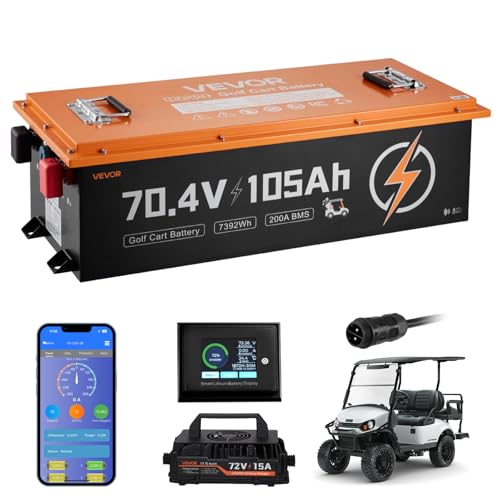
VEVOR’s 72V LiFePO4 golf cart battery features a 105Ah capacity and a 2C continuous discharge rate, with a built-in 200A BMS and Bluetooth-enabled touch monitor. The 70.4V nominal rating aligns well with many 72V systems, offering smooth power delivery and reliable cycle life. The integrated charger is included, simplifying upgrades for compact golf carts or similar vehicles. The battery is designed for easy installation in EV-style carts, reducing the need for extensive wiring changes.
Key considerations:
– 4000+ charge cycles translate to years of daily use under normal conditions.
– 70.4V nominal output may require controller compatibility checks for exact voltage tolerances.
– Bluetooth monitoring enables remote checks of cell balance, temperature, and state of charge.
– Ensure proper fit and venting in your cart’s enclosure to manage heat during operation.
VPauexii 72V 105Ah Lithium Golf Cart Battery

The VPauexii 72V 105Ah pack emphasizes high cycle life and strong peak performance, boasting up to 6000+ deep cycles and a maximum 14.72kW continuous power output. The built-in 200A Bluetooth BMS supports real-time monitoring via a mobile app, offering 5-in-1 protection: overcharge, overheating, short-circuit, overcurrent, and cell imbalance. The rugged military-grade steel shell provides IP65-level protection against water, fire, shocks, and corrosion, making it suitable for rough terrains and outdoor use.
Key considerations:
– Long lifespan claims may depend on proper charging practices and operating temperatures.
– The 6000+ cycles indicate durability but require consistent maintenance of the BMS and firmware updates if applicable.
– The 200A BMS supports strong peak currents, but confirm compatibility with your controller’s peak requirements.
– The robust enclosure adds weight—evaluate overall vehicle balance and mounting space.
EXECYC Ebike Battery 72V 20Ah

EXECYC’s 72V 20Ah ebike battery is built around LG cells and includes a 60A BMS for protection against overcharge and short circuits. The unit uses a standard 84V charging connector and XT60 discharge connector, with an LED indicator and a safety key lock to deter theft. The pack is designed for triangle ebike applications and supports motors in the 0–3000W range. It is marketed as a balanced option for mid-range power kits and conversion builds, offering clear load monitoring and secure mounting features.
Key considerations:
– A 60A BMS supports significant current but confirm motor peak demands to avoid triggering protection during high-torque starts.
– The key lock enhances security for portable installations.
– Ensure compatibility with your controller’s voltage window and charging setup (84V charger included).
– Consider the overall weight and dimensions for frame integration.
ZLSHELIBK 72V Ebike Battery 20Ah

ZLSHELIBK offers a 72V 20Ah lithium battery suitable for 2kW–5kW class motors. It ships with a 4A charger and built-in 80A BMS, designed for reliable performance and quick charging relative to its capacity. The battery’s dimensions and fit will be important when upgrading older ebike frames, so verify frame compatibility and space before purchase. The kit targets high-demand e-mobility setups and emphasizes efficient charging and load handling.
Key considerations:
– 4A charger can deliver faster top-ups, but ensure you have adequate charging infrastructure.
– Charger compatibility with your frame’s electrical system is essential.
– Battery size and weight impact mounting in smaller frames; confirm room and mounting points.
– A built-in BMS helps protect against common lithium faults but regular inspection improves longevity.
Buying Guide: Key Purchase Considerations
- Voltage and compatibility: Confirm your vehicle controller’s voltage acceptance and whether the pack’s nominal voltage aligns with your system. Some 72V packs use 73.6V nominal while others are 70.4V; verify tolerance and wiring compatibility.
- Capacity and range: Higher Ah translates to longer driving range, but weight and space increase. Balance capacity with your frame’s weight limits and available enclosure space.
- BMS features: A robust Battery Management System with protections for overcharge, overdischarge, short circuits, and temperature helps extend life. Bluetooth or app-based monitoring adds visibility for balancing and health checks.
- Charge speed and charger compatibility: Fast chargers reduce downtime but require compatible power supply and temperature management. Ensure your charger matches the pack’s voltage, current, and connector type.
- Durability and enclosure: For golf carts and off-road e-bikes, corrosion resistance, IP ratings, and a sturdy shell reduce damage from vibrations and elements.
- Cycle life and warranty: Look for manufacturers citing 4000–6000+ cycles for LiFePO4-based packs and note warranty terms for protection against manufacturing defects.
- Installation fit: Confirm dimensions, mounting points, venting, and cabling length. Some packs include integrated monitors or handles that simplify installation.
- Safety features: Fire resistance, insulation, and secure locking mechanisms improve theft protection and user safety.
- Regulatory and local requirements: Ensure compliance with local electrical standards and any vehicle-specific regulations for battery packs and BMS.
Across these options, the best choice depends on your application—heavy use on golf carts benefits from higher continuous discharge and a robust BMS, while ebike builds may prioritize compact size, quick charging, and manageable weight. Evaluate how each feature lines up with your daily usage, climate, and maintenance capabilities to select a pack that delivers consistent power over years of service.