Best 100 Amp Meter Sockets With Disconnects for Homes
When upgrading electrical service or planning a new installation, a reliable 100 amp meter socket with a disconnect is essential for safety and ease of maintenance. This guide reviews five top options, highlighting construction, compatibility, and standout features. Each product is evaluated for residential use, whether for overhead or underground feeds, to help you choose a model that balances durability with straightforward installation.
Selected products at a glance:
| Product | Brand | Amp Rating | Format | Key Benefit |
|---|---|---|---|---|
| 100a Ring Type Oh Meter Socket | SIEMENS | 125 A (rating listed) | Ring Type | Durable ring-type design for residential metering |
| 100 Amp Meter Socket, 4 Jaw Meter Base | JINDOUZI | 100 A | 4 Jaw | Copper internals, steel shell for durability |
| Relaxweex 100a, 4 Jaw Meter Base | Relaxweex | 100 A | 4 Jaw | Compact, copper transmission components |
| Siemens MC1020B1100S 10 Space Load Center | SIEMENS | 100 A | Meter Load Center | Ring Type cover; suitable for overhead feeds |
| Eaton UHTRS101BE Single Residential Meter Socket | Eaton | 100 A | Residential Meter Socket | Simple, easy-to-use installation |
Siemens 100a Ring Type Oh Meter Socket

The Siemens ring-type meter socket is designed for residential overhead service with a robust steel enclosure and ring-type contacts. Its load-handling capacity supports typical single-family use. The unit emphasizes secure connections and corrosion resistance for long-term reliability in outdoor environments. The included ring-type cover aids quick service access and tamper resistance, meeting common utility requirements. This model aligns with standard residential metering practices and provides straightforward installation for electricians familiar with Siemens products.
100 Amp Meter Socket, 4 Jaw Meter Base

JINDOUZI’s 100 A four-jaw meter base features copper inserts, copper connectors, and a steel shell for resilience in harsh conditions. With a 600V rating and compatibility for overhead or underground feeds, this unit supports reliable service in varied residential setups. Compliance with ANSI C12.7 standards adds a layer of safety assurance. The combination of durable materials and a robust build makes it a practical choice for homeowners and professionals seeking a cost-effective disconnect-enabled meter base.
Relaxweex 100a, 4 Jaw Meter Base
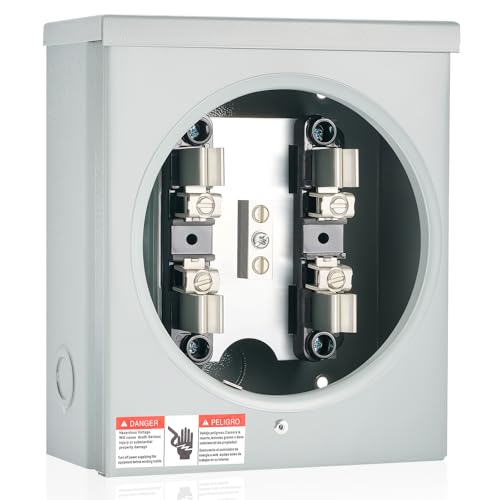
Relaxweex offers a compact 8.7 x 7.5 x 3.2 inch meter socket with a four-jaw configuration and horn bypass. Constructed from galvanized steel, it provides weather resistance and durability suitable for both overhead and underground feed. Internal copper angles and connectors improve current transmission stability, helping maintain consistent power distribution. This model suits homeowners needing a space-efficient solution without compromising electrical performance.
Siemens MC1020B1100S 10 Space 20 Circuit Meter Load Center

This Siemens load center combines a 100-amp meter socket with multiple spaces for feeders, enabling centralized distribution for a home. It is designed for overhead feed setups and requires local utility confirmation for approval in some regions. The system supports scalability beyond a basic disconnect, making it a practical option for remodeling projects or new homes that anticipate additional circuits.
Eaton UHTRS101BE Single Residential Meter Socket

Eaton’s UHTRS101BE model provides a straightforward, single-residential meter socket design rated at 100 amps. It emphasizes user-friendly installation and dependable performance for standard residential services. The unit’s compact form factor and recognized Eaton engineering offer a reliable option for homeowners who want simplicity without sacrificing safety or compatibility with typical utility hookups.
Buying Guide: Key Considerations For 100 Amp Meter Sockets With Disconnect
Choosing the right 100 amp meter socket with a disconnect involves evaluating several core factors to ensure compatibility, safety, and durability. The following considerations reflect multiple perspectives, including utility compatibility, installation environment, and long-term maintenance.
- Type and configuration: Ring-type, four-jaw, and bypass-capable designs serve different metering needs. Ring-type sockets are common for residential overhead feeds, while four-jaw bases provide versatile connections for various service setups. Consider whether a horn bypass is required for maintenance access.
- Material and enclosure: Steel or galvanized steel housings offer weather resistance and structural integrity for outdoor use. Copper components inside improve current transmission efficiency and reduce resistance losses, boosting overall reliability.
- Voltage and current ratings: Ensure the unit supports 600V or higher where applicable and is certified for at least 100 A, matching your service entrance requirements. Consider future expansions if planned.
- Standards and compliance: Look for ANSI C12.7 or equivalent approvals for safety and interoperability. Local utility requirements can vary, and some installations require utility confirmation.
- Install environment: Overhead versus underground feeds dictate mounting orientation and enclosure design. Weather sealing, tamper resistance, and ease of access are essential in outdoor locations.
- Maintenance and accessibility: A design that allows quick disconnects and straightforward conductor access reduces downtime during servicing. Consider whether the unit supports horn bypass or other service features that simplify maintenance.
- Compatibility with accessories: Some meters bundles include combination meter sockets with load centers or accessories for bypass, covers, and mounting hardware. Verify what is included to avoid extra purchases.
- Durability and warranty: Materials such as galvanized steel and copper components tend to offer longer service life under outdoor conditions. Check warranty terms for coverage against corrosion and electrical faults.
- Cost-to-benefit analysis: While price is a factor, prioritize safety, compatibility with your utility, and long-term reliability. A slightly higher upfront cost may yield lower maintenance and replacement costs over time.
- Professional installation: For safety and code compliance, consider professional installation or at least inspection by a licensed electrician, particularly when dealing with main service equipment and disconnects.