Best Multi Stage Water Pump Guide: Top Models for Home and Small-Scale Use
Finding the right multi-stage water pump depends on your flow needs, head height, and electrical setup. This guide highlights five well-suited options for American buyers, explaining who each pump is best for and why it stands out. Use the quick-reference table below to compare key specs at a glance.
| Product | Stages | Flow (GPM) | HP | Voltage | Best For |
|---|---|---|---|---|---|
| LUMIRA 07 GPM, 16 STAGE | 16 | 7 | 1.0 | 115/230 | Medium-height homes, steady pressure |
| LUMIRA 07 GPM, 13 STAGE | 13 | 7 | 0.75 | 115/230 | Budget-conscious setups with moderate head |
| LUMIRA 25 GPM, 10 STAGE | 10 | 25 | 2.0 | 115/230 | Higher flow needs, larger homes |
| Goulds SJ10 1 HP | Multi-stage Jet | — | 1.0 | — | Deep-well or well-withdrawal setups |
| DAYTON 5UXF8 | 5 | — | 2.0 | 115/230 | Heavy-duty home or small business pumping |
LUMIRA Multi Stage Booster Pump — 07 GPM, 16 Stage

The LUMIRA 07 GPM, 16-stage booster pump delivers about 7 GPM at a high head, powered by a 1.0 HP ODP motor. It uses 1″ FNPT inlet/outlet connections and supports up to 477 ft (207 psi) maximum head. This model is best for small-to-medium homes needing strong pressure with reliable 1-phase operation. Its 60 Hz compatibility and UL recognition offer standard home use safety and reliability.
Best for: Homes with higher elevation fixtures requiring higher pressure without excessive amperage. This version is a solid pick when you need significant head and consistent flow, keeping energy use in check for a 1.0 HP motor.
Caution: The motor frame is 56J; ensure your electrical panel can accommodate a 1.0 HP, 1-phase load and confirm compatible voltage (115/230 V) before installation.
LUMIRA 07 GPM, 13 STAGE Booster Pump
This model provides 7 GPM at a lower head per stage and uses 0.75 HP ODP motor power. It also features 1″ FNPT connections and 60 Hz operation with UL recognition, suitable for households seeking a balanced compromise between price and performance. Maximum head is approximately 398 ft (172 psi), with a maximum flow near 9 US gpm.
Best for: Budget-conscious applications where moderate head and decent flow are required without the higher amperage draw of a larger motor.
Limitation: Slightly lower head than the 16-stage version; not ideal if you frequently push very high vertical distances.
LUMIRA 25 GPM Booster Pump — 10 Stage

Designed for higher flow, this model delivers 25 GPM at about 200 ft (87 psi) with a 2.0 HP ODP motor. It uses 1″ FNPT connections and supports up to 39 US gpm maximum, with a 2.0 HP, 1-phase, 115/230 V, 60 Hz, 56J frame UL recognized motor.
Best for: Larger homes or properties with higher water usage, such as homes with multiple bathrooms or small irrigation zones, where strong flow is essential.
Limitation: Higher power requirement means more energy consumption and potentially larger electrical considerations during installation.
Goulds SJ10 1 HP Vertical Deep Well

The Goulds SJ10 is a vertical deep-well multi-stage jet pump designed for deep-well applications. It operates with 1 HP, single-phase power. While detailed head and flow specs aren’t listed here, this model is typically selected for deep-water extraction where the pump needs to pull water from a lower reservoir to a domestic system.
Best for: Deep wells needing reliable lift at moderate flow without oversized equipment. Choose this if your supply comes from a deep source and you want a compact vertical design.
Caution: Specific head and performance figures aren’t provided in this listing; verify your well depth, required head, and electrical compatibility before purchase.
DAYTON 5UXF8 Multi-Stage Booster Pump

This DAYTON booster pump features 2 HP, 1-phase operation with five stages and 1″ NPT inlets. It is described as a booster pump suitable for higher-demand domestic or small commercial applications, delivering robust performance at 115/230 V.
Best for: Situations requiring strong boost with a compact footprint and 1-phase electrical setup. It’s a fit for scenarios where moderate to high head is needed without stepping into three-phase territory.
Limitation: Multi-stage design offers good performance, but the listing provides limited details on exact head and flow ranges, so confirm these specs match your use case before buying.
Goulds HSC15 Centrifugal Pump
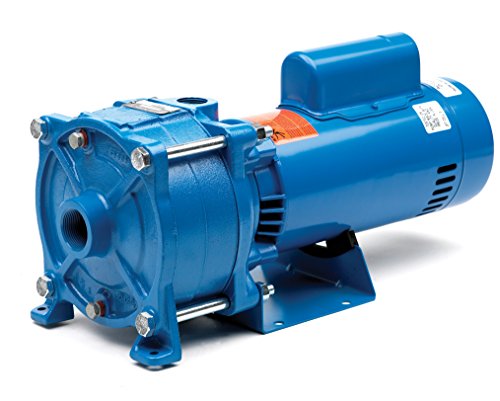
The Goulds HSC15 is a centrifugal pump with multi-stage design, rated at 1-1/2 HP and single-phase operation. This model emphasizes steady, continuous flow suitable for domestic or light commercial transfer needs where centrifugal technology aligns with the system’s head and friction characteristics.
Best for: Applications that benefit from centrifugal pumping characteristics with moderate to high head and reliable one-phase power.
Caution: Specific stage count and performance curves are not listed; verify compatibility with your system’s head, flow requirements, and electrical setup before ordering.
Goulds Booster Pump (3/4 HP, 13 Stage)

This Goulds model provides a 3/4 HP, 1-phase booster pump with 13 stages and 75 psi maximum pressure. Made in the United States, it’s suited for compact installations needing reliable boost without excessive horsepower.
Best for: Small homes or cottages where space and energy use are constraints, yet a steady boost is required.
Limitation: The listing notes a 75 psi max, which may not meet high-pressure demands in taller homes or extensive irrigation setups.
DAYTON 45MW68 Multi-Stage Booster Pump

DAYTON’s 45MW68 is a multi-stage booster pump with a longer form factor and notable construction for various boost scenarios. The listing indicates a robust build suitable for consistent use, though specific stage and head details aren’t provided here.
Best for: Long-running boosting tasks in home or small business contexts where durability and steady operation are prioritized.
Caution: Limited data on exact head and flow; confirm your required performance range before purchasing.
Buying Guide: Key Considerations for Multi-Stage Water Pumps
- Flow rate versus head: Balance your required GPM with the head (distance and height) your system needs. Higher stages generally boost head, while higher HP supports higher flow at the same head.
- Power and wiring: Most compact boosters run on 1-phase 115/230 V. Check your electrical panel capacity and whether a dedicated circuit is needed.
- Stage count and efficiency: More stages can increase head but may add complexity and cost. Choose the fewest stages that meet your needs to optimize efficiency.
- Inlet/outlet sizing: Most models use 1″ FNPT or NPT connections. Ensure compatible piping and fittings for leak-free installation.
- Continuous operation and duty: Look for UL recognition or similar safety certifications. Consider whether the pump will run continuously or intermittently and choose a model rated for your duty cycle.
- Application fit: Deep-well, above-ground storage, irrigation, or domestic water boosting each require different configurations. Verify that motor power, head, and flow align with your use case.
- Space and mounting: Some pumps have taller profiles (vertical well designs) or longer housings. Confirm space in your utility room or well house.
Frequently Asked Questions
- What is a multi-stage water pump? A pump with multiple impeller stages to increase pressure (head) and sometimes flow, typically used for boosting water in homes and small facilities.
- How do I choose the right stage count? More stages increase head; pick the minimum number of stages that achieves your required pressure at the furthest fixture.
- Is a higher HP always better? Not necessarily. Higher HP provides more power but can draw more current. Match HP to your system’s head and flow needs.
- Can I install a multi-stage pump myself? If you have basic plumbing and electrical skills, many models are installable by homeowners; otherwise hire a licensed professional.
- What safety features should I look for? UL recognition, proper electrical ratings, and compatible wiring for your voltage are important safety considerations.
- Do these pumps require maintenance? Yes. Regular inspection of seals, lubrication per manufacturer guidance, and checking for leaks help extend life.