Best Arc Fault Gfci Breaker Options for Safer Home Electrics
Arc fault and ground fault circuit breakers (AFCI/GFCI) provide essential protection against electrical fires and shock hazards. This guide highlights five top products that combine arc-fault detection with ground-fault protection for residential and small commercial wiring. Each option is designed for plug-in or plug-on installations and is suitable for common load centers. Below, you’ll find concise product details, installation considerations, and a buying guide to help you compare features and safety benefits.
Summary of Selected Products
| Product | Brand | Type | Amp Rating |
|---|---|---|---|
| SIEMENS Q120DF | SIEMENS | AF CI/GF CI Dual Function | 20 A |
| ABB THQL1120DFP | ABB | Dual Function AFCI/GFCI | 20 A |
| EMSER Siemens Q120DFN | EMSER/Siemens | CAFCI/GFCI Dual Function | 20 A |
| Siemens Q115DF | SIEMENS | AF CI/GF CI Dual Function | 15 A |
| Square D HOM120PDFC | Schneider Electric | CAFCI/GFCI Dual Function | 20 A |
Note: Each product listed below is a 120-volt, single-pole device suitable for typical residential circuits and compatible load centers. Always verify compatibility with your panel model and local electrical codes before installation.
Siemens Q120DF 20-Amp AFCI/GFCI Dual Function

The Siemens Q120DF is a plug-in dual-function AFCI/GFCI breaker designed to meet code requirements with a streamlined installation in Siemens load centers. It supports faster installation by combining arc-fault and ground-fault protection in a single device. This model features a LED trip indicator to pinpoint the trip cause, aiding with quick diagnostics on residential electrical panels.
Key features include: 20-amp single-pole operation, plug-in load center compatibility, and a single device that replaces separate AFCI and GFCI components. Ideal for homeowners upgrading from older configurations or electricians seeking code-compliant protection in a compact form factor.
ABB Q-Line THQL1120DFP 20A Dual Function

The ABB THQL1120DFP offers integrated arc-fault and ground-fault protection in a 20-amp, single-pole breaker. This dual-function device aims to enhance safety for both homes and light commercial spaces, with robust construction and compliance with high safety standards. Its straightforward design supports reliable installation and dependable performance in 120 V circuits.
Highlights include: combined AFCI/GFCI protection in one unit, a plug-in install type, and durability designed for long-term service. Suitable for projects requiring enhanced fire and shock prevention in typical residential electrical systems.
EMSER Siemens Q120DFN 20A Dual Function

EMSER’s listing of the Siemens Q120DFN 20A 1-pole dual function breaker combines CAFCI and GFCI protection with a plug-on-neutral or standard plug-in design. It is UL-listed and rated for 120 V operation, designed to simplify replacement in compatible Siemens panels while delivering comprehensive safety coverage. This product is presented in a bulk-pack format, making it convenient for contractors handling multiple installations.
Key points: 20 A, 1-pole, dual-function protection, plug-in mounting, and compatibility with Siemens panels that accept these CAFCI/GFCI devices. A solid choice for upgrading to safer branch circuits in multi-bedroom or living areas with higher arc-fault risk.
Siemens Q115DF 15-Amp Afci/Gfci

The Siemens Q115DF is a 15-amp AFCI/GFCI dual-function breaker designed for plug-on or plug-in installations in compatible Siemens load centers. This compact device delivers arc-fault detection and ground-fault protection within a single unit, helping to meet modern safety standards without the need for separate components. It is built for quick installation and reliable, long-term operation in typical residential electrical systems.
Considerations include: appropriate for circuits with lighter loads, compatibility with UL type QFGA2 systems, and an LED or indicator-based trip status in some Siemens panels. A practical option for bedrooms, home offices, and living spaces where arc-fault protection is required by code.
Square D HOM120PDFC Homeline 20A Dual Function

The Square D HOM120PDFC is a Homeline plug-on-neutral 20-amp single-pole dual-function breaker offering CAFCI and GFCI protection. It features a neutral connection design intended to reduce wiring complexity and speed installation, with compatibility limited to Homeline series 4 and newer load centers. This design reduces the need for additional pigtails and simplifies gutter space in panels.
Important notes include: 120 VAC operation, quick installation in compatible panels, and an emphasis on streamlined neutral connections for faster service upgrades. It’s a strong option for new installations or panel upgrades where Homeline compatibility is ensured.
Siemens 20 Amp 1-Pole Dual Function (CAFCI/GFCI)

This 20-amp 1-pole device provides CAFCI and GFCI protection in a compact form. It’s designed for straightforward replacement of standard breakers without pigtails, and it carries 10,000 AIC and HACR ratings. The unit is suited for installation in compatible Siemens panels seeking integrated arc-fault and ground fault protection for branch circuits.
Square D HOM115PDFC Homeline 15A

The Square D HOM115PDFC is a 15-amp Homeline plug-on-neutral dual-function (CAFCI and GFCI) circuit breaker. It incorporates a streamlined neutral connection design to minimize wiring steps and elbows in the panel, enabling faster installations. As with other Homeline devices, it requires a compatible Homeline panel model for optimal performance and compliance with 120 VAC circuits.
BRP115AF 15 Amp AFCI Plug-On Neutral
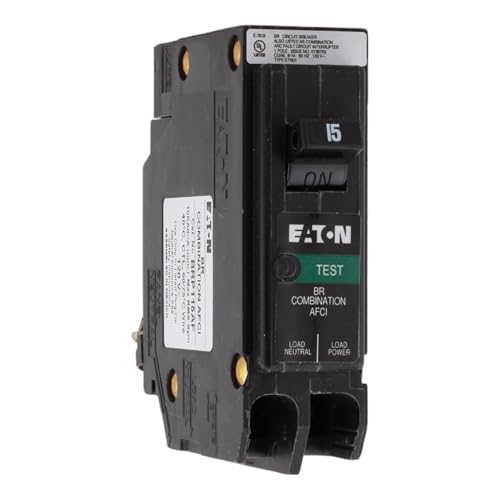
The BRP115AF from CUTLER HAMMER is a 15-amp single-pole AFCI arc-fault circuit breaker with plug-on neutral capability. It supports 120 V operation and UL-listed safety features, rated at 10kAIC. This model focuses on arc-fault protection while simplifying the neutral wiring, providing a compact solution for circuits with a higher sensitivity to arc faults.
Buying Guide: Key Considerations For Arc Fault GFCI Breakers
When selecting an AFCI/GFCI breaker, consider compatibility, installation type, protection level, and code requirements. The following factors help buyers compare options objectively:
- Compatibility: Verify that the breaker is compatible with your panel brand and model (Siemens, ABB, Square D, Schneider Electric). Also confirm whether the panel accepts dual-function devices and if a plug-on-neutral version is required by your wiring setup.
- Protection Type: Choose between CAFCI/GFCI dual-function breakers that protect against arc faults and ground faults. Some products emphasize quick diagnostics (LED indicators) to identify trip causes.
- Amp Rating and Pole Count: Common residential choices include 15 A and 20 A, single-pole. Select based on circuit load and branch circuit design to prevent nuisance trips while maintaining safety.
- Installation Type: Plug-in vs. plug-on-neutral designs influence ease of replacement and neutrals. Ensure the neutral configuration matches your panel requirements to avoid wiring complications.
- Code Compliance: Many regions require AFCI/GFCI protection in living spaces. Check local electrical codes and homeowner association rules to determine required protection levels (family room, bedrooms, kitchens, etc.).
- Durability and Build Quality: Look for brands with robust chassis materials, UL listings, and clear trip indicators to simplify service calls and maintenance.
- Price versus Value: While price is a consideration, prioritize long-term safety and reliability. A single dual-function breaker can replace multiple components, offering both cost and space savings over time.
- Availability and Packaging: Some entries come in bulk packs; assess whether you need to stock multiple units for future replacements or project-based installations.
Other perspectives you might consider include compatibility with smart home or surge protection features, compatibility with older panels, and the potential need for a professional electrician to perform the upgrade to ensure code compliance and proper panel labeling.