Best Z Axis Power Feeds for Milling Machines: Precision and Control
Find the right Z-axis power feed to improve milling accuracy, reduce manual effort, and protect your machine during tool collisions. This guide highlights top options for common knee-type and Bridgeport-style mills, with clear notes on who each product is best for and why it stands out. Ideal buyers include hobbyists upgrading a compact mill, workshop professionals needing smoother feed control, and shop owners seeking safer, more efficient operations.
| Product | Best For | Why It Stands Out |
|---|---|---|
| VEVOR Z-Axis Power Feed | General purpose mills with 5/8″ end shaft | High torque and adjustable speed; solid protection features |
| GPOAS AL-460 Power Feed | Lightweight, easy-install setups | Compact and portable with straightforward installation |
| RATTMMOTOR JN400S | Precision work and low-noise operation | 650 in-lb torque with safety devices and smooth speed control |
| FAHKNS Power Feed Z-Axis | Budget-friendly, versatile compatibility | Good speed control and low-noise design |
| RATTMMOTOR BJS-235 | Higher speed milling tasks | 0-120 RPM range with strong torque and safety features |
VEVOR Z-Axis Power Feed For Milling Machines

Best for: workshops needing robust, adjustable control on Bridgeport- or knee-type mills with a 5/8″ end shaft. This model offers a wide speed range up to 200 RPM and a strong 450 in-lb torque, making it suitable for demanding milling tasks where precise feed rates matter. The Gleason spiral bevel gears support stable transmission, and an automatic protective mechanism helps guard against tool collisions.
Why selected: Its high compatibility and smooth speed adjustment make it a strong all-around option for daily milling use. The powerful torque helps with heavier materials or deeper cuts, while the built-in safety features reduce risk of gear damage during aggressive operations.
Caution: Ensure your machine’s end shaft matches the 5/8″ diameter requirement and verify mounting compatibility before purchase.
GPOAS AL-460 Z-Axis Power Feed

Best for: users seeking a portable, easy-to-install option for common knee-type mills with a 5/8″ end shaft. The AL-460 provides competitive torque (450 in-lb) and a 0-200 RPM range with straightforward setup, making it ideal for hobby shops and smaller workshops.
Why selected: Its compact footprint and lightweight design simplify installation, and the included 18-month warranty plus lifetime guidance add a practical safety net for beginners.
Caution: Some users may prefer higher torque for dense materials; confirm your mill’s mounting pattern aligns with this model’s fit before buying.
RATTMMOTOR JN400S Z-Axis Power Feed (650 in-lb)
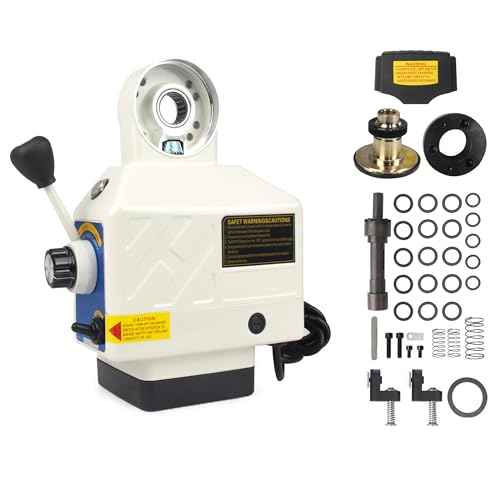
Best for: precision-focused operators who require high torque and dependable safety features. The JN400S delivers up to 650 in-lb torque at 0-200 RPM and includes a safety device to protect gears and electronics in fast-feed or collision scenarios.
Why selected: It balances strong torque with low-noise operation, helping maintain cutting surface precision at higher speeds. The built-in protective mechanism preserves components during abrupt tool movements.
Caution: Check compatibility with your machine’s shaft end and electrical supply (110V) to ensure seamless installation and operation.
FAHKNS Power Feed Z-Axis 450 in-lb Torque

Best for: budget-conscious buyers seeking reliable speed control across a standard 0-200 RPM range with a 450 in-lb torque. The FAHKNS unit is designed for Bridgeport- and similar knee-type mills with a 5/8″ end shaft.
Why selected: Ergonomic design and flexible operation—manual or automatic speed control—make it suitable for a variety of milling tasks, from light finishing passes to heavier milling work.
Caution: While it offers solid versatility, some users may prefer models with higher torque for tougher materials or larger-format mills.
RATTMMOTOR BJS-235 Z-Axis Power Feed
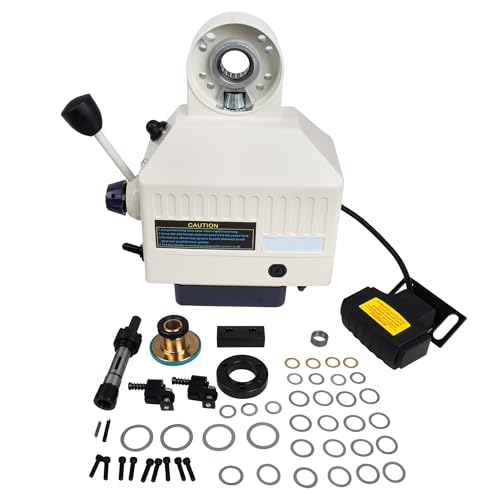
Best for: higher-speed milling tasks requiring a broader speed range, with 0-120 RPM and a strong torque profile. It suits Bridgeport- and certain knee-type mills with a compatible end shaft.
Why selected: The BJS-235 provides a good mix of speed and torque, coupled with reliable bearings and a safety device to minimize damage during aggressive feeds. It supports efficient finishing passes and precision milling.
Caution: The maximum speed is lower than some competitors; plan operations to stay within the 0-120 RPM range for best results.
Buying Guide: Z-Axis Power Feed Essentials
What matters most when choosing a Z-axis power feed is compatibility, control, and protection. The right unit should integrate smoothly with your mill, deliver precise feed rates, and safeguard both the machine and operator during fast or collision-prone moves.
Key questions to ask
- Is my mill’s end shaft diameter 5/8″ and compatible with these units?
- What RPM range do I need for my typical milling tasks?
- What torque rating is required for the materials I work with?
- Does the unit include a safety mechanism for gear and electronics protection?
- Is installation straightforward, and does it fit my mounting pattern?
Comparison: Speed, Torque, and Compatibility
- Higher torque helps with tougher materials and deeper cuts; consider units offering 450 in-lb to 650 in-lb.
- 0-200 RPM is common; choose based on your preferred feed rate and cutting strategy.
- 5/8″ end shaft compatibility is standard for many Bridgeport-type mills; verify before purchase.
- Portable and lightweight options suit smaller shops or easier retrofits.
Installation and Maintenance Tips
- Follow manufacturer mounting patterns and consult online installation videos if available.
- Regularly inspect gears and drive components for wear, especially after aggressive feeds.
- Calibrate feed rate during initial setup to ensure stable, repeatable results.
- Maintain clean, dry electrical connections and observe voltage requirements (110V vs 220V as specified).
Safety Considerations
- Use the built-in safety devices to protect gears and electronics during fast feeds or reversals.
- Avoid mounting configurations that create excessive vibration or risk of part contact with the tool or workpiece.
FAQ
- What is the typical lifespan of a Z-axis power feed? Most units are designed for long-term use with proper maintenance, but exact lifespan depends on operating conditions and loads.
- Do these feeds require a dedicated power supply? Most models operate at 110V or 220V; verify your shop’s electrical setup before purchasing.
- Can I retrofit any knee-type mill with a Z-axis power feed? Compatibility depends on the end shaft diameter, mounting pattern, and available space on the mill.
- Is higher RPM always better? Not necessarily; select RPM range to match your standard milling speeds and workpiece materials for best results.
- Do these feeds affect precision during light finishing passes? When properly calibrated, they improve consistency and reduce operator fatigue, especially on long runs.
- Are warranties available? Many sellers offer warranty terms; review warranty specifics and return policies before buying.