Best Wireless Water Monitoring System for Homes, RVs, and More
Looking for a wireless water monitoring system that can detect leaks, monitor levels, and trigger automatic shutoffs? This guide highlights five solid options, explaining who they’re best for, how they work, and what to watch out for. These picks are ideal for homeowners, RV enthusiasts, and property managers seeking reliable, cable-free monitoring with alerting and quick-response capabilities.
The following table summarizes the top picks and who they’re best for. Use it as a quick reference when deciding which system to purchase.
| Product | Brand | Best For |
|---|---|---|
| YoLink LoRa Smart Water Level Monitoring Sensor | YoLink | Long-range, battery-powered monitoring in areas with weak WiFi |
| TankMaster – Wireless RV Tank Monitoring System | RiVöt | RVs needing local, app-based tank level visibility without internet |
| Frizzlife LP365 Smart Water Monitor | FRIZZLIFE | Whole-home real-time leak detection with remote alerts |
| Smart Water Auto Shut Off Valve & Leak Detector | AIWSH | Whole-home protection with LoRa coverage and multiple sensors |
| H2flow LevelSmart Smart Autofill System | LevelSmart | Pools, spas, fountains, and ponds needing automatic level control |
YoLink LoRa Smart Water Level Monitoring Sensor

The YoLink sensor is a wireless, battery-powered float switch with a 105dB siren and LoRa wireless range. It supports multiple applications such as sump pump alarms, toilet leak alerts, and tank level monitoring. It is best for buyers needing long-range connectivity where WiFi is unreliable or unavailable. It can trigger pumps on/off and alert lights or sirens automatically when levels are high or low. A caution: the setup relies on YoLink hubs and compatible devices within the YoLink ecosystem, so ensure you have or plan to obtain the hub for full functionality.
Who it’s best for: homeowners with distant water tanks, basements, or outdoor setups where WiFi coverage is poor. Why selected: LoRa provides long-range coverage, reducing the need for wiring or professional installation.
Limitations: Must be paired with a YoLink hub and compatible devices to enable full automation and alerts.
TankMaster – Wireless RV Tank Monitoring System

TankMaster monitors fresh, gray, and black RV tanks via Bluetooth and Wi-Fi, delivering current tank levels in an app. It supports up to 10 TankMasters locally on a single device and keeps data on-device—no cloud or internet required for operation. It’s best for RV users who prioritize offline usability and direct smartphone access. A caution: it does not support remote internet connectivity, so you’ll rely on local access while camping.
Who it’s best for: RV owners who want simple, local tank monitoring without cellular data. Why selected: easy setup, offline operation, and clear tank-type organization in the app.
Caution: Limited to Bluetooth/Wi-Fi local connectivity; not suitable for remote monitoring over the internet.
Frizzlife LP365 Smart Water Monitor and Automatic Shutoff
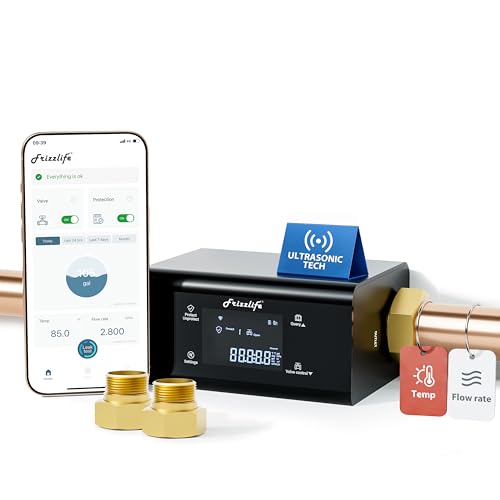
The LP365 offers real-time leak alerts, auto shutoff, and 24/7 monitoring with ultrasonic leak detection. It supports viewing temperature and flow, and integrates with smart devices for proactive protection. It’s best for users who want ongoing, continuous monitoring across multiple rooms with automatic shutoff if a leak is detected. A caution: the feature set emphasizes real-time alerts; ensure your home network and app permissions meet your privacy and security preferences.
Who it’s best for: homeowners seeking comprehensive leak protection and remote control. Why selected: strong leak detection, proactive shutoff, and continuous monitoring features.
Caution: Primarily relies on app-based alerts; ensure compatibility with your preferred smart home ecosystem.
Smart Water Auto Shut Off Valve & Leak Detector

This system uses long-range LoRa to provide whole-home leak protection with auto shut-off. It includes dual leak sensors (wired and wireless) and supports up to eight wireless sensors for expanded coverage. It’s best for homeowners who want network-wide protection and resilient operation during internet outages. A caution: LoRa range can vary by environment; walls or basements may affect signal strength, so plan sensor placement accordingly.
Who it’s best for: households needing broad coverage and redundancy for leak detection. Why selected: dual sensor options and scalable sensor count improve protection across high-risk areas.
Caution: Ensure proper placement to maintain reliable LoRa connectivity through obstacles.
H2flow LevelSmart Autofill System

The LevelSmart LevelSmart Autofill System automates water levels for pools, spas, fountains, and ponds, offering a maintenance-free installation and a simple setup. It is best for outdoor water features where consistent levels are desired with minimal upkeep. A caution: designed for specific water features; ensure compatibility with your pool or fountain hardware before purchase.
Who it’s best for: owners of pools, spas, ponds, or fountains needing automatic level control. Why selected: ease of installation and ongoing maintenance-free operation.
Buying Guide: Key Considerations for a Wireless Water Monitoring System
- Connectivity type: LoRa, Bluetooth, or Wi-Fi? Choose LoRa for long-range, low-power needs; choose Wi-Fi if you want cloud access; Bluetooth for local control.
- Power source: Battery-powered or wired? Battery-powered sensors offer flexibility but require replacements; wired sensors may provide continuous operation but require installation work.
- Sensor coverage: How many zones or tanks need monitoring? Ensure the system supports multiple sensors or hubs as needed.
- Alarm and control features: Auto shutoff, sirens, push alerts, and app-based controls help prevent water damage; verify compatibility with your existing smart home setup.
- Data access: Local vs cloud storage? Some systems offer on-device data storage with no internet requirements, while others rely on cloud services for analytics and history.
- Installation considerations: Ease of placement (outdoors vs indoors), potential drilling or adhesion needs, and the risk of false alarms in humid environments.
- Scalability: Can you start with a basic kit and expand later? Look for systems that add more sensors without major infrastructure changes.
Frequently Asked Questions
- Do wireless water monitoring systems require Wi-Fi? Not always. Some use LoRa or Bluetooth and work offline or with a local hub, while others rely on Wi-Fi/cloud services for remote access.
- Can these systems control water valves automatically? Yes, several models offer auto shutoff or valve control when a leak or high/low level is detected.
- Is installation difficult for a novice? Many kits are designed for easy installation, especially those that stick sensors to tanks or install on pipes; some may require a plumber or installer for best results.
- Will these systems work in RVs or outdoor areas? Yes, several options are designed for RV tanks or outdoor features, with weather-resistant sensors and portable hubs.
- Do I need a hub or gateway? Many wireless systems require a hub or gateway to coordinate sensors, alerts, and automation rules; verify hub compatibility with all planned devices.
- Can I monitor multiple zones with a single system? Most systems support multiple sensors or tanks; confirm the maximum number of sensors per hub or account before buying.