Best Wireless Rain Sensors for Sprinkler Systems
Choosing a wireless rain sensor helps conserve water and keeps your lawn from overwatering. The right sensor detects rain or temperature changes and automatically pauses irrigation. This guide reviews five top options, highlighting why they stand out, how easy they are to install, and what to consider before buying.
| Product | Brand | Key Benefit |
|---|---|---|
| Rain Bird CPRSDBEX | Rain Bird | Customizable rainfall threshold |
| Rain Bird Wireless Rain & Freeze System | Rain Bird | Rain and freeze protection with intuitive interface |
| Orbit 57069N | Orbit | Weather-resistant wiring and water-absorbent disks |
| Rain Bird WR2-RFC Kit | Rain Bird | Reliable wireless rain and freeze sensing |
| Hunter MINICLIK | Hunter | Simple install and automatic shutoff on rain |
Note: All models reviewed are designed for American residential irrigation systems and offer wireless communication to controllers. Specifications reflect typical configurations and may vary by installation environment.
Rain Bird CPRSDBEX Wired Rain Sensor

The Rain Bird CPRSDBEX combines a reliable rain-sensing mechanism with adjustable thresholds and a vented design to help the sensor dry out after rainfall. It automatically shuts off the sprinkler system when rain is detected and restarts once conditions are dry, helping conserve water and reduce runoff. The built-in dial lets users fine-tune rainfall activation from 1/8″ to 3/4″, making it adaptable to different yard sizes and irrigation needs. An adjustable side vent ring assists in drying the sensor after water exposure, which can prolong sensor life in humid climates.
Why it stands out: Precise threshold adjustment and a rugged mount ensure dependable performance, especially in regions with variable rainfall. The wired connection provides a stable signal to compatible controllers, and its compact form fits neatly in most irrigation setups.
Rain Bird Wireless Rain & Freeze Sensor System
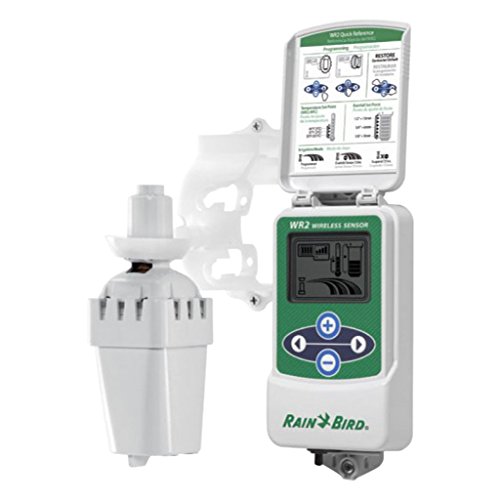
This system combines a wireless rain sensor with a freeze sensor, enabling the irrigation controller to halt operations during rain and when temperatures drop below a set point. It can save up to about 35% on water usage by preventing irrigation during unfavorable conditions. The interface is described as intuitive with icon-driven programming, simplifying setup for homeowners. It’s important to note compatibility considerations: this model is not compatible with Rain Bird ESP-SMT or ESP-SMTe smart controllers, so compatibility with your current system should be verified before purchase. Settings typically cover rainfall from 1/8″ to 1/2″ and low-temperature ranges from 33°F to 41°F.
Why it stands out: The dual-function approach protects against both rainfall and freezing conditions, offering a comprehensive solution for year-round water management. Its straightforward programming helps homeowners adjust settings without specialized tools.
Orbit 57069N Rain & Freeze Sensor
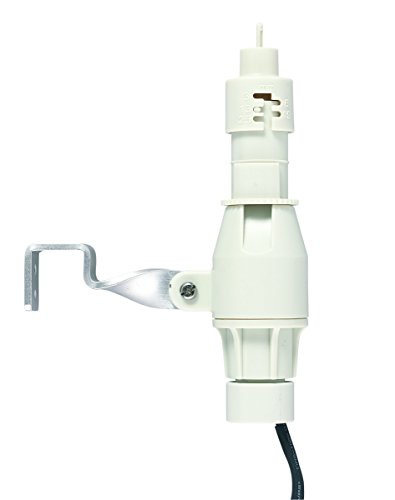
Orbit’s 57069N provides automatic rain and low-temperature detection for sprinkler controllers. Its weather-resistant wire runs from the controller to an exterior area, ensuring reliable signal transmission. The sensor uses water-absorbing disks that expand when wet, causing the controller to suspend watering. This straightforward wet-detect mechanism is robust in traditional irrigation setups where direct line-of-sight wireless transmission may be limited. It’s a practical choice for older controllers or systems without modern smart interfaces.
Why it stands out: A simple, durable design that excels in classic irrigation configurations. The sensor’s passive mechanism, with disks that respond to moisture, offers dependable operation without complex programming.
Rain Bird WR2-RFC Wireless Kit

The WR2-RFC kit delivers a compact wireless rain and freeze sensing package designed for easy installation. It’s marketed as a complete wireless solution with reliable signal integrity, making it suitable for homeowners seeking a straightforward upgrade to non-wireless systems. The kit emphasizes quick setup and user-friendly programming, which helps minimize installation time and potential mistakes. Key specs include a standard mounting footprint and reliable wireless communication between sensor and controller, ensuring consistent rain and freeze protection.
Why it stands out: Fast installation with reliable wireless connectivity. The kit’s emphasis on simplicity makes it accessible for DIY installers and those upgrading from older hardwired units.
Hunter MINICLIK Rain Sensor

The Hunter MINICLIK is designed for easy installation on automatic irrigation systems. It automatically ends scheduled watering when it detects a pre-set amount of rain and resumes once the storm subsides. The unit emphasizes quick coupling with existing controllers and a compact design that minimizes obstruction near sprinkler heads or yard features. It’s a practical option for homeowners seeking a low-profile sensor with reliable rain detection performance.
Why it stands out: The Mini-Click design targets simple, fast installation and operation, making it a popular choice for DIY projects and quick upgrades to traditional irrigation setups.
Buying Guide: Key Purchase Considerations
- Coverage and compatibility: Verify that the sensor works with your controller model and wiring setup. Some systems are designed for specific brands or line-of-sight wireless links, while others are universal with adaptable adapters.
- Detection thresholds: Look for adjustable rainfall thresholds (e.g., 1/8″ to 1/2″ or 1/8″ to 3/4″). Fine-tuning helps tailor irrigation pauses to local rainfall patterns and plant needs.
- Rain vs. freeze sensing: Consider whether you need both rain and temperature-based shutoff. Freeze sensors prevent watering during cold snaps, which saves water and protects equipment.
- Ease of installation: Some units install in minutes with simple mounting, while others require mounting brackets, wiring, or external power considerations. If you’re not comfortable with wiring, choose models described as DIY-friendly.
- Power and reliability: Wireless models offer convenience but vary in battery life and signal range. Wired options may provide more stable operation in challenging environments.
- Durability: Outdoor exposure requires weather-resistant enclosures and seals. Look for IP ratings or user-reported performance in humid or dusty climates.
- Maintenance: Check for features that simplify maintenance, such as self-drying vents, easy calibration dials, and indication LEDs to confirm operation.
- Cost of ownership: Consider total cost including installation, potential controller compatibility, and replacement parts. A higher upfront cost can yield long-term water savings.
- Environment: Urban yards with dense shade, or areas with frequent rain, may benefit from tighter thresholds; desert ecosystems may require different settings to prevent over-watering.
In evaluating these options, focus on how well the sensor integrates with your existing controller, the ease of programming, and how reliably it pauses irrigation during adverse conditions. A sensor that’s simple to install and adjust can provide consistent water savings while protecting plant health.