Best Wireless Fire Alarm System Suppliers for Smart Home and Commercial Security
Looking for reliable wireless fire alarm system suppliers to keep your home or business safe? This guide highlights five top options, focusing on ease of use, clear alerts, and straightforward installation. The best picks suit different buyers: homeowners seeking simple wireless coverage, small business managers needing reliable local alarms, and facility managers requiring scalable solutions. Read on to compare features, ideal use cases, and practical considerations for choosing the right system.
| Product | Best For | Why It Stands Out |
|---|---|---|
| Swokely 3 Pack Wireless RF 433MHz Fire Alarm Panel | Homeowners and small offices | Compact wireless panel with easy manual alarm and strong alert indicators. |
| QWORK Wired Emergency Sound and Light Fire Alarm Station | Traditional wired systems | Dual action manual call point with clear activation and instructions. |
| Relaxweex 8 Pcs Fire Alarm Pull Station Set | Office and commercial spaces | Multiple pull stations with built-in LEDs and audible alerts for quick evacuation. |
| 5853 Resideo | Affordability and supplier breadth | Glossy branding with emphasis on glassbreak and wireless capabilities. |
| System Sensor SWL White Fire Strobe | Industry-standard wired strobe | Clear strobe and alarm signaling with scalable wiring options. |
Swokely 3 Pack Wireless RF 433MHz Fire Alarm Panel
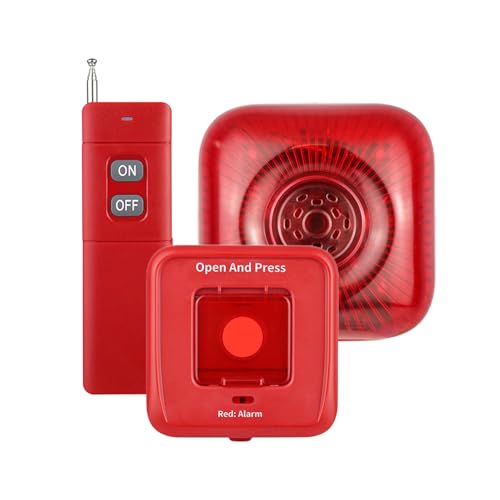
The Swokely system uses a 433MHz wireless protocol to connect a central alarm panel with a manual fire alarm bell and remote alert capabilities. This setup favors quick, local alerts for residential or small-office environments. Best for buyers seeking an affordable, plug-and-play wireless solution with straightforward operation. Caution: wireless range can vary in multi-story layouts or dense construction, which may require repeaters.
QWORK Wired Emergency Sound and Light Fire Alarm Station

The QWORK unit is designed for traditional wired fire alarm systems and adds a dual action manual call point with a push/pull mechanism and key access. It suits facilities already using wired alarm networks that require an easily identifiable activation point. Best for: spaces that need a proven manual activation with clear visibility. Limitation: not a stand-alone wireless option; requires compatible wiring and integration.
Relaxweex 8 Pcs Fire Alarm Pull Station Set

This 8-piece kit includes multiple dual-action pull stations with LED indicators and audible alarms. It’s well-suited for larger offices or facilities where distributed manual alerts improve evacuation times. Better for: environments needing extensive manual signaling coverage. Caution: assembly and wiring should follow local codes; ensure compatibility with existing panels if integrating with a larger system.
5853 Resideo

Resideo presents a broad fire safety lineup described as wireless-capable with a focus on Glassbreak recognition and supplier breadth. This option may appeal to buyers prioritizing a well-known supplier network and a wide catalog. Best for: organizations that value a large ecosystem of compatible devices. Limitation: product marketing emphasis may not reveal exact specs for every installation scenario.
System Sensor SWL White Fire Strobe

System Sensor SWL White Fire Strobe is a wired option emphasizing clear visual signaling and integration into security networks. Best for facilities needing strong, visible alerts with wired reliability. Caution: not a wireless model; ensure compatibility with existing wiring and power supplies.
Buying Guide
What should you consider when choosing a wireless or mixed-fire alarm system?
- Room coverage and layout: multi-story homes or offices may require repeaters or additional panels for consistent alerts.
- Power and connectivity: wireless devices depend on batteries or power backups; wired components need a stable power source.
- Activation methods: manual pull stations vs. push/pull or dual action points affect evacuation speed and ease of use.
- Alerts and audibility: consider devices with loud alerts and visible LEDs or strobes for environments with noise or visual impairment considerations.
- Expandability: choose systems with scalable accessory options for future growth or integration with existing security networks.
How to choose by use case
- Residential homes: prefer wireless panels with easy installation, strong range, and user-friendly interfaces.
- Small offices: look for a mix of wireless sensors and reliable manual call points for quick evacuation.
- Commercial spaces: prioritize scalable systems with multiple call points, robust signaling, and compatibility with existing building management plans.
Installation considerations
- Compliance: verify local fire codes and electrical standards for your jurisdiction.
- Placement: locate alarms where they can be clearly heard and seen, avoiding obstruction by furniture or decorative features.
- Maintenance: establish a regular testing schedule and battery replacement plan for wireless devices.
FAQ
- What is the difference between wireless and wired fire alarm systems?
Wireless systems use radio signals to connect components, while wired systems rely on physical wiring. Wireless can be quicker to install but may require battery maintenance and signal range considerations. - Can I mix wireless and wired devices in one system?
Yes, many systems support hybrid configurations, but check compatibility with your controller and local codes. - What should I look for in a fire alarm manual call point?
Look for clear activation mechanisms, visible indicators, and compatibility with the central panel. - How often should fire alarm components be tested?
Regular testing intervals vary by jurisdiction, but monthly local checks and quarterly professional inspections are common. - Do fire alarms require professional installation?
Some systems are designed for DIY installation, while others require licensed professionals to ensure proper wiring and compliance. - What is the role of a strobe light in a fire alarm system?
Strobes provide visual alerts for occupants who may not hear alarms, improving evacuation safety.