Best Wind Turbine With Battery Storage for Reliable Off-Grid Power
Answering the demand for dependable off-grid power, this guide highlights top wind turbine with battery storage systems. These setups suit remote cabins, boats, RVs, farms, and emergency backup needs. The featured products blend wind and solar options for continuous energy generation, with battery storage to smooth out supply. If you need practical, ready-to-use kits, these picks emphasize value, durability, and clear configuration for different off-grid lifestyles.
Below is a quick, at-a-glance comparison of the five selected kits. The table focuses on capacity, core components, and typical off-grid use cases to help you decide which configuration best fits your site, climate, and energy goals.
| Product | System Type | Battery Type & Size | Inverter | |
|---|---|---|---|---|
| VEVOR 24V 1000W Solar Wind Power Kit | Hybrid solar + wind | 25.6V 100Ah LiFePO4 | 3000W | Up to ~4 kWh |
| 1120W 24V Solar Wind Kit Home Off-Grid | Hybrid solar + wind | 2× 100Ah Li Battery (likely LiFePO4) | 3000W | ~2.4 kWh/day |
| VEVOR 12V 600W Solar Wind Kit | Hybrid solar + wind | 12.8V 100Ah LiFePO4 | 1000W | ~2.4 kWh |
| Giosolar 1000W Wind Solar Kit | Hybrid solar + wind | 2× 100Ah LiFePO4 | 1000W | Varies by sun/wind |
| Giosolar 100W Wind Turbine Kit | Wind only with controller | Battery not included | Wind charge controller | Dependent on wind |
VEVOR 24V 1000W Solar Wind Power Kit
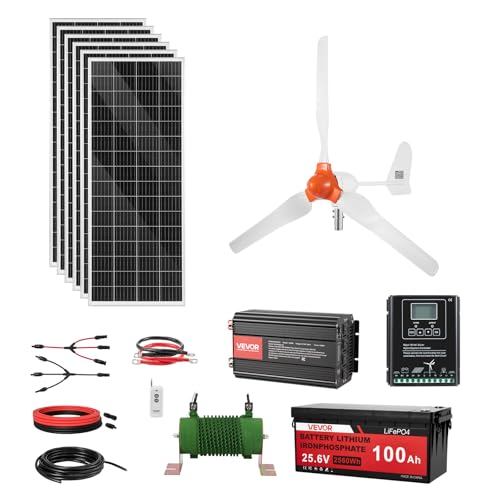
Best for: Off-grid homes, cabins, and small farms needing a robust multi-source system. This kit combines six 100W solar panels with a 400W wind turbine, plus a 25.6V 100Ah LiFePO4 battery and a 3000W inverter. The setup targets higher daily energy output and resilience in variable conditions.
Why chosen: The hybrid approach leverages both wind and solar to maximize utility across day and night. The strong rotor and low-start wind speed support consistent generation, while the LiFePO4 pack offers durable cycle life. It is suited for larger off-grid loads like refrigeration, pumps, and lighting in remote locations.
Limitation: As a higher-capacity system, it requires adequate mounting space, proper wiring, and a suitable charging controller to manage multi-source input. Ensure clear sun and wind access for best results.
1120W 24V Solar Wind Kit Home Off-Grid

Best for: Home-scale off-grid setups needing steady battery support and mid-range power. This kit includes a 400W wind turbine, six 120W solar panels, and a 3000W inverter with two 100Ah Li batteries, making it suitable for homes with modest daily energy demands.
Why chosen: It balances solar and wind in a moderate footprint, delivering reliable daytime generation plus wind-driven storage at night or cloudy days. The aluminum frame and multi-layer encapsulation enhance durability in various climates.
Caution: The combo relies on accurate system sizing to avoid under/overcharging. Confirm panel placement and wind exposure to achieve expected outputs.
VEVOR 12V 600W Solar Wind Kit

Best for: Compact off-grid setups for RVs, boats, or small cabins requiring dependable 12V operation. The kit features two 100W solar panels and a 400W wind turbine with a 12.8V 100Ah LiFePO4 battery and 1000W inverter.
Why chosen: This mid-size configuration emphasizes portability and straightforward wiring, making it a practical entry point for smaller dwellings while still enabling daily energy generation from wind and sun.
Limitation: Power output scales with wind and sun; in persistently low-wind environments, performance depends heavily on solar input. Plan for seasonal variability.
Giosolar 1000 Watt Wind Solar Kit

Best for: Off-grid enthusiasts who want a combined wind and solar solution with high-capacity LiFePO4 storage. This kit includes two 100Ah LiFePO4 batteries, a 1000W inverter, and a hybrid controller for integrated management.
Why chosen: The 1 kW inverter capacity supports diverse loads, from appliances to charging stations, while the LiFePO4 battery set provides reliable energy storage with extended cycles and safety features via BMS.
Limitation: Battery configuration and wire sizing must align with local electrical codes and the controller’s specifications. Ensure proper ventilation for battery packs during charging.
Giosolar 100W Wind Turbine Kit

Best for: Lightweight, wind-focused setups where space is limited or wind is consistently available. This 100W turbine with a wind charge controller is designed to work with a battery system for small-scale charging.
Why chosen: It offers a simple, affordable way to start harvesting wind energy and charging an existing battery bank, particularly in breezy locations or as a supplementary source to a larger solar setup.
Limitation: Output is highly dependent on wind availability; use alongside solar or a larger turbine if higher daily energy is required.
Buying Guide
What size system do you need? Start with your daily energy consumption and peak loads. A larger battery bank and inverter expand capabilities, but require more space and better wiring. Consider your average wind speeds and sun exposure to estimate steady generation.
Hybrid versus wind-only configurations
Hybrid solar-wind kits offer better year-round performance, smoothing power supply across weather conditions. If you live in a windy climate with some sun, hybrid systems maximize production and storage efficiency.
Battery type and capacity
LiFePO4 batteries provide long cycle life and safer chemistry for off-grid use. Look for a pack that matches inverter input, ventilation requirements, and space constraints. Battery capacity should cover your highest daily usage with a buffer for cloudy days.
Inverter size and efficiency
Inverters must handle your peak load. A higher wattage inverter supports more appliances simultaneously. Efficiency impacts how much energy is wasted as heat, so choose a model with good efficiency ratings.
Controller compatibility
The charge controller should manage both wind and solar inputs in hybrid kits. Ensure it supports your battery chemistry and includes protections such as overcharge, short circuit, and temperature compensation.
Installation considerations
Check mounting space, wind exposure, and weather resistance. Proper grounding, wiring gauges, and proper fuse sizing are essential for safety and performance. Local codes may require professional installation for larger systems.
FAQ
- What is a wind turbine with battery storage best for? It’s ideal for remote locations needing uninterrupted power, such as cabins, boats, RVs, or farms, especially where wind is a reliable resource.
- Do hybrid wind and solar kits require an observer to manage charging? Generally, no. Modern controllers automatically balance input from wind and solar and regulate battery charging.
- Can I upgrade an existing system with a larger inverter? Yes, if the wiring, breakers, and battery capacity are compatible and rated for the higher load.
- What maintenance is needed for LiFePO4 batteries? Regular inspection, proper charging with a compatible BMS, and avoiding deep discharges help extend cycle life.
- Is professional installation required? For complex, high-capacity systems, professional installation is recommended to ensure safety and code compliance.
- How do I choose between more solar panels or a larger wind turbine? If your site has strong wind but limited sun, add wind capacity; if sunny days prevail, expand solar input. A balanced approach often delivers the best year-round output.