Best Wind Turbine for Residential Use: Top Home-Grade Options for Clean Power
Choosing the right wind turbine for a residential property involves balancing cost, durability, noise, and compatibility with home energy systems. The following selections come from reliable brands and cover a range of wind conditions and capacities suitable for hobbyists, off-grid cabins, and small-scale home power projects. Read on to compare features and find a model that fits your site and energy goals.
The table below provides a quick glance at five relevant products to help you compare at a glance. For more detail, scroll to each product section.
| Product | Brand | Key Benefit | Typical Use |
|---|---|---|---|
| Wind Power V4.0 STEM Kit | Thames & Kosmos | Educational, 3-ft turbine with real electricity generation | Learning, small-scale experiments |
| LTIGOAW 12V Vertical Axis | LTIGOAW | Quiet operation, 100W max, versatile mounting | Home, cabins, off-grid |
| LIAPDG 12V/24V Kit | LIAPDG | Three-phase PMG, low starting wind, versatile color options | Small to mid-scale home power |
| QX Electronics Micro Wind Turbine | QX Electronics | Compact micro generator with basic AC output | Educational or extremely small-scale hobby projects |
| Wind Turbines 6000W / 9000W Series | Generic | Noisy-to-low-noise, high-capacity residential options | Larger home sites or off-grid setups |
Thames & Kosmos Wind Power V4.0 STEM Experiment Kit
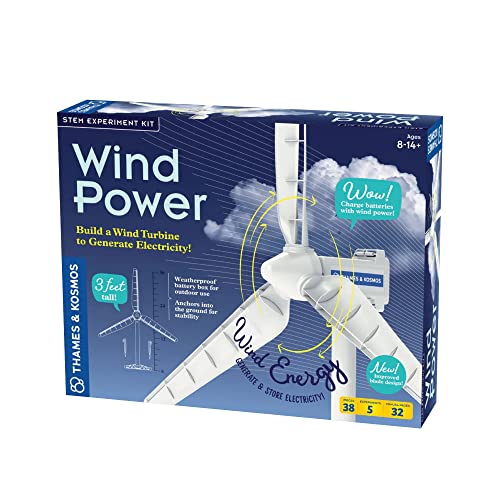
The Thames & Kosmos Wind Power V4.0 kit offers a real, working 3-foot wind turbine designed for educational use. It provides hands-on learning about wind energy as a renewable resource and demonstrates how wind can be converted into stored electric energy to power a small model car. The blade construction emphasizes durability and aerodynamics, improving performance in practical experiments. This kit is well suited for classrooms or dedicated home setups focused on foundational renewable energy concepts.
DIY Small Wind Turbine Generator Kit with Light Strip

This compact wind turbine includes a 18-inch diameter turbine designed to power a decorative light strip in a yard. It lights up automatically when wind is present, making it a fun visual demonstration of wind energy. The kit emphasizes DIY assembly with a brushless motor and ASA/PC blade materials for durability in outdoor conditions. It’s best for decorative, educational, and light-duty energy demonstrations rather than large-scale residential power generation.
Wind Turbines 6000W 8000W 9000W 10000W No Noise Vertical Magnetic Levitation

These vertical-axis wind turbines claim high capacity figures (ranging into the kilowatt class in some offerings) with low to negligible noise, leveraging magnetic levitation and a three-blade design. They are described as durable and capable of withstanding strong winds, with a coreless permanent magnet generator. They are suitable for larger residential sites or off-grid installations where higher energy output is desired, though considerations regarding local regulations and installation complexity are important.
POFLUANY 1200W Wind Generator Kit

The POFLUANY 1200W kit features a three-phase permanent magnet synchronous motor and an integrated voltage regulator. It includes a rotating aluminum alloy body with a yaw adjustment system to optimize wind capture, and a durable design with weather-resistant components. The system suits home and off-grid setups seeking moderate power generation with automatic control to manage battery charging and system protection.
LTIGOAW 12V 500W Vertical Axis Wind Turbine

The LTIGOAW 12V 500W turbine uses a vertical-axis design with a compact form factor and dual bearings for stable operation. It is designed for home use, cabins, or off-grid applications, delivering up to 100W under certain wind speeds. The turbine emphasizes durability, weather resistance, and quiet performance suitable for residential settings, with easy mounting options and a focus on low-noise operation.
Generic 10,000W Vertical Wind Turbine
This high-capacity option aims at larger residential sites or off-grid installations, featuring a vertical-axis setup and three blades. It advertises low-noise operation and strong wind resistance, focusing on durability with a coreless PMG design. Prospective buyers should assess site wind data, installation requirements, and grid or battery integration when considering this scale of turbine.
Buying Guide
- Wind resource and site assessment: Measure average wind speeds at your location and consider turbulence, obstructions, and exposure. Turbines perform best where average speeds regularly exceed 9–12 mph (4–5 m/s).
- Power needs and scale: Match turbine capacity to your load. Small, educational or decorative units generate minimal power, while larger units (thousands of watts) require substantial wind exposure and electrical storage or grid interconnection.
- Vertical vs. horizontal axis: Vertical-axis turbines tend to be quieter and easier to install in limited spaces, while horizontal-axis designs often offer higher efficiency at open, windy sites.
- Durability and materials: Look for weather-resistant housings, corrosion-resistant blades, and sturdy mounting options. Material quality impacts longevity in harsh conditions.
- Noise considerations: Residential zones often have noise limits. Check decibel ratings and placement to minimize impact on neighbors and living areas.
- Electrical integration: Ensure compatibility with batteries, charge controllers, and inverters. Some kits include integrated regulators; others require separate components.
- Safety and regulations: Verify local permits, zoning restrictions, and electrical codes. Hire a qualified electrician for grid-tied systems and complex installations.
- Maintenance and warranty: Consider ease of maintenance and the availability of replacement parts. A longer warranty can reduce lifecycle costs for durable models.
- Cost considerations: Initial cost, installation, and potential tax incentives influence total cost of ownership. Evaluate return on investment based on local wind resources.
- Future upgrades: If planning expansion, choose a modular system or a turbine that can be integrated into a larger off-grid or hybrid setup.