Best Welder Extension Cord 220V: Safe, Flexible Options for 250V Welding Machines
Finding a reliable welder extension cord is essential for safe and efficient 220V welding work. This guide highlights practical 220V welding extension cords with 8- or 10-gauge conductors, durable jackets, and NEMA 6-50 connectors. Each product is evaluated for distance, weather resistance, and overall build quality to help you choose a cord that fits your setup—whether you’re in a shop, garage, or on a job site. The following picks emphasize safety, compatibility, and performance across common welding machines from MIG to TIG and plasma cutters.
| Product | Brand | Length | Gauge | Rating | Link |
|---|---|---|---|---|---|
| YESWELDER 40ft 250V | YESWELDER | 40 ft | 8 AWG | 40A, 250V | Link in section header |
| ARCCAPTAIN 40ft 50ft | ARCCAPTAIN | 40 ft / 50 ft | 8 AWG | 40A, 250V | Link in section header |
| YESWELDER 50ft 250V | YESWELDER | 50 ft | 8 AWG | 40A, 250V | Link in section header |
| YESWELDER 50ft 10 AWG | YESWELDER | 50 ft | 10 AWG | 25A, 250V | Link in section header |
| Parkworld 25ft | Parkworld | 25 ft | 8 AWG | 40A, 250V | Link in section header |
YESWELDER 40ft 250 Volt Welder Extension Cord

This 40-foot welding extension cord is built for 250V systems with an 8 AWG conductor count. Its 3-conductor design supports safe current flow for 40A welding applications, making it suitable for docking with NEMA 6-50P to 6-50R connections. The STW jacket provides resistance to wear, water splashes, and outdoor exposure, enhancing durability for yard, shop, or field use. It is compatible with a range of welding machines and adapters to extend reach without compromising safety.
Key features
- 40 ft length extends power distance safely
- 8 AWG, 3 conductors; 40A at 250V
- Heavy-duty, corrosion-resistant design; STW jacket
- Indoor and outdoor use; splash resistance
ARCCAPTAIN 40Amp 50ft Welder Extension Cord

ARCCAPTAIN’s 40A 250V extension cord is designed for reliability and safety with a 40-foot reach and 50-foot variant options. Featuring 8 AWG copper conductors and a NEMA 6-50P to 6-50R setup, this cord emphasizes robust insulation and a STW jacket to tolerate outdoor use and temperature fluctuations. The design prioritizes conductivity and resistance to weather exposure, delivering consistent performance for MIG, TIG, or MMA welding tasks across varied environments.
Key features
- 40 ft length (also offered in 50 ft)
- 8 AWG copper conductors; 40A, 250V
- 100% copper wire with thicker insulation for safety
- STW jacket; rain/splash resistance
YESWELDER 50ft 250 Volt Welder Extension Cord

This 50-foot extension cord from YESWELDER uses an 8 AWG, 3-conductor setup rated for 250V and 40A. The heavier length option is ideal for larger shop layouts or outdoor sites where the welder must operate away from the power source. Built with a corrosion-resistant design and STW jacket, it resists moisture and wear, helping ensure long-term performance in challenging environments.
Key features
- 50 ft reach; 8 AWG, 3 conductors
- NEMA 6-50P to 6-50R; 40A at 250V
- Heavy-duty jacket for indoor/outdoor use
- Durable construction for long service life
YESWELDER 50ft 250 Volt Welder Extension Cord (10 AWG)
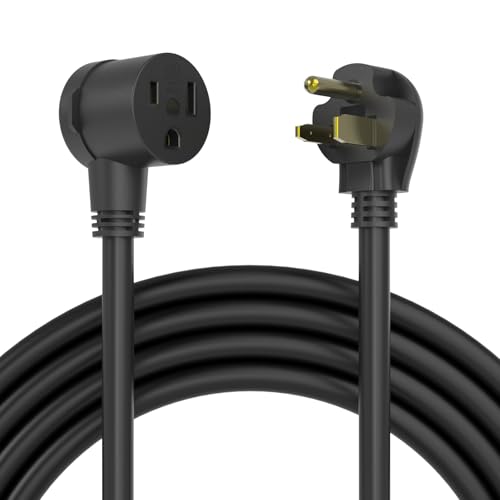
This 50-foot option uses 10 AWG conductors for up to 25A at 250V, offering a lighter-weight alternative for less demanding setups. Despite the thinner gauge, it maintains a 3-conductor configuration with NEMA 6-50P to 6-50R compatibility and a durable jacket suitable for both indoor and outdoor environments. It’s a practical choice when mobility and weight are primary concerns without sacrificing essential performance.
Key features
- 50 ft length; 10 AWG; 25A at 250V
- NEMA 6-50P to 6-50R; 3 conductors
- STW jacket; resistant to splash and wear
Parkworld Welder Extension Cord 25ft

Parkworld offers a compact 25-foot extension with an 8 AWG/3C STW setup, designed to handle 40A at 250V. The right-angle NEMA 6-50 connection accommodates spaces with limited clearance, while the robust jacket and copper wiring support reliable operation for portable welders. This cord is well-suited for small shops or close-quarter job sites where a shorter extension is advantageous.
Key features
- 25 ft length; 8 AWG/3C; 40A, 250V
- STW jacket; right-angle NEMA 6-50 connector
- Durable construction for heavy-duty use
Buying Guide: Key Considerations for 220V Welder Extensions
When selecting a welder extension cord for 220V operation, several factors influence safety and performance. Consider the following perspectives to choose the best fit for your setup.
- Conductor gauge: 8 AWG is common for 40A, 250V needs and offers low voltage drop over longer runs. 10 AWG is lighter and suitable for less demanding applications but supports lower current.
- Length vs. voltage drop: Longer cords increase resistance. For extended runs, prioritize lower resistance conductors and robust jackets to minimize voltage drop and heat buildup.
- Jacket material and rating: STW or SJTW jackets provide moisture resistance and durability. Outdoor-use cords should handle weather and temperature fluctuations.
- Connector quality: NEMA 6-50P to 6-50R plugs and receptacles must handle the welding equipment’s current and stress. Look for heavy-duty, corrosion-resistant connectors.
- Environmental suitability: Indoor vs. outdoor use; splash resistance, UV stability, and flexibility in cold temperatures (-40°C) can affect performance and ease of handling.
- Safety features: Look for grounded conductors, proper insulation, and clear labeling of amperage and voltage to prevent overloading your welder or power source.
- Compatibility: Ensure the extension cord matches your welder’s plug configuration and your power outlet, especially for specialty machines like plasma cutters or TIG welders with higher start-up currents.
- Cost vs. durability: Heavier gauge cords often cost more but provide longer service life in demanding environments; weigh long-term value against upfront cost.
In practice, 8 AWG cords with STW jackets are a reliable baseline for most 40A welding setups, with longer lengths chosen for job-site flexibility. For casual or smaller scale work, 10 AWG may suffice, but ensure the current draw does not exceed the cord’s rating. Always match the extension cord to both the welder’s amperage and the site’s environmental conditions to optimize safety and performance.