Best Water Pipe Heating Tape Solutions for Cold-Weather Protection
Facing freezing temperatures and the risk of burst or blocked water lines? This guide highlights top water pipe heating tape products that keep water flowing in cold weather. These cables self-regulate to save energy, are designed for metal or plastic pipes, and include safety certifications for peace of mind. The best fits vary by installation length, pipe material, and whether you need indoor or outdoor use. This buyer’s overview targets homeowners and DIYers seeking reliable freeze protection for homes, RVs, roofs, and more.
Summary table of the chosen products:
- Cupohus Heat Tape with Thermostat (15 ft) — best for mid-length residential hoses and outdoor setups.
- HEATIT Self-Regulating Heat Cable (6 ft) — best for compact, high-safety applications with full certifications.
- HEATIT 30 ft Self-Regulating Cable — best for longer runs with versatile pipe compatibility.
- JDZKOMKE 50 ft Pipe Heating Cable — best for long runs and robust insulation needs.
- Cupohus 3 ft Heat Tape with Thermostat — best for short runs and quick fixes.
Cupohus Heat Tape for Water Pipes (15 Ft) With Thermostat

The Cupohus 15-foot heat tape is designed to protect water hoses and pipes by maintaining the line above 59°F (15°C). It activates when water drops below 41°F (5°C) and turns off at 59°F (15°C), helping to prevent unnecessary energy use. The system operates on 120V with a GFCI outlet, reducing overheating risk and ensuring safety in damp or exposed installations. This option suits mid-length outdoor hoses or RV connections where a longer run is not required.
Best for: Homeowners with moderate-length plumbing runs and outdoor exposure who prioritize automatic temperature control and safety.
Limitations: No explicit long-term waterproofing claims beyond integrated protection; best to follow installation instructions to avoid contact with moisture in extreme environments.
HEATIT Heating Cable (HISD 6ft, 7W/ft)
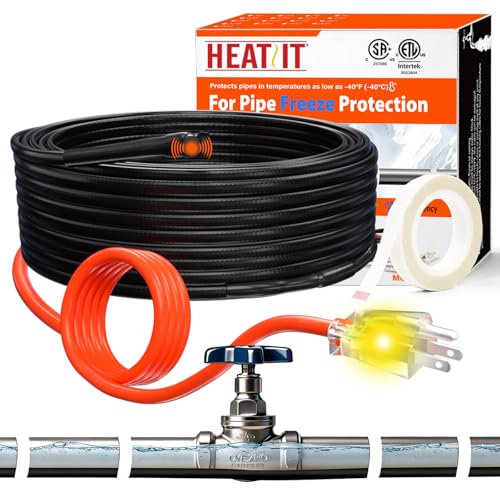
HEATIT’s 6-foot self-regulating heating cable is CSA and ETL certified, with a UL-certified plug for extra protection. It’s designed for water-filled plastic or metal pipes and includes a built-in thermostat for automatic on/off control. This product’s compact length makes it ideal for short pipe runs or applications with limited space. It also emphasizes energy efficiency by heating only when necessary.
Best for: Small projects or spaces where full system certification and safety marks are a priority, plus a plug-and-play setup.
Limitations: Shorter length means more frequent splices for longer pipe runs; ensure the installed length covers the required area.
HEATIT 30 ft Self-Regulating Cable

This 30-foot HEATIT option offers ETL certification for the entire heating cable, not just the plug, and includes a 2-foot power cord. It’s suitable for longer pipe runs and is compatible with metal or plastic pipes. The product is described to maintain water flow at temperatures as low as -40°F, delivering a robust solution for longer outdoor lines or exposed piping.
Best for: Longer pipe configurations requiring full-system safety certification and reliable freeze protection over extended runs.
Limitations: The longer length can require careful routing to avoid tangling or overheating in tight spaces; plan the installation path accordingly.
JDZKOMKE 50 ft Pipe Heating Cable

The JDZKOMKE 50-foot heating cable is designed for longer runs with robust insulation and a copper core. The device aims to protect metal and plastic pipes down to -40°F, using a multi-layer construction that includes a copper core, aluminum shield, and a weather-resistant outer jacket. It’s positioned as a rugged solution suitable for exposed pipes or longer underground installations, with product liability insurance backing for added security.
Best for: Long, exposed, or buried pipe installations where corrosion resistance, durability, and extended coverage matter most.
Limitations: Heavier and longer installation may require more planning to ensure proper clearance and avoid physical damage during routing.
Cupohus Heat Tape for Water Pipes (3 Ft) With Thermostat

The 3-foot Cupohus heat tape provides a compact option with an integrated thermostat. It is designed to keep water above freezing in short runs and small spaces, such as roof lines or RV connections. The product emphasizes automatic on/off based on water temperature, with a focus on safety through 120V operation and a protective GFCI outlet integration.
Best for: Short-distance installations where space is limited and quick, easy setup is desired.
Limitations: Short length may require multiple units for longer runs, increasing setup complexity for larger systems.
MAXKOSKO 6 Ft Heating Cable

MAXKOSKO offers a 6-foot heating cable rated at 5W/ft designed for both metal and plastic pipes. It focuses on energy savings with self-regulating technology that turns on as temperatures drop, maintaining flow down to -40°F. A 3-foot power cord is included, balancing length and convenience for longer runs when combined with extra cable segments.
Best for: Moderate-length projects where a balance of power, safety, and energy efficiency is important, with flexibility for straight, spiral, or overlapped installations.
Limitations: Ensure the installation method aligns with the recommended straight or overlapped layouts to avoid uneven heating.
Buying Guide: Key Considerations for Water Pipe Heating Tape
- Length vs. application: Choose length that covers the entire run. Longer cables fit outdoor or buried pipes; shorter cables suit indoor or RV lines.
- Pipe material compatibility: Some cables specify metal or plastic pipes; verify compatibility with your pipes (copper, PVC, PEX, etc.).
- Self-regulating vs. fixed-output: Self-regulating cables adjust heat output to prevent overheating and save energy; fixed-output cables provide consistent heat but may use more electricity.
- Certifications and safety: Look for ETL/CSA certifications and UL-listed plugs for enhanced safety, especially in damp or outdoor environments.
- Power source and cord length: Ensure the plug length reaches a safe outlet; plan for an appropriate distance between thermostat and outlet if required.
- Installation considerations: Route cables away from water sources and heat-sensitive components; consider weatherproofing and protective insulation for outdoor use.
- Maintenance and warranties: Check for warranties and ease of replacement in case of damage due to exposure or wear.
FAQ
- What temperature does water pipe heating tape activate at?
-
Most self-regulating cables turn on as temperatures drop near 38–41°F (3–5°C) and maintain heat to keep water above freezing, often around 59°F (15°C), depending on the model.
- Can I use heating tape on any pipe?
-
Not all cables are universal. Check the manufacturer’s guidelines for metal vs. plastic pipes, and avoid use on fuel lines, gutters, or other non-water systems unless specified.
- Is ETL or CSA certification necessary?
-
For safety in North America, fully certified systems (the entire cable, not just the plug) offer higher safety assurances, especially in damp or outdoor installations.
- How long should the installation run be?
-
Installers should cover the entire length of the water-filled portion of the pipe or hose. Avoid gaps where freezing could occur; plan for the length of the run plus some extra for connections.
- Are these cables energy-efficient?
-
Yes, self-regulating cables heat only where needed, reducing energy use compared with constant-output solutions.
- Do these cables require professional installation?
-
Most installations are DIY-friendly, but follow safety guidelines, especially regarding electrical outlets, GFCI protection, and outdoor use.