Best Water Heaters for Quick, Reliable Hot Water at Home
Find the right hot water solution for your space and needs. This guide highlights five top options—from compact under-sink minis to full-home tankless models—so you can pick the best water heater for your family, apartment, or small business. Each pick is described by who it’s best for, how it performs, and any important caveats to watch for. Use the quick-buying table below to compare at a glance.
| Product | Best For | Key Benefit |
|---|---|---|
| BOSCH Tronic 3000 T Mini-Tank | Under-sink use, small kitchens or bathrooms | Compact, easy installation, 98% thermal efficiency |
| EcoSmart ECO 11 | Space-saving, whole-home on-demand | Self-modulating, 99% energy efficient |
| VEVOR 12 Gallon Tank-Style | Small apartments, multiple outlets | Large capacity with strong insulation |
| Rheem 18kW Tankless Electric | High-demand households, multiple points of use | Advanced self-modulation and efficient flow |
| Orbek 14kW Tankless | Two to three fixtures, compact install | High flow at 3.38 GPM, clear 240V requirements |
BOSCH Electric Mini-Tank Water Heater Tronic 3000 T 2.5-Gallon
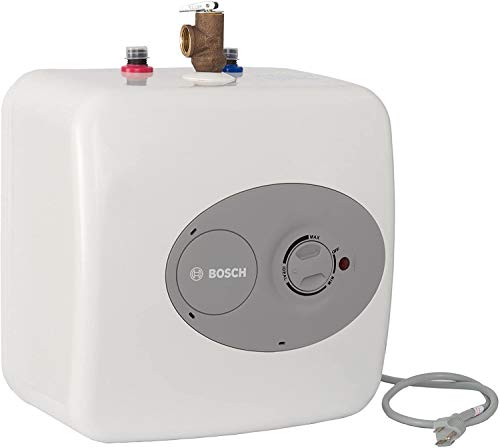
The BOSCH Tronic 3000 T brings hot water exactly where you need it with a 2.5-gallon capacity. It’s ideal for under-sink installations, small bathrooms, or compact office kitchens. Thermal efficiency reaches 98%, helping reduce energy waste. It can be mounted on a shelf, wall, or floor and plugs into a standard 120-volt outlet for independent operation.
Best for: individuals or small households needing near-instant hot water at a single point of use. Choose this if you want a simple, space-saving solution without dedicated plumbing changes. Caution: limited hot-water volume means not suitable for whole-house use or high-demand scenarios.
Tankless Water Heater Electric 110V, 3000W AIYEZIDT
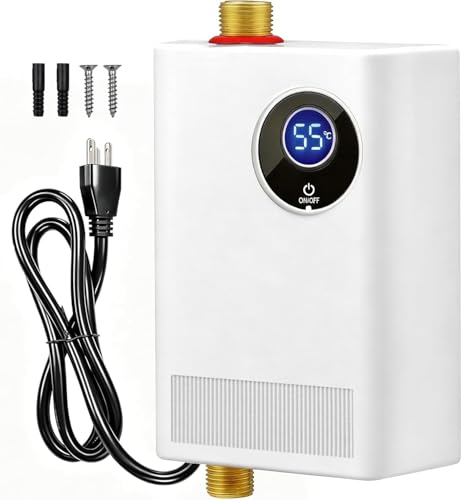
The AIYEZIDT mini tankless unit delivers instant hot water in 3–5 seconds at the sink, with a maximum temperature around 131°F. Its compact design is wall-mounted for apartments, kitchens, bathrooms, or RVs. It includes IPX4 waterproofing and auto-off safety features, with an LCD display for status checks.
Best for: spaces that require on-demand water at a point of use without a storage tank. Choose this if you value quick temperature display and space efficiency. Caution: performance depends on inlet water temperature and plumbing layout; not ideal for whole-home supply.
EcoSmart ECO 11 Electric Tankless Water Heater

The EcoSmart ECO 11 provides endless on-demand hot water with self-modulating technology. It is a compact unit (about 11.5 x 8 x 3.75 inches) that can be mounted on a wall or installed at a point of use. It’s 99% thermally efficient and saves energy by heating water only when needed. It’s designed for small homes or apartments with limited space and modest hot-water demand.
Best for: households seeking space-saving, energy-efficient on-demand hot water. Choose this if you want a scalable option for one or two outlets. Caution: may require additional units for higher simultaneous hot-water needs.
VEVOR Electric Tank Water Heater, 12 Gallon

This 12-gallon tank design suits small apartments or studios with 1–2 outlets. It features a durable enamel interior, fast heating via an immersion tube, and robust insulation to reduce heat loss. Built-in protections support safe operation in varied dwellings.
Best for: users who want a traditional storage tank option with a decent hot-water reserve. Choose this if you prefer familiar tank-style operation over tankless models. Caution: larger footprint than compact minis; ensure space fits the unit.
Rheem 18kW 240V Tankless Electric Water Heater

The Rheem 18kW tankless unit uses advanced self-modulation to adjust power and consistently deliver hot water at the point of use. With a rated 4.4 GPM flow, it supports multiple fixtures while maintaining temperature. External digital thermostatic control and LED display aid operation and monitoring.
Best for: larger households or homes with multiple hot-water demands at once. Choose this if you need higher flow and reliable temperature control. Caution: installation requires a robust electrical panel and adequate clearances for 240V wiring.
Buying Guide: Key Considerations For Your Water Heater
- Hot-water demand: Assess the number of outlets and peak flow needs. Tankless models suit high-demand homes better when sized correctly; minis fit single-point use.
- Space and installation: Under-sink minis save space; wall-mounted tankless units save wall space but require proper venting or plumbing access.
- Power requirements: Tankless heaters often need 240V circuits and dedicated breakers. Check your electrical panel capacity before purchasing.
- Efficiency and operating cost: Self-modulating tech and insulation improve energy efficiency. Tank-style heaters store hot water but may experience standby losses.
- Water temperature and climate: In colder climates, higher flow units or multiple heaters may be needed to maintain comfortable output.
- Installation and maintenance: Some units are easier to install and service than others. Consider professional installation for high-capacity or electrical-intensive models.
Frequently Asked Questions
- What size water heater do I need for a small apartment?
Answer: A compact point-of-use or small tankless unit (1–2 fixtures) typically suffices. - Is a tankless water heater better than a tank heater?
Answer: Tankless units offer endless hot water and space savings, but may require careful sizing to meet simultaneous demands. - Do I need a professional to install a 240V tankless heater?
Answer: Yes, installation often requires electrical work and plumbing connections by a qualified professional. - Can I install multiple tankless heaters for higher flow?
Answer: Yes, but you’ll need proper electrical capacity and correct system design to balance flow and temperature. - What maintenance do tank heaters require?
Answer: Periodic flushing to remove mineral buildup and checking anode rods, valves, and electrical connections as recommended by the manufacturer.