Best Waste Water Submersible Pumps for Basements, Sumps, and Dewatering
Answer: A waste water submersible pump is best chosen by how much solids you need to pass, where it will be installed, and how automatic you want the operation to be. This guide highlights five reliable options for residential and light commercial use, explains who each pump is best for, and provides practical buying tips. The top picks cover heavy-duty sewage pumps, grinder pumps, cast-iron construction, and automatic float control to simplify maintenance and reliability.
Buyer summary table (quick reference):
| Product | Best For | Key Benefit | Best Use |
|---|---|---|---|
| Zoeller Waste-Mate 267-0001 | Residential & light commercial basements | 2″ solids handling, non-clogging vortex impeller | Basement dewatering, effluent, sewage |
| AQUASTRONG 1 HP Grinder Pump | Homes with wipes and debris concerns | Grinds soft debris to prevent clogs | Basement sump and sewage ejector systems |
| Acquaer 3/4HP Submersible | Solid passage up to 2″, durable cast iron | High flow, robust cast iron design | Residential sewage and sump basins |
| DEWALT 3/4 HP Cast Iron | Rugged, reliable performance | High head capacity, automatic control | Severe basement and sewage tasks |
| Little Giant 1/3 HP | Compact, automatic sump pumps | Built to last with reliable float control | Small basements and utility areas |
Zoeller Waste-Mate 267-0001 Sewage Pump
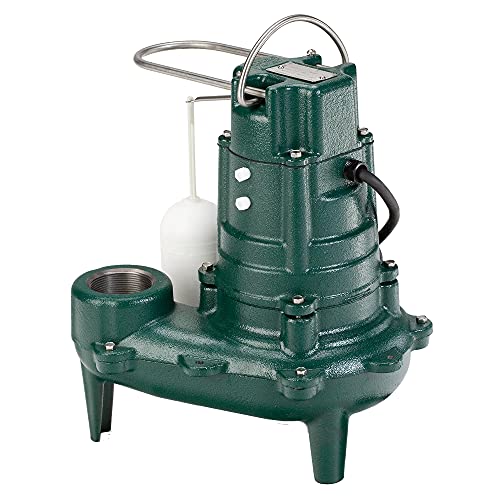
The Zoeller Waste-Mate 267-0001 is a heavy-duty, automatic submersible pump designed for sewage, effluent, or dewatering tasks. It has 1/2 HP and a non-clogging vortex impeller that passes 2″ spherical solids. The float-operated switch enables automatic operation, suitable for residential and commercial use where sewage or effluent must be moved reliably. Best for homes with occasional sewage challenges or light commercial basements that require a robust, maintenance-friendly pump.
Best for: small-to-medium basements and effluent setups that need solid handling with simple automatic control. Limitation: solids larger than 2″ are not intended to pass. Choose this if you want a proven, straightforward pump for typical residential needs.
AQUASTRONG 1 HP Sewage Grinder Pump
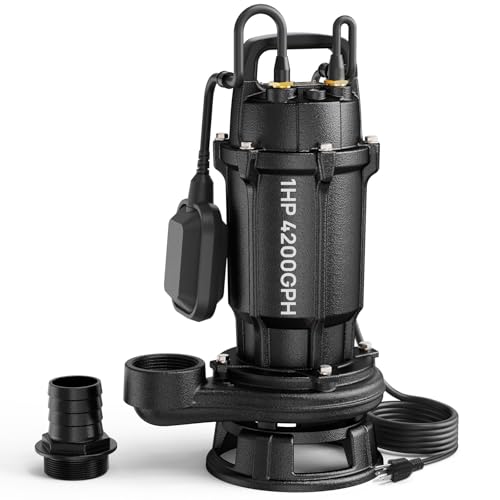
The AQUASTRONG 1 HP grinder pump includes stainless steel blades to shred soft and tough debris, helping prevent clogs in sewage systems. It has a 4200 GPH flow and a 40 ft lift, and uses a 115V single-phase motor for efficient performance. The 2″ discharge supports Solid up to 2″, and it is suited for basement sump basins and ejector systems. Best for homes with messy wastewater streams and a need for debris reduction. Caution: avoid using rubber items or towels which grinders may struggle with.
Best for: homes tackling wipes, twigs, or similar debris in a basement sump or ejector setup. Limitation: not recommended for gasoline, alcohol, or biogas environments due to material considerations.
Acquaer 3/4HP Submersible Sewage Effluent Pump
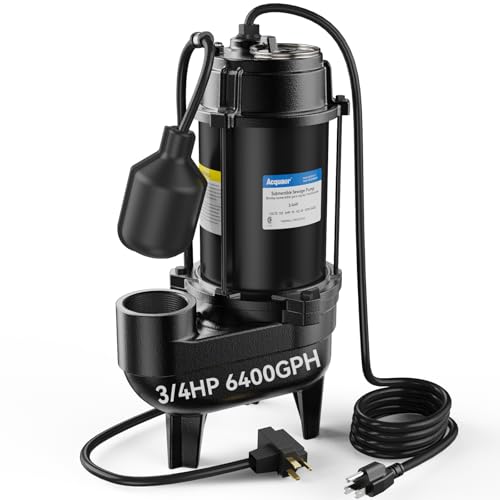
Acquaer’s 3/4 HP pump offers 6400 GPH and a 29 ft lift, with a rugged cast iron housing and a non-clogging vortex impeller. It features a 2″ NPT discharge and an auto/manufactured float switch for automatic operation. This pump is ideal for basements or below-grade installations where high flow and solid handling are needed. Best for: residential sewage and sump systems needing a balance of power and durability. Limitation: designed for 2″ solids and may not be suitable for very large solids or septic tank applications.
DEWALT 3/4 HP Cast Iron Sewage Pump

DEWALT’s 3/4 HP cast iron sewage pump is fully submersible with a 10-foot cord and auto on/off via a tether switch. It delivers strong performance with a maximum lift up to 28 ft and a high discharge rate suitable for demanding basement and sewage pump tasks. Best for: users who need rugged, long-term reliability and clear automatic control in tough environments. Limitation: be mindful of its heavier iron construction if weight is a consideration for installation or transport.
Little Giant 6EC-CIA-SFS 1/3 HP Sump Pump

The Little Giant 6EC-CIA-SFS is a 1/3 HP automatic submersible pump with a cast iron housing and integral snap-action float switch. It runs on 115V with a 20-foot cord, offering reliable automatic operation for smaller basements or utility spaces. Best for: compact, automatic sump needs where space or budget is limited. Limitation: lower flow and lift compared to higher horsepower models, so best for smaller volumes.
Buying Guide
What should you consider when choosing a waste water submersible pump?
- Solids handling: Determine the maximum solid size your system must pass. Pumps with 2″ or greater pass-through reduce clogs in damp basements and ejector pits.
- Flow rate and head: Higher GPH and lift help move water quickly from basins to discharge points. Match flow to your space and drainage height.
- Material and construction: Cast iron housings offer durability in corrosive sewage environments; stainless steel components can improve longevity in harsh settings.
- Automatic operation: Float switches enable hands-off use. Consider tether or vertical float options and the location of the sump pit.
- Discharge size: A 2″ discharge is common for residential sewage pumps and helps ensure compatibility with standard piping.
- Grinder capability: If debris is a concern, grinders reduce solid buildup and clogs, but they add complexity and cost.
- Maintenance and accessibility: Look for pumps with clear service access and non-clog designs to simplify routine checks.
Which features matter most for your situation?
- Residential basements: Prioritize automatic operation, solid handling up to 2″, and reliable performance with 1/2 to 1 HP options.
- Sewage ejector systems: Grinder or non-clog impellers help manage wipes and debris in many homes.
- Below-grade installations: Ensure the pump has enough lift for the target discharge and a durable cast iron body for long service life.
Installation and safety tips
- Follow local codes for sump pits, check valves, and discharge piping to prevent backflow.
- Keep the pump fully submerged in water during operation to avoid overheating.
- Regularly inspect the power cord and float switch for signs of wear or corrosion.
FAQ
- What is a waste water submersible pump? It is a pump designed to move sewage, effluent, or wastewater from basins, basements, or pits, typically operating submerged in water.
- Do I need a grinder pump? A grinder pump is useful if your wastewater contains fibrous or solid debris that could clog a standard impeller.
- What is the difference between automatic and manual pumps? Automatic pumps turn on/off based on water level via a float switch; manual pumps run continuously or when turned on.
- Can these pumps handle 2″ solids? Many models listed pass up to 2″ solids; verify the specific model in case of exceptions.
- Is cast iron better than plastic? Cast iron is generally more durable in sewage environments, though heavier and potentially pricier.
- How often should I maintain a sump pump? Check annual operation, inspect for clogs, clean impellers, and test the float switch to ensure reliability.