Best Vertical Axis Wind Turbine Kit Options for Home Energy
Answering the buyer’s intent: find reliable vertical axis wind turbine kits that fit home or small-business energy needs. This guide highlights five practical options, clarifying who each is best for and why. It covers performance basics, installation considerations, and where each kit excels. The recommended picks include models suited for quiet operation, year-round wind capture, and easy integration with controllers or grid inverters. Ideal buyers range from eco-conscious homeowners to small off-grid setups seeking steady wind-to-electricity conversion.
Buyer-friendly at-a-glance: the following table summarizes the five selected products, including key focus areas and best-use scenarios.
| Product | Best For | Key Strength |
|---|---|---|
| 20000W Vertical Axis Wind Turbine Generator Kit with Controller for Home Use | Large energy needs, residential or small commercial | High power output and integrated controller |
| Tsampa 20000W Vertical Axis Wind Turbine Generator (48V) | Mid-range DC voltage systems, quiet operation | Nylon fiber blades, low-noise profile |
| Tsampa 20000W Vertical Axis Wind Turbine Generator (220V) | AC-coupled or higher voltage grid-tied setups | Versatile voltage options, low-start torque |
| 3000W Vertical Axis Wind Turbine Generator Kit for Home Use | Smaller homes, cabins, boats, or terraces | Compact design with Maglev generator |
| Lbxlhr 10000W/12000W Vertical Axis Turbine Generator | Hybrid wind-solar systems, 12V-220V readiness | Three-phase PMG with MPPT controller |
20000W Kit With Controller For Home Use
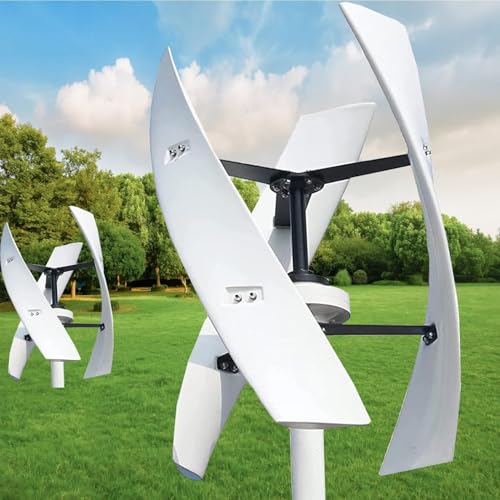
Features highlight the nylon fiber blades with precision injection molding and an aerodynamic profile designed for higher efficiency across typical wind speeds. This kit supports a broad range of applications, including residential energy, monitoring systems, and marine energy setups. It emphasizes year-round use with a wide operating temperature range and a self-adjusting blade design that captures wind without yaw adjustments. Best for buyers seeking high-capacity output and a built-in controller for simplified integration. Caution: heavy system weight may require a robust mounting surface.
Tsampa 20000W Vertical Axis (48V)

Designed for home energy supplementation, this model uses nylon fiber blades with an aerodynamic profile and a temperature tolerance from -40℃ to 80℃. It captures wind at 2 m/s with no yaw required. It operates quietly thanks to double bearings and low vibration. Best for users prioritizing low-start wind speed and quieter operation at moderate wind resources. Limitation: higher wattage requires adequate electrical system sizing and safety considerations for 48V configurations.
Tsampa 20000W Vertical Axis (220V)
This variant offers a 220V option suitable for grid-tied or higher voltage setups. It retains the nylon blade design for year-round performance and automatic wind direction capture without yaw. Best for buyers planning AC-powered or higher voltage infrastructure. A potential limitation is the need for compatible electrical components and protection devices to manage 220V systems safely.
3000W Vertical Axis Kit For Home Use

Key points include high-quality aluminum alloy blades with corrosion resistance and a compact, quiet Maglev generator design. The arc blade design improves wind resource utilization for better efficiency. Best for smaller setups where ease of installation and low noise are priorities. Limitation: lower absolute power than larger kits, so it suits modest energy needs or supplementary wind power.
Lbxlhr 10000W/12000W Kit

Vertical wind turbine uses FRP blade material with a spiral, aerodynamically shaped blade design for stable electricity generation. It includes a three-phase AC PMG with an intelligent microprocessor for current and voltage regulation. Best for hybrid wind-solar installations and systems needing MPPT control. Caution: maximum RPM protection limits may affect very high wind scenarios; ensure proper site selection to minimize risk.
Buying Guide
What matters most when choosing a vertical axis wind turbine kit:
- Power needs and system voltage: Align turbine wattage and voltage with your storage or grid plans (12V, 24V, 48V, 220V, etc.).
- Blade design and materials: Nylon fiber and FRP blades offer durability and lightweight performance; consider noise and wind-speed requirements.
- Controller and inverter options: Integrated controllers simplify setup; verify compatibility with your battery bank or grid connection.
- Wind site assessment: Check local average wind speeds, turbulence, and obstructions to gauge expected output.
- Aesthetics and installation: Some kits are compact and quiet, suitable for rooftops or poles, while others require solid mounting foundations.
- Maintenance and service life: Look for bearings, gearless or maglev designs, and corrosion resistance for outdoor use.
How to compare effectively
- Compare energy yield at typical wind speeds (e.g., 2 m/s vs. higher winds).
- Assess starting wind speed and cut-in thresholds to predict real-world performance.
- Evaluate noise levels if the turbine will operate near living spaces or work areas.
- Review the ease of integration with existing solar, wind, or battery systems.
Important considerations by buyer type
- For homeowners with modest energy needs: a 3kW kit or a mid-range 10kW option may fit best.
- For off-grid or hybrid setups: higher-wattage units paired with MPPT controllers can maximize annual energy production.
- For boats or terraces: compact, low-noise designs with flexible mounting options are preferable.
Frequently Asked Questions
- Q: Do vertical axis wind turbine kits require yaw control? A: Many designs are self-orienting to wind direction, reducing the complexity of yaw mechanisms.
- Q: Which voltage is best for a home system? A: It depends on your battery or grid setup. Typical options include 12V/24V/48V for DC systems or 220V for AC/grid configurations.
- Q: Are these kits suitable for all wind conditions? A: Performance depends on wind speed and turbulence. Some blades are optimized for low wind speeds, while others excel at higher winds.
- Q: Is a grid inverter required? A: If net metering or grid-tied operation isn’t used, an inverter or charge controller is typically needed to convert generated power for storage or use.
- Q: What maintenance is expected? A: Regular inspection of bearings, blades, and connections helps sustain efficiency and safety.
- Q: How do I choose between 48V and 220V options? A: Lightning-fast response and compatibility with your storage or grid equipment determine the best fit for your system.