Best Vented Battery Box for RV: Safe Storage Solutions for Your Batteries
Finding the right vented battery box for RV use is essential for safety, longevity, and performance. The right enclosure protects your batteries from physical damage, minimizes gas buildup, and helps organize your electrical system. This guide highlights five top-rated vented battery boxes that are well-suited for recreational vehicles, campers, and marine applications. Each option balances durability, ventilation, and ease of installation so you can choose the best fit for your rig.
| Product | Brand | Key Benefit |
|---|---|---|
| Camco 55371 Vented RV/Marine Battery Box | Camco | Protects battery, vents gases, holds 1 Group 24 |
| Camco Side-by-Side Double Battery Box (55385) | Camco | Holds 2 Group 24 batteries, full vented design |
| Camco 55370 Vented RV/Marine Battery Box (Double) | Camco | Holds 2 Group 24, robust venting |
| Attwood 9067-1 Vented Battery Box | Attwood | Group 27, integrated venting |
| Attwood 9069-1 Standard Non-Vented Box | Attwood | Group 24, non-vented option |
When evaluating vented battery boxes, key factors include the number of batteries supported, venting design, material durability, compatibility with terminal types, and installation hardware. The following sections review five popular options, summarizing how their features address common RV, marine, and trailer needs. Each product section includes the model’s primary advantages, ventilation approach, and compatible battery configurations.
Camco 55371 Vented Battery Box
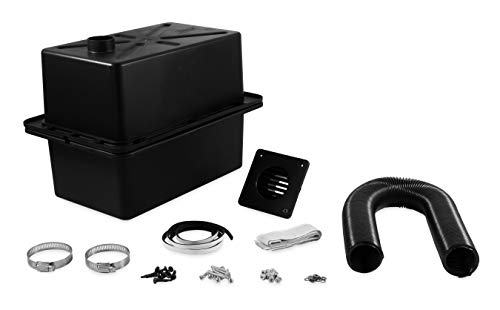
The Camco 55371 is a single-battery enclosure designed to shield RV or marine batteries from physical impact while allowing gas venting. It specifically accommodates one Group 24 battery and features a vented design to expel hazardous gases, supporting safer storage in compartments. The unit’s compact footprint makes it a practical choice for smaller RV compartments or tight storage areas, and its durable construction helps resist environmental exposure common in outdoor settings.
Camco Side-by-Side Double Battery Box (55385)

This double-battery enclosure holds two Group 24 batteries and includes a vented design to expel gases safely. It comes as a complete RV accessory kit with a battery box, hose, louvered vent grill, and mounting hardware. Its wider footprint suits larger compartments or where dual batteries are essential, making it a strong option for motorhomes, travel trailers, and toy haulers that require more power storage without sacrificing ventilation.
Camco 55370 Vented Battery Box (Double)

The Camco 55370 doubles the capacity for two Group 24 batteries with an emphasis on venting to release hazardous gases. Its design aims to protect batteries from collisions and contaminants while enabling safe storage in RV compartments. The product is compatible with standard mounting schemes and includes the necessary hardware for straightforward installation, appealing to users seeking a robust two-battery solution with solid ventilation.
Attwood 9067-1 Vented Battery Box
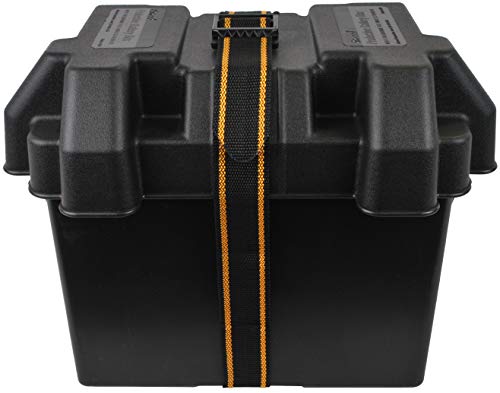
The Attwood 9067-1 is designed for Group 27 batteries with a maximum height of 10-1/2 inches. It uses a durable polypropylene construction and features an integrated venting system to manage gases while protecting terminals from moisture and debris. Inside and outside dimensions are provided to help determine fit within existing compartments. This box supports harsh environmental conditions and is suitable for marine and RV applications that require reliable venting and safe battery housing.
Attwood 9069-1 Standard Non-Vented Box
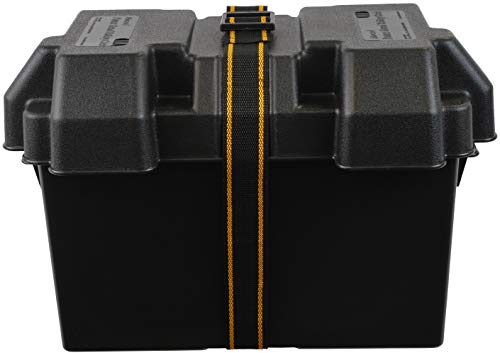
The Attwood 9069-1 provides a non-vented enclosure for Group 24 batteries and is designed to mount securely with an included strap. The lack of venting is a deliberate choice for installations where venting is unnecessary or where terminal protection is the priority. It remains acid-resistant and impact-tested for use in various RV and marine environments, offering a compact option for enclosed battery compartments that require a sealed approach.
Buying Guide: Key Considerations For Choosing A Vented Battery Box
- Battery compatibility: Verify the box supports the battery group (e.g., Group 24 or Group 27) you use, and check maximum height and width allowances.
- Ventilation design: Consider whether a top vent, side vent, or integrated vent system best suits your storage location and hose routing needs. Ensure the design expels gases safely without allowing water intrusion.
- Material and durability: Look for acid-resistant polypropylene or other rugged polymers rated for outdoor exposure and temperature variation typical of RV and marine environments.
- Terminal accessibility: Some boxes include 3/8-inch studs or compatible terminals; ensure the design accommodates your cables and ring terminals without crowding.
- Hardware and installation: Check whether mounting hardware, hoses, or vent grills are included, and confirm compatibility with your existing compartments and mounting surfaces.
- Ventilation vs. non-vented options: In some setups, non-vented boxes may be appropriate if the battery is kept in a controlled, dry cabinet, while vented designs are safer for exposed compartments.
- Maintenance and accessibility: A box with easy lid access and straightforward hose routing reduces maintenance time and improves safety during checks.
In selecting a vented battery box, balance capacity with the available space in your RV, trailer, or boat. A single-box solution is adequate for lightweight systems, whereas dual-box configurations support higher electrical needs. Consider future upgrades to larger batteries or additional storage requirements, and ensure the enclosure remains compliant with safety standards for enclosed battery compartments.