Best Transfer Switches for Solar: Top Picks for Reliable Backup Power
Choosing the right transfer switch is essential for safe, automatic power switching between solar, battery, and grid sources. The options below are designed for off-grid and grid-tied solar setups, offering auto-switching, battery protection, and fast transition times. This guide highlights five strong choices that balance reliability, ease of use, and compatibility for American homes.
| Product | Brand | Voltage Range | Typical Use |
|---|---|---|---|
| MOES Dual Power Controller 50A | MOES | DC 12V/24V/48V, AC 110V-220V | Off-grid solar/wind, automatic grid switching |
| MOES Smart Automatic Transfer Switch 80A | MOES | DC 12/24/48V, AC 110/220V | Off-grid solar/wind, app remote control |
| EF ECOFLOW 120V Home Backup Kit (Delta Pro) | EF ECOFLOW | 120V/240V | Residential backup power, expandable capacity |
| Jackery HomePower 3000 | Jackery | 120V/240V | Portable home backup, UPS-enabled |
| 100Amp AC110V Automatic/Manual Transfer Switch | IGEYAPA | 110V AC | Dual-source switching for homes with grid/generator/solar |
MOES Dual Power Controller 50A: Automatic Solar Transfer
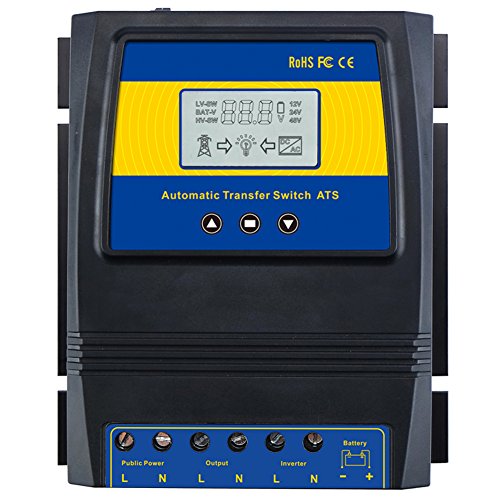
Designed for off-grid solar or wind systems, this MOES unit switches to grid power when battery voltage falls below a defined cut-off, protecting the battery and maintaining supply. It supports DC input options of 12/24/48V and AC input options of 110-120V and 220-240V, with auto-distinguish capability. Users can set cut-off and recovery voltages, ensuring battery health. The switch operates quickly, minimizing downtime, and supports multiple battery chemistries, including sealed, gel, lead-acid, and lithium types, as long as voltages stay within supported ranges.
MOES Smart Automatic Transfer Switch 80A: Auto & App Control

This transfer switch manages automatic power switching between DC input sources (inverter) and AC input sources (grid). It emphasizes energy efficiency and battery protection, with app Bluetooth control via MOES hub for remote operation. It also supports manual switching and features fast transfer between solar/wind sources and the grid. In cloudy or windless days, it shifts to grid power to protect the battery, then returns to inverter power when voltage recovers, with fast switching that minimizes load interruption.
EF ECOFLOW Delta Pro 3600Wh Kit: Home Backup Power

The Delta Pro-based kit provides a large 3600Wh LFP battery capacity for home backup and outdoor use, with the potential to expand to 25kWh or more by pairing extra modules or generators. It supports 120V/240V dual voltage outputs, enabling use with common household appliances and larger equipment. The system is designed for seamless handoffs during outages, maintaining power to essential devices with reliable online UPS capability, and scales well for growing backup needs in American homes.
Jackery HomePower 3000: 3600W UPS-Ready Solar Generator

The Jackery HomePower 3000 combines a robust 3600W output (7200W surge) with a 3072Wh LiFePO4 battery, delivering essential home backup for appliances like fridges, routers, and lighting. It offers an ultrafast ≤20ms UPS, ensuring critical devices stay powered during outages. The system supports a 30% residential clean energy tax credit in some programs, and its design emphasizes portability and reliable performance for emergency situations and everyday use.
IGEYAPA 100Amp AC Transfer Switch: Fast Auto Switchover

This 100A two-pole AC transfer switch supports automatic and manual switching between two power sources, suitable for homes using mains, generators, or solar. It features quick auto-switching within 0.05 seconds to ensure continuity and safety of power. The device accommodates four wiring configurations and provides clear LED indicators to show active sources in both Auto and Manual modes. It focuses on reliability and rapid transition to minimize downtime.
HCOVTXR Automatic Transfer Switch 100A: Multi-Source Support

HCOVTXR offers a 100A transfer switch with 110V operation and 50/60 Hz compatibility. It supports automatic or manual switching between three power sources (utility, generator, solar), with protection against overvoltage, undervoltage, and overcurrent. The built-in LED display aids real-time monitoring of voltage and current, though it emphasizes monitoring rather than actuation, making it a solid option for informed, hands-on power management.
Buying Guide: Key Considerations For Solar Transfer Switches
- Source compatibility: Ensure the unit supports the number and type of sources in your setup (solar, wind, battery, grid, or generator) and matches your battery voltage (12V/24V/48V) and mains voltage (110V/120V or 220V/240V).
- Automatic vs Manual switching: Automatic switching protects loads during outages, but some scenarios benefit from manual overrides or app control for planned maintenance or testing.
- Transfer time: Fast switch times (often under 25 ms) minimize power interruption to sensitive appliances; check advertised transfer times for your critical loads.
- Battery protection: Look for cut-off and recovery voltage settings to protect battery lifespan and prevent deep discharge.
- Monitoring and control: App integration, LED displays, and remote monitoring help manage multi-source systems and verify operation.
- Safety certifications and installation: Verify compliance with local electrical codes and ensure proper integration with existing panels, inverters, and meters; professional installation is often recommended.
- Expandability and future-proofing: Consider future expansion of solar capacity, storage, or grid-tied backup to avoid early replacements.
- Reliability and support: Choose brands with solid customer support, clear documentation, and readily available replacement parts.
- Physical installation: Check enclosure size, mounting options, and wire gauge compatibility to handle the system’s amperage without overheating.
In evaluating these options, prioritize compatibility with your battery type and voltage, the desired level of automation, and how quickly you need to switch between power sources. The five products above address common American home setups, balancing ease of use, protection features, and scalable backup capabilities for solar users.