Best Timer for Landscape Lighting: Reliable Timers for Outdoor Ambience
Choosing the right timer for landscape lighting helps preserve energy, extend bulb life, and ensure pathways, entryways, and plantings glow at the right moments. This guide reviews five standout options spanning mechanical and digital designs, and highlights key features like dusk-to-dawn sensing, multiple zones, and compatibility with low-voltage systems. The selections aim to balance ease of use with durable outdoor performance for American homes.
Summary of Selected Products
| Product | Brand | Key Benefit |
|---|---|---|
| Intermatic DT200LT Digital Astronomic Landscape Timer | Intermatic | Smart DST adjustments and wide low-voltage compatibility |
| Kichler Outdoor Mechanical Timer with Tradition Pin Setting | Kichler | Pin-based daily cycles; robust outdoor enclosure compatibility |
| WAC Landscape Lighting Mechanical Timer | WAC Lighting | Simple dial control with 30-minute increment precision |
| Lightkiwi H5576 Digital Timer | Lightkiwi | Large LCD display; quick setup for low-voltage transformers |
| SUNVIE 300W Low Voltage Transformer With Timer | SUNVIE | Two independently controlled zones with multiple modes |
Intermatic DT200LT Digital Astronomic Landscape Timer

The Intermatic DT200LT offers user-friendly programming and a one-push override for quick adjustments, making it convenient for homeowners managing landscape lighting and seasonal displays. It supports daylight saving time automatically, removing the need to reprogram seasonally. This model is rated for low-voltage transformers up to 1200W, accommodating various outdoor lighting setups, from garden accents to porch illumination and even small holiday displays. Its digital, astronomic design aims to align lighting with sunset times for consistent nightly performance.
Kichler Outdoor Mechanical Timer with Tradition Pin Setting

The Kichler mechanical timer uses traditional pin settings to automate on/off cycles, offering two on/off cycles within a 24-hour period. It is designed for use with Kichler’s Pro Series, Plus Series, and Contractor Series transformers, ensuring dependable compatibility for many established landscape lighting systems. The device is suitable for outdoor deployment inside a weatherproof transformer enclosure, delivering durable operation in varied climates. This pin-based approach favors straightforward, predictable scheduling without digital menus.
WAC Landscape Lighting Mechanical Timer

This WAC mechanical timer plugs into a WAC landscape power supply and provides straightforward time-of-day control. The outer dial sets local time, while 30-minute pins determine on/off moments. The system is compatible with WAC’s family of power supplies, including 75W, 150W, 300W, and 600W options. It appeals to users who want a simple, reliable dial-based timer with predictable daily scheduling for exterior lighting and accents.
Lightkiwi H5576 Digital Timer for Low Voltage Landscape Lighting

The Lightkiwi H5576 digital timer is designed for low-voltage transformers, featuring an easy setup and a large, readable LCD display. It supports reliable on/off scheduling for 12V or 14V lighting systems, making it a popular choice for homeowners seeking a balance between digital control and clear visibility during setup and adjustments. The user-friendly interface helps simplify complex lighting plans without sacrificing precision.
Lightkiwi Q6914 Mechanical Timer for Low Voltage Landscape Lighting

The Lightkiwi Q6914 provides a mechanical plug-in timer with easy set-up for daily on/off control. It is specifically suited for low-voltage landscape lighting transformers, offering reliable operation for homeowners who prefer mechanical controls over digital displays. The device turns lamps on and off at user-defined times each day, contributing to energy savings and consistent landscape illumination.
SUNVIE 300W Low Voltage Landscape Transformer With Timer and Photocell Sensor

The SUNVIE transformer provides two independently controlled zones, allowing different lighting scenes across zones. It supports a timer and a removable photocell sensor for dusk-to-dawn operation, plus five modes including manual, auto, countdown, and photocell-based timing. It is designed to convert 120V AC to 12/14V AC for safe, low-voltage landscape lighting. This model emphasizes flexibility for varied lighting designs and energy-conscious operation.
DEWENWILS 120W Low Voltage Landscape Transformer with Timer and Photocell

DEWENWILS combines a built-in dusk-to-dawn sensor with a 120W transformer for low-voltage lighting. It offers a countdown timer and straightforward operation to switch lights on and off automatically. The unit is ETL listed for outdoor use and includes mounting-friendly design features to simplify installation. It suits users who want an integrated sensor and timer in a compact, weatherproof housing.
SPW Pro-Trade Mechanical Timer for Landscape Lighting
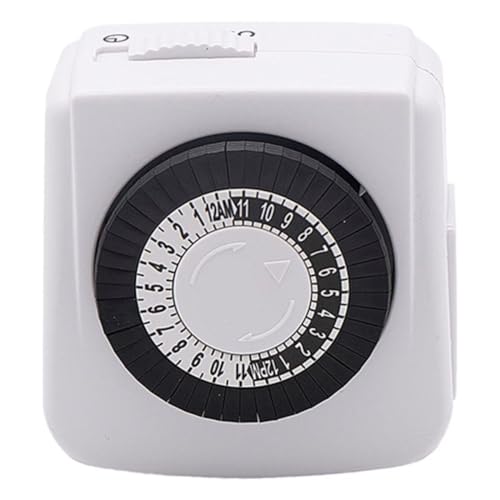
The SPW Pro-Trade timer focuses on 24-hour preset control, tailored for professional-grade landscape lighting transformers. It is designed to support precise illumination scheduling and reliable operation across daily cycles, appealing to users who require durable timers for long-term outdoor installations and business applications along walkways and signage lighting.
Buying Guide: How To Choose The Right Landscape Lighting Timer
Key purchase considerations help ensure the timer aligns with your system and goals. First, confirm transformer compatibility and wattage limits, especially for low-voltage setups that power path lights, spotlights, or accent features. Digital timers often provide more precise scheduling and dusk-to-dawn functionality, but mechanical timers win in reliability and simplicity. Consider the number of zones: two-zone models enable different scenes for front yard and garden beds without extra controllers. If you value automatic daylight saving time adjustments, seek a model with auto DST support. Weatherproof housing, outdoor-rated components, and installation ease are essential for longevity in harsh climates. Compare control options—pin-based, dial, or digital—and match them to your preferred maintenance routine and technical comfort level. Finally, evaluate warranty, brand support, and compatibility with existing transformers or power supplies to maximize long-term performance.